Birdorable Bonanza 2025 Bird #10
The Hadada Ibis: An Iconic Voice of Africa
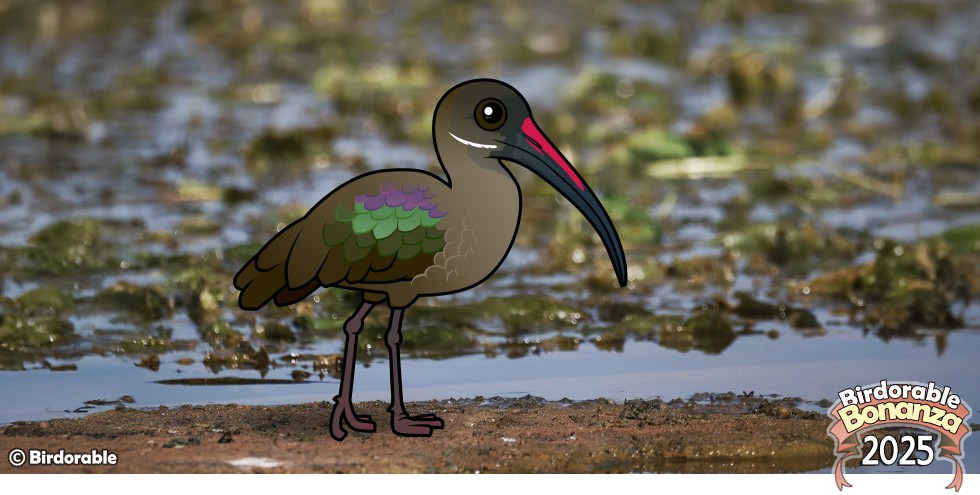
Today our 2025 Birdorable Bonanza comes to a close with the introduction of our 840th species: the Hadada Ibis!
The Hadada Ibis is a large, loud bird found across much of Sub-Saharan Africa. It’s instantly recognizable not only by its size, shape, and slightly curved bill, but also by its unmistakable call, for which it is named: a harsh "haa-haa-haa-de-dah" sound. These birds are often heard flying overhead or calling from rooftops, especially in the early morning or evening.
Hadada Ibises are primarily greyish-brown with an iridescent green or purple sheen on their wings that shines in the sunlight. They have long, sturdy legs and a heavy, curved bill adapted for probing the soil. They often forage in gardens, parks, wetlands, and even along roadsides. Their favorite foods include insects, earthworms, and other invertebrates, which they find by poking their bills into soft ground.
While their calls can be jarring, especially in suburban areas, Hadada Ibises are well-loved by many for their quirky personalities and adaptability. They've taken to urban environments easily, commonly seen in backyards and on golf courses where lawns make great foraging grounds. Their increasing presence in cities shows how well some wild birds can coexist with humans when given the chance.
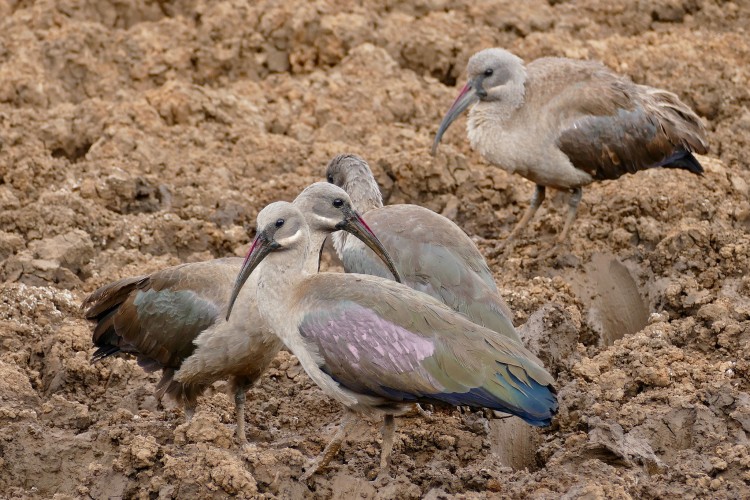
Hadada Ibises by Bernard DUPONT [CC BY-SA 2.0]
In flight, Hadada Ibises display slow, powerful wingbeats and fly with their necks outstretched. They often travel in pairs or small groups and are very vocal while flying. Their noisy habits may not be ideal for light sleepers, but their presence is a reminder of how wildlife can still thrive alongside human activity.
Breeding typically takes place during the rainy season. Hadada Ibises build large stick nests in trees, often close to water. Both parents share duties, including incubating the eggs and feeding the chicks. The young are fed through regurgitation and fledge after about six weeks.
Although not considered threatened, Hadada Ibises benefit from access to open spaces and healthy green areas. Their growing populations in urban areas have even made them unofficial ambassadors of biodiversity in some African cities. While they might be loud neighbors, they're also a fascinating and charismatic part of Africa’s birdlife.