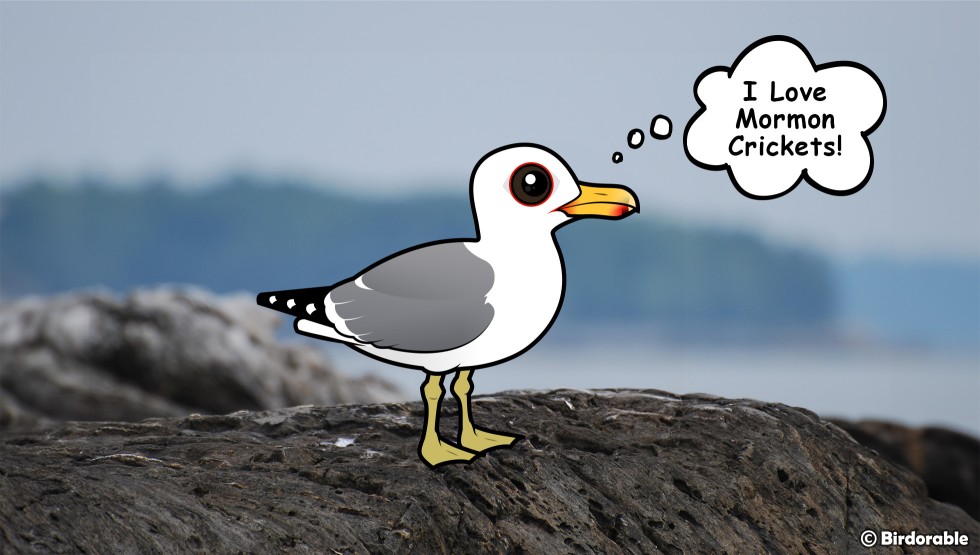
California Gull: Utah's State Bird and Symbol of Perseverance

The California Gull, a medium-sized gull native to the western half of North America, holds a special place in the heart of Utah's history and culture. This bird, distinguished by its versatile diet and adaptability, is celebrated not just for its presence across various habitats but also for its pivotal role in a historical event deeply revered by the people of Utah. In recognition of its significant contribution, the California Gull has been honored as the state bird of Utah, a symbol of survival and divine intervention.

The bond between the California Gull and the state of Utah is cemented by a remarkable event known as the "miracle of the gulls." According to Mormon folklore, these seagulls played a crucial role in saving the Mormon pioneers' first harvest in 1848. After settling in the Salt Lake Valley, the pioneers faced a devastating invasion of crickets that threatened to destroy their crops. In a turn of events that would be remembered as miraculous, flocks of California Gulls descended upon the fields, feasting on the crickets and significantly reducing their numbers. This act is credited with saving the crops and, by extension, the pioneers themselves, ensuring the survival of the approximately 4,000 Mormons who had made the arduous journey to Utah.

In commemoration of this event, the Seagull Monument was erected in Salt Lake City, standing as a testament to the California Gulls' unexpected rescue and the pioneers' gratitude. This monument not only celebrates the survival of the Mormon pioneers but also highlights the intricate ways in which nature and human history are intertwined.

The story of the California Gull and the Mormon pioneers exemplifies the profound impact that animals can have on human lives, particularly in times of need. It serves as a reminder of the resilience of both nature and humanity, and the extraordinary circumstances under which they can come together to overcome adversity. The California Gull, once a simple bird seeking its next meal, has become a symbol of hope, perseverance, and the miraculous, embodying the spirit of Utah and its people.
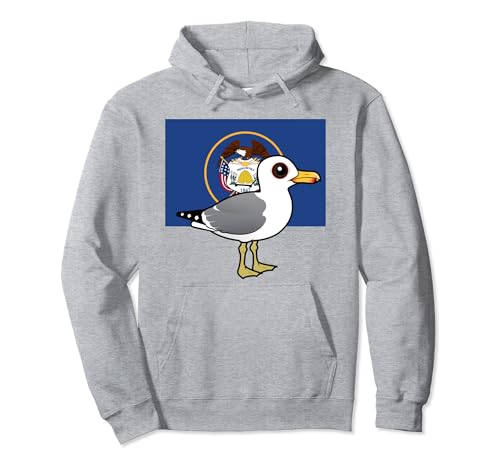
Cute California Gull Gifts

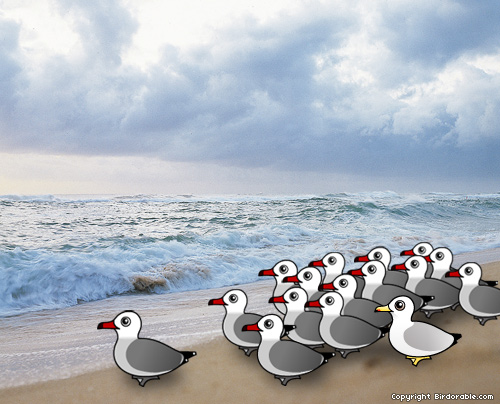
Birdorable Heermann's Gulls

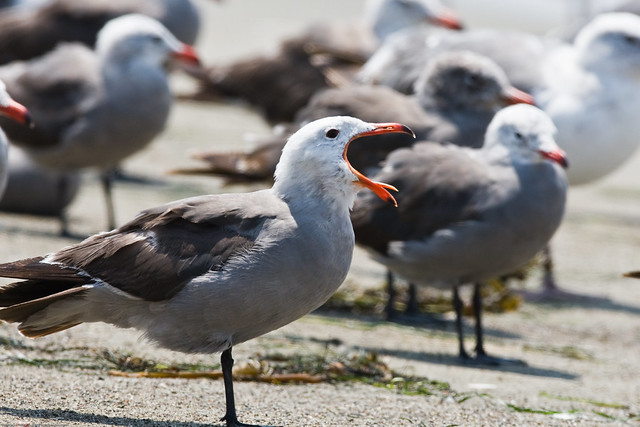
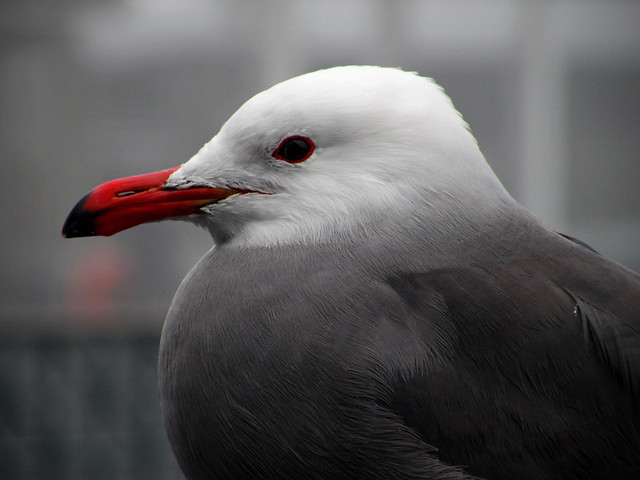
Have you ever seen a Heermann's Gull? These birds live on the west coast of the United States and Mexico. There are about 150,000 pairs of them and 95% of these nest on the island of Isla Rasa off Baja California. Audubon calls it one of North America's most beautiful gulls. Among other gulls in this area, Heermann's Gulls are easy to identify: breeding adults are dark gray above and light gray below, they have a white head and bright red bill with black tip. They are about the same size as a Ring-billed Gull. Isla Rasa is included in the Islas del Golfo California Biosphere Reserve. Because so many of these birds nest in one place, the entire species is vulnerable to disturbances there, which include harvesting of eggs by fishermen, industrial development and predation by introduced mammals.

2 of 2 Heermann's Gull (Larus heermanni) Villa Creek beach, Estero Bluffs, Cayucos
Photo by Mike Baird (via Flickr)
Heermann's Gull
Photo by Mary Angelini (via Flickr)

If you like this cute gull, check out our other Birdorable terns and gulls.

Black-legged Kittiwake

Birdorable Black-legged Kittiwake

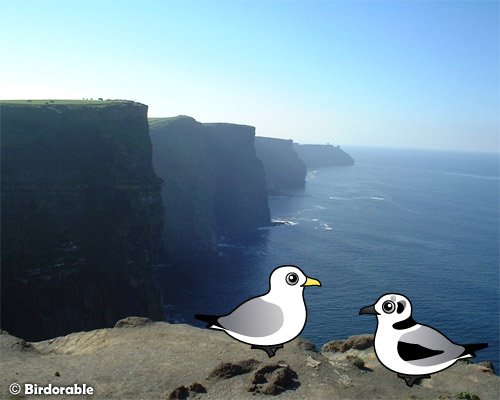
This week we've added another cute bird to Birdorable: the Black-legged Kittiwake. The above photo of cliffs in Ireland shows an adult Kittiwake on the left and a juvenile on the right. Juvenile individuals have black markings on the wings, neck and head. There are actually two races of Black-legged Kittiwake: one in the North Atlantic ocean and another in the North Pacific ocean.

The first one, which is common throughout Europe and the east coast of North America, has only three normal toes. Hence its latin name Rissa tridactyla, which means "three-toed". Its hind toe is reduced to a tiny bump. Kittiwakes spend most of their lives out at sea and come ashore only to breed. They actually seldom walk, so its legs are much shorter than those of other gulls. And who needs a hind toe if you hardly ever walk, right?

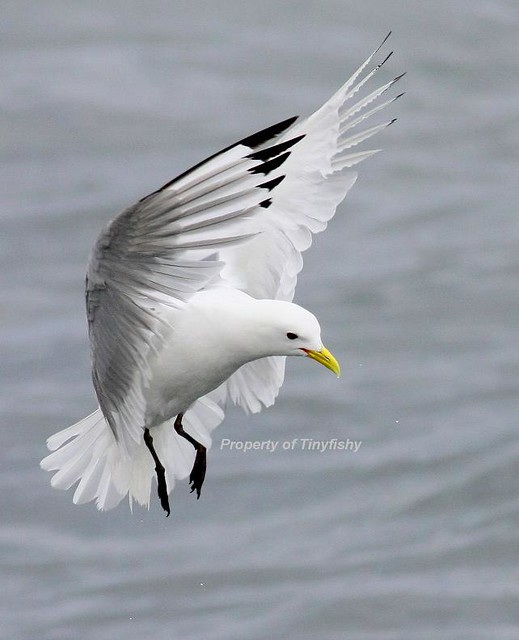
(#222) Black-Legged Kittiwake
Photo by tinyfishy

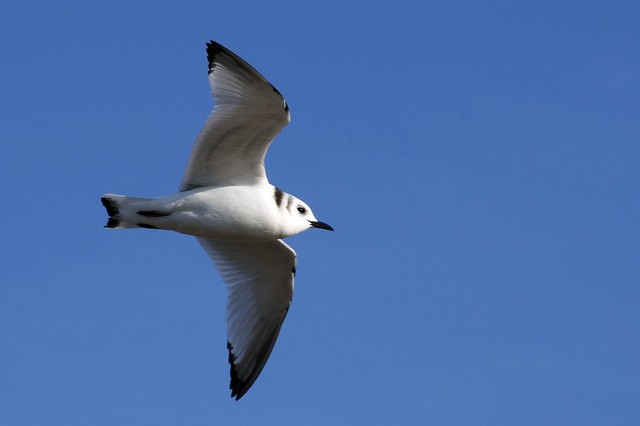
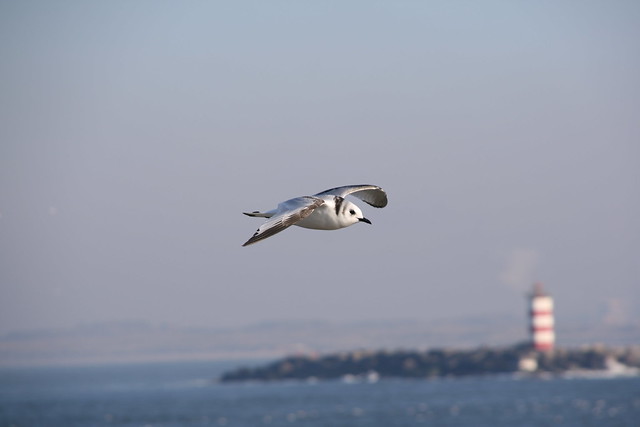
We often saw Black-legged Kittiwakes on the North Sea coast when we lived in the Netherlands and I always thought they were particularly cute. Here's a juvenile that we saw flying around at IJmuiden, a coastal town west of Amsterdam:

Black-legged Kittiwake
IJmuiden 030 (18-Nov).jpg
Photos by Amy Evenstad

Kittiwakes breed in large colonies on rocky cliffs and is very noisy on the breeding ground, as is evident from the video below. They are capable of utilizing the sheerest of vertical cliffs as their nesting site.

The Birdorable Kittiwake is available on t-shirts and other apparel. This is our totally cute version of the Black-legged Kittiwake!