Florida is home to an incredible variety of birds, thanks to its subtropical climate, coastal wetlands, and diverse habitats. Whether you're a local birder or visiting the Sunshine State, some birds are so iconic that they’re practically part of Florida’s identity. Here are five must-know species that call Florida home—starting with the state bird.
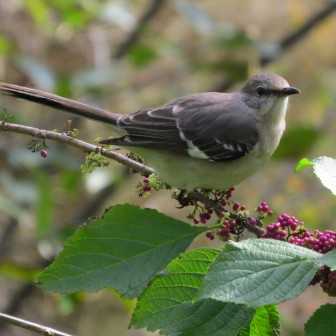
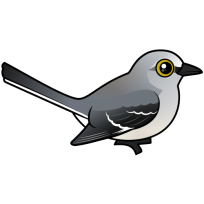
Northern Mockingbird

Florida’s official state bird since 1927, the Northern Mockingbird is famous for its vocal talents of mimicking other birds. They're medium-sized gray birds with white patches on their wings and tail, often seen singing from treetops or fences. Mockingbirds are common in suburban neighborhoods, parks, and gardens. If one takes a liking to your yard, you’ll likely hear it day and night, especially during breeding season.
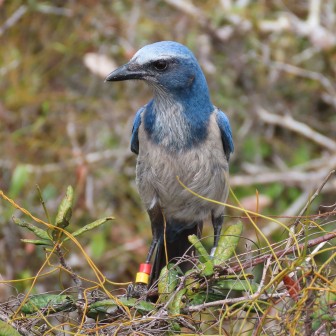
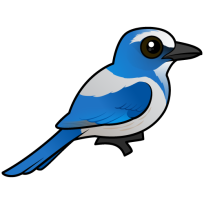
Florida Scrub-Jay

The Florida Scrub-Jay is the only bird species found exclusively in Florida. It should undoubtedly be the state bird, but that's another story. This bold, inquisitive bird has striking blue and gray plumage and lives in a very specific habitat: scrubby flatwoods. These areas are increasingly rare due to development, making the Florida Scrub-Jay a federally threatened species. Florida Scrub-Jays live in close-knit family groups. 
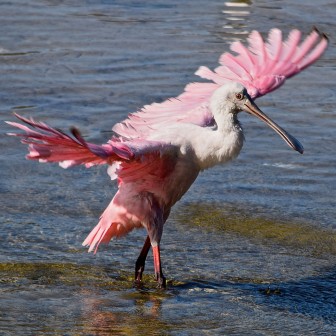
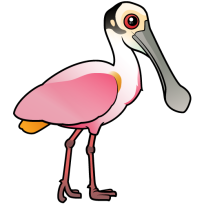
Roseate Spoonbill

The Roseate Spoonbill brings a splash of tropical color to Florida’s wetlands. With its bright pink feathers and unique spoon-shaped bill, it’s often mistaken for a flamingo at a distance. Spoonbills use their unusual bills to sweep through shallow water, feeling for crustaceans and small fish. They're most commonly found in mangroves, saltwater lagoons, and estuaries. The pink color comes from the carotenoids in their diet—similar to flamingos.
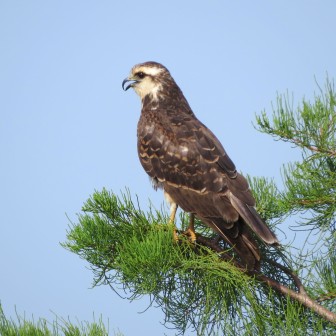
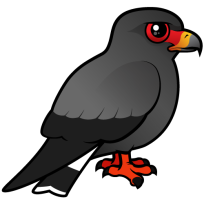
Snail Kite

This raptor is specially adapted to feed almost exclusively on snails. The Snail Kite has a slender, deeply hooked bill perfect for extracting snails from their shells. Males are mostly dark gray with red legs and eyes, while females are brown with streaky underparts. These birds are found around freshwater marshes and lakes in central and southern Florida. Because of their dependence on healthy wetland ecosystems and a steady supply of snails, they are considered a threatened species.
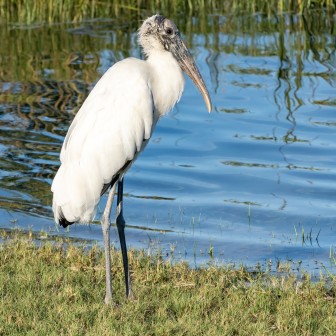
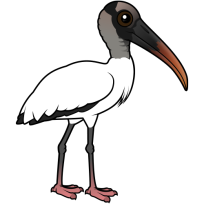
Wood Stork

The Wood Stork is a large, bald-headed wading bird that may not win beauty contests but plays a critical role in Florida’s wetland ecosystems. These birds forage in shallow water by feel, snapping their bills shut when they sense prey like fish or amphibians. Wood Storks are social nesters, often forming noisy colonies high in cypress trees. Habitat loss has affected their numbers, but conservation efforts have helped stabilize populations in recent years. Seeing a group of these big birds take flight is a classic Florida wetland scene.

Learn More About Iconic Florida Birds
Honorable Mention

Other birds that could easily make this list include the Crested Caracara, Burrowing Owl, and Osprey. The Crested Caracara, a striking bird of prey with a bold appearance, is often seen strutting through open pastures in Central Florida. The Burrowing Owl, with its expressive face and ground-dwelling habits, is a unique resident of Florida’s dry prairies and urban fringes. And the Osprey, a fish-hunting raptor, is a familiar sight around Florida’s coastlines and lakes, often seen diving feet-first into the water or perched on man-made nesting platforms. Each of these birds adds to Florida’s rich birdlife and could easily earn a spot among the state’s most iconic species.

Florida’s birdlife is as colorful and varied as the state itself. From wetlands to backyards, these birds are just a glimpse into the biodiversity waiting to be explored.


Hello San Juan, Puerto Rico!

We (Arthur & Amy) had the pleasure of visiting Puerto Rico for four short days at the end of February / early March of this year. We aimed to see endemics and enjoy the beautiful island they call Isla del Encanto as we drove all around the U.S. territory.

Puerto Rico is a paradise for birdwatchers, with a variety of habitats that support both endemic and migratory species. From lush rainforests to coastal reserves, the island offers incredible opportunities to see rare and beautiful birds. In our pre-trip research and practical experience we found that the island has a lot of great birding spots. Here are six top destinations for birdwatchers visiting Puerto Rico.

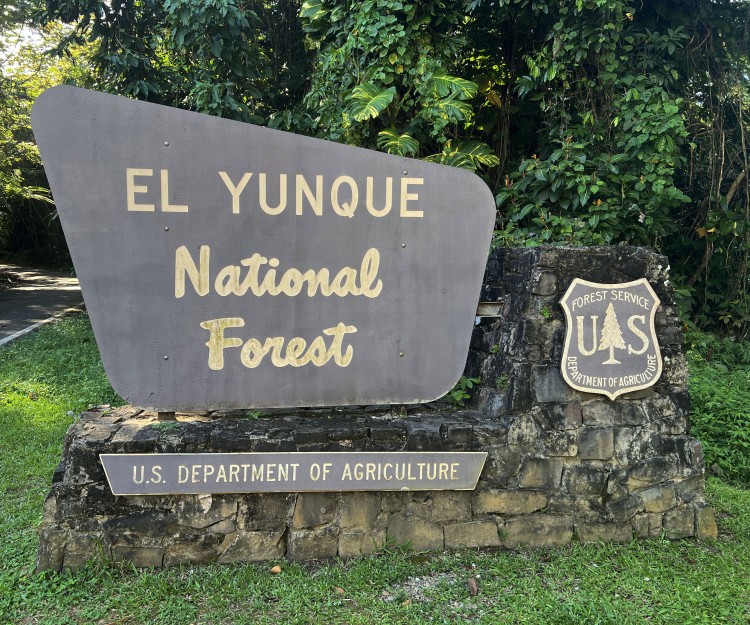
El Yunque National Forest

El Yunque is one of Puerto Rico’s most famous natural attractions and a top spot for birdwatching. Located just an hour from San Juan, this wonderland is the only tropical rainforest within the U.S. National Forest System. It is home to many tropical specialties and endemics. The lush landscape, filled with waterfalls and dense vegetation, provides a perfect setting for spotting a variety of species. At El Yunque we stopped at the amazing visitor center and drove the main road through the park, stopping here and there to enjoy the scenery and look for birds. We saw our first Puerto Rican Bullfinch here, as well as several Bananquits and Pearly-eyed Thrashers.

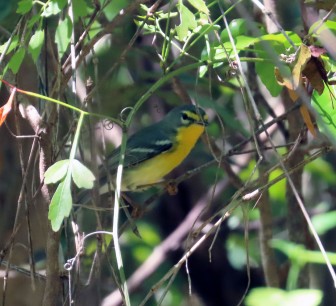
Adelaide's Warbler peeking out from thick foliage

Bosque Estatal de Guánica

Bosque Estatal de Guánica is a unique dry forest on Puerto Rico’s southern coast and a top birding destination. This UNESCO-designated Biosphere Reserve is home to many endemic and Caribbean specialty birds. Unlike the lush rainforests of El Yunque, Guánica’s arid environment features cacti, thorny shrubs, and seasonal lagoons, attracting species adapted to drier conditions. With well-maintained trails and diverse birdlife, it’s an essential stop for birdwatchers exploring Puerto Rico. It was very hot during our mid-day visit to this magical dry forest habitat. We had learned that this was one of the best spots to find the endemic Adelaide's Warbler, and we were delighted to find a couple of individuals here during our walk. 

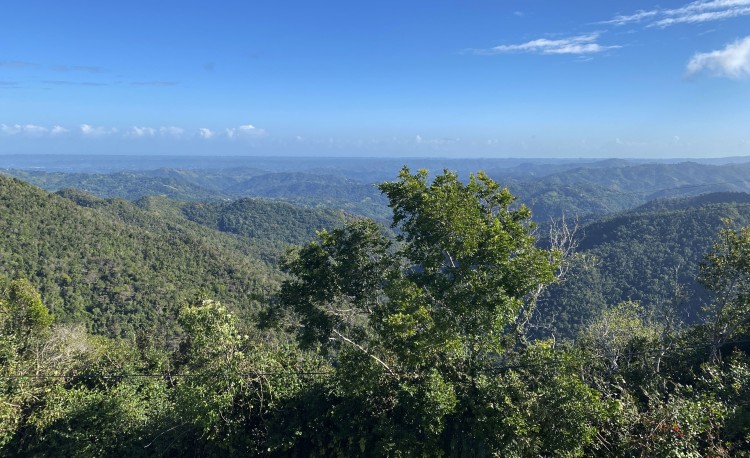
View over Bosque Estatal de Maricao

Bosque Estatal de Maricao

This mountainous forest in western Puerto Rico is home to a variety of endemics, including the Puerto Rican Tanager, Puerto Rican Bullfinch, and Puerto Rican Tody. The cool, high-altitude environment supports unique bird species that can’t be found in lower elevations. The winding roads and trails provide great birdwatching opportunities, making this a must-visit for birders seeking rare species. For those looking to see the elusive Elfin Woods Warbler, Bosque Estatal de Maricao is the best place to visit. We were very happy to find our target here, as well as adding several others to our list: Puerto Rican Spindalis, Puerto Rican Woodpecker, and (non-endemic) Scaly-naped Pigeon.

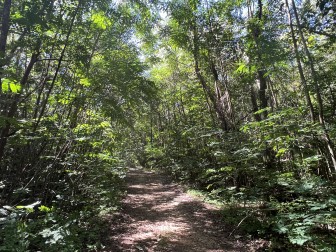
Trail at Bosque Estatal de Cambalache

Bosque Estatal de Cambalache

For those who enjoy rugged trails and a more off-the-beaten-path birding experience, Bosque Estatal de Cambalache is an excellent choice. The dense forest and quiet surroundings provide a peaceful setting for birdwatching, with well-maintained trails that offer great chances for spotting birds. This spot is also popular with mountain bikers, so we had to keep on our toes while hiking the perimeter trail. Here we finally saw our first Puerto Rican Lizard-Cuckoos in the deep forest habitat.

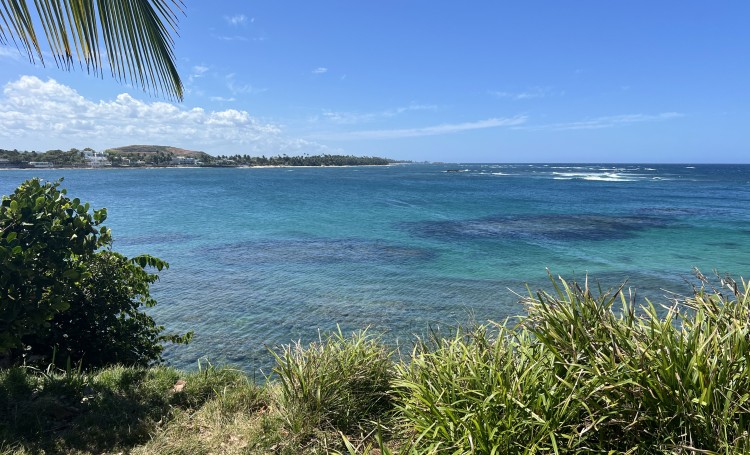
Ocean view from Cerro Gordo

Parque Nacional Cerro Gordo

This coastal park offers stunning ocean views and excellent birding opportunities. Located west of San Juan, it features a mix of open forest and coastal habitats, attracting seabirds, raptors, and endemic songbird species. Hikers and birdwatchers alike enjoy the scenic trails. Here we added Puerto Rican Flycatcher to our list, along with great views of Puerto Rican Spindalis, Puerto Rican Woodpecker, and non-endemics Venezuelan Troupial, Magnificent Frigatebird, and Smooth-billed Ani. 

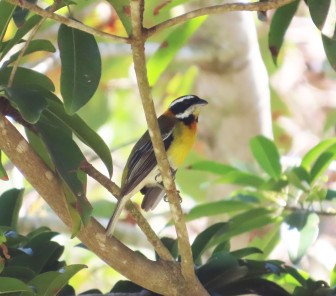
Puerto Rican Spindalis at Cerro Gordo

Bosque Estatal de Río Abajo

If you're hoping to catch a glimpse of the rare and endangered Puerto Rican Amazon, Bosque Estatal de Río Abajo is the place to visit. This state forest is a key site for the parrot’s recovery program, and with some luck, birders can spot them flying overhead or hear their calls echoing through the trees. We were not among them; we had a hard time with parking and trespassing issues here so it was a no-go for us. Other birders have had better luck and this location is nearly always included in birder trip lists for Puerto Rico.

Bonus Spot: Hacienda La Esperanza

One of the top birding hotspots in Puerto Rico, Hacienda La Esperanza in Manatí is the top-ranked eBird location on the island by both species and checklists. This nature reserve was formerly a sugarcane plantation and today features wetlands, forests, and grasslands. The variety of habitats makes it a top spot for birders, though we did not make it here during our travels. Endemics often seen here include Puerto Rican Lizard-Cuckoo, PR Mango, PR Woodpecker, PR Flycatcher, PR Spindalis, PR Euphonia, PR Oriole, and PR Bullfinch.

Puerto Rico offers some of the best birdwatching in the Caribbean, with diverse ecosystems that support an incredible range of bird species. Whether you’re exploring the rainforests, coastlines, or mountain forests, you’ll have the chance to see some of the island’s most beautiful and rare birds. With a good pair of binoculars and a little patience, you’re sure to have an unforgettable birding experience like we did!

Are you following Birdchick's adventures in Panama? She's currently birding at the fabulous Canopy Lodge ("I have died and gone to birder heaven") and she's practically live-blogging as she goes. So far she's seen an amazing variety of tropical birds, including Great Potoo, Red-capped Mannikin (the moonwalking bird) and even Keel-billed Toucans! If you want to follow Birdchick's tropical birding fun, check out her blog and follow her on Twitter.

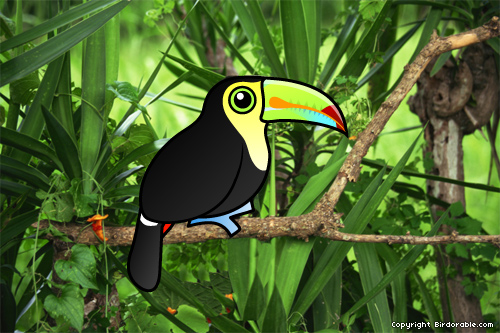
Birdorable Keel-billed Toucan