2014 Bonanza Bird #6: Ring-billed Gull

The 6th bird in our 2014 Bonanza is a familiar species of gull. It's the Ring-billed Gull!
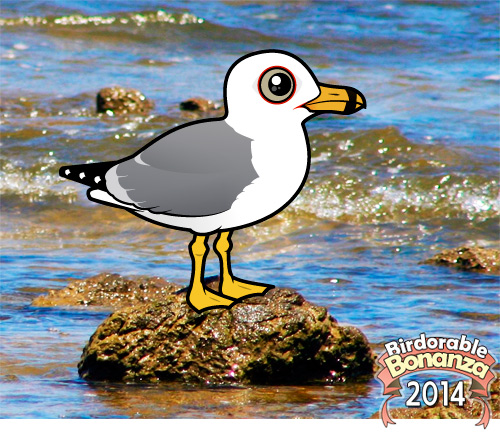
Birdorable Ring-billed Gull

The Ring-billed Gull is a "white-headed" medium-sized species of gull found across much of North America. In fact, it may be North America's most common gull. They nest near bodies of fresh or marine water in colonial groups.
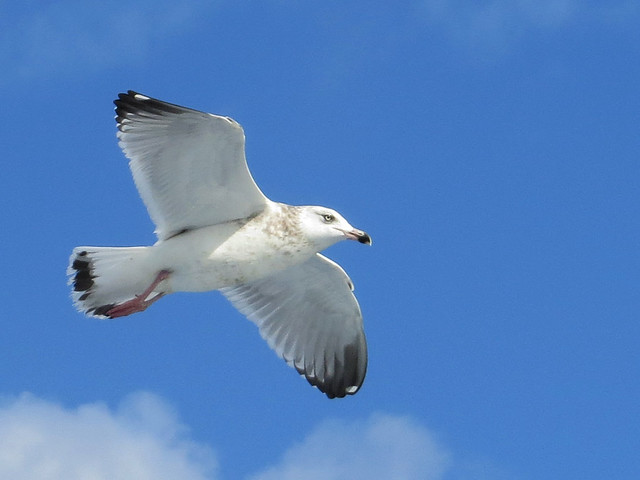
Ring-billed Gull
Ring-billed Gull by Amy Evenstad

Ring-billed Gulls are known for their skilled flying ability. They can be fast, graceful and agile on the wing. Ring-billed Gulls are even known to steal food from other birds -- in flight! They will practice this skill by playing with an object while in the air, dropping the object, and then swooping down to pick it up again. In non-breeding season, Ring-billed Gulls may roost and forage together in very large flocks, sometimes with other gulls. Ring-billeds seem to like their personal space: they will often stand evenly spaced, keeping at least 1 to 2 meters between each bird. The Ring-billed Gull joins Birdorable today, bringing our total number of bird species to 564. Our Bonanza concludes tomorrow with a striking bird of southeast Asia that also has "bill" in its name. Can you guess tomorrow's species?

Bonanza2014Preview7

Comments

Gustavo Carvalho on November 21, 2014 at 12:39 PM wrote:
Looking at the shape and the name with ''bill'' maybe a Broadbill? If it's a broadbill and it's from southeast Asia,maybe a Black-and-Red Broadbill or a Silver-Breasted Broadbill or a Black-and-Yellow Broadbill as they are the most common ones :)
Louise Warner on February 27, 2017 at 7:38 AM wrote:
black and yellow broadbill!
Louise Warner on February 27, 2017 at 7:41 AM wrote:
i men't black-and-yellow or black-and-red and silver- breasted broadbill.
Spurwing Plover on January 26, 2022 at 7:53 AM wrote:
I have seen Ring Bills in Yreka Ca they hang around in Greenhorn Park and the Fast Food places(McDonalds,Burger King)and i once saw some at a Car Wash squabbling over Dropped Taco
Spurwing Plover on January 14, 2023 at 8:05 AM wrote:
Steven Seagull

Leave a comment

Comments with links or HTML will be deleted. Your comment will be published pending approval.
Your email address will not be published
You can unsubscribe from these communications at any time. For more information on how to unsubscribe, our privacy practices, and how we are committed to protecting and respecting your privacy, please review our Privacy Policy. By clicking submit below, you consent to allow Birdorable to store and process the personal information submitted above to provide you the content requested.

Birds and the Big 2024 Cicada Emergence: A Natural Feast

Periodical cicadas are among nature's most fascinating insects, with their synchronized emergences occurring every 13 or 17 years. These insects spend most of their lives underground as nymphs, feeding on tree roots. When they finally emerge, they transform the landscape in remarkable ways, not just for themselves, but...

Meet the Magnificent Violet Sabrewing Hummingbird

Our Birdorable Hummingbird Week 2024 continues today with a new species added to our flock: it's the Violet Sabrewing! The Violet Sabrewing is one of the largest and most stunning hummingbirds in the Americas. This vibrant bird is a spectacle with its iridescent plumage and dynamic behavior. Found...

Fun Facts About Blue Jays

Blue Jays are large, bold songbirds that live across much of North America. They are common throughout their range, which includes the eastern two-thirds of the continent. Here are some facts about this familiar and widespread species. There are at...

Gull Week Extremes: Facts & Stats

This week, we're celebrating gulls! There are about 55 widely recognized species of gull in the world. We'd like to share some of the extreme facts and interesting statistics found within this diverse family. Smallest Gull SpeciesThe Little Gull, weighing in at around 4.2 ounces (120 grams), is...