2014 Bonanza Bird #5: Black-throated Finch

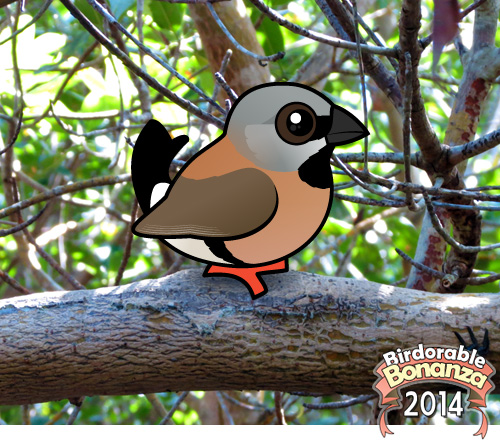
The 5th bird in our 2014 Bonanza is an Australian songbird, the Black-throated Finch!
PicBlackThroatedFinchBlog

Black-throated Finches are granivorous, meaning they eat seeds and grains. They are endemic to Australia, where they are found in the northeast of the country, in Queensland. Historically they were also found along the eastern coast down in New South Wales, but their numbers have been declining. The species overall has a conservation status of Least Concern, but the southern population is considered to be Vulnerable by Australian authorities. Black-throated Finches are relatively sedentary (non-migratory), though they may change location in response to food availability during times of drought. The population faces threats from several factors, including loss of habitat from human development and predation by non-native mammals.
_black-throated-finch
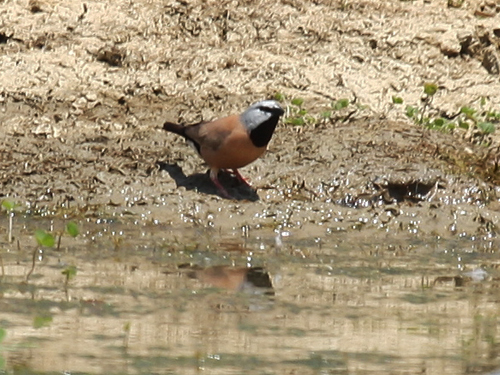
Black-throated Finch by Tim Lenz (CC BY 2.0; modified)

To learn more about this species, visit the Black-throated Finch Recovery Team website. The Black-throated Finch joins Birdorable today, becoming our 563rd species. We now have 24 species of finch. If you can't get enough of this darling Australian finch, be sure to check out our collection of cute Birdorable Black-throated Finch t-shirts & gifts!. Our Bonanza continues tomorrow with a New World species that likes to live by water and is named for a feature on its beak. Can you guess tomorrow's species?
Bonanza2014Preview6

Comments

Gustavo Carvalho on November 20, 2014 at 2:14 PM wrote:
I think it could be a Ring-Billed Gull (Larus delawarensis) !!!
Jackson L. on November 20, 2014 at 5:39 PM wrote:
Ring-billed Gull? :)

Leave a comment

Comments with links or HTML will be deleted. Your comment will be published pending approval.
Your email address will not be published
You can unsubscribe from these communications at any time. For more information on how to unsubscribe, our privacy practices, and how we are committed to protecting and respecting your privacy, please review our Privacy Policy. By clicking submit below, you consent to allow Birdorable to store and process the personal information submitted above to provide you the content requested.

Baby Birdorable: Piping Plover

If you think our Birdorable birds are cute as adults, what about when they are babies? Below are some baby photos (shared via Flickr Creative Commons) of the Piping Plover. When it comes to cute baby birds, it's hard to beat precocial shorebird chicks. Precocial chicks are ready...

Baby Birdorable: Black Stork

If you think our Birdorable birds are cute as adults, what about when they are babies? Below are some baby photos (shared via Flickr) of the Black Stork. Black Storks build large nests, typically in a very tall forest trees. Clutch size is usually 3-4 eggs; incubation...

The Secret Behind Waterproof Feathers & More: The Preen Gland

Birds have a unique way of keeping their feathers in top shape, thanks to a special gland called the uropygial gland. Also known as the preen gland, this small but important organ is located near the base of a bird’s tail. It produces an oily secretion that birds...

Noisy by Nature: Celebrating the Noisy Miner

Today we kick off our 2025 Bonanza with a bird we became very familiar with during our visit to Australia earlier this year: the Noisy Miner! The Noisy Miner is one of Australia's most recognizable and frequently heard birds. Native to the eastern...