In 1982 you could have counted every California Condor alive on the planet without running out of fingers and toes. There were 23. That wasn't 23 in California, and it wasn't 23 in captivity. That was the entire species: every single condor left on Earth, all twenty-three of them.

This is a bird with a three meter wingspan, the widest of any bird in North America, a bird that can weigh as much as a small dog, and live for sixty years. Its kind had flown these skies since the Ice Age, when the genus ranged across the Americas and condors soared over what is now Florida. It was down to two dozen individuals, and something had to be done.

The Decision Nobody Wanted to Make

By the mid 1980s the wild birds were dying faster than they were breeding, and biologists faced a stark choice: leave the last few free and hope, or catch every single one and try to breed them in captivity.

The argument ended up in court, where the National Audubon Society sued to stop the Fish and Wildlife Service from capturing every remaining wild bird, arguing some condors should stay free to guide any captive-bred birds released later. A district court agreed and blocked the captures, but in June 1986 the appeals court overturned that ruling, finding the decision to take in the remaining condors "manifestly defensible."

On Easter Sunday 1987, a biologist named Jan Hamber tracked the last free-flying California Condor to a trap site in southern California. The bird was known as AC-9. When he was carried away, the species existed only in captivity. A species that had ridden thermals over that landscape for tens of thousands of years was, as of that afternoon, entirely in human hands.

Puppets

The recovery worked because of a quirk of condor biology. A pair normally raises a single chick, but if the egg is lost early, the female will often lay another. Biologists exploited this by taking the first egg and letting the parents lay a replacement, doubling the output of every pair.

That created a new problem. A chick raised by people grows up thinking it is a person, which is fatal for a bird that needs to find its own food and live wild with its own kind. So the eggs taken away were hatched and fed using hand puppets shaped and painted like the head of an adult condor, so that a growing chick would not learn to associate food with people.
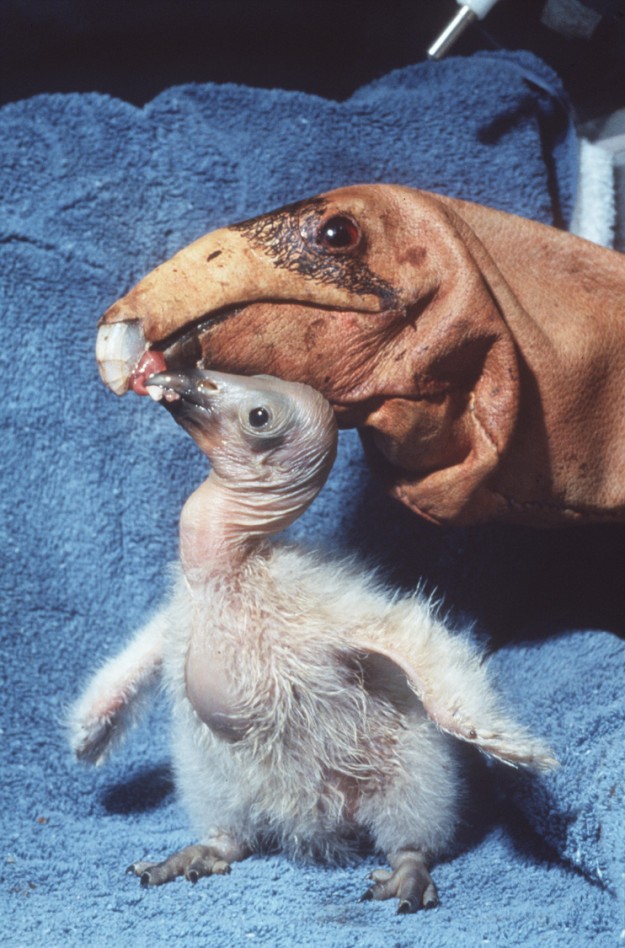
Look closely, that "adult bird" is actually a hand puppet! (source: U.S. Fish and Wildlife Service, public domain) 

Back to the Sky

The first captive-bred condors were released in 1991 and 1992, at Big Sur, Pinnacles and Bitter Creek National Wildlife Refuge in California. Arizona followed in 1996, at the Vermilion Cliffs near the Grand Canyon. Later came a site in the Sierra de San Pedro Martir in Baja California, Mexico.

And in May 2002, after fifteen years in captivity, biologists opened a pen at Hopper Mountain and let AC-9 go. The last wild condor became a wild condor again. He was given a new number, 21, and he went on to nest in the Sespe Condor Sanctuary and raise chicks of his own in the open air. He died in the wild on June 29, 2016, by then the oldest bird in the southern California flock.

Prey-go-neesh Comes Home

In 2022 condors returned to a part of their range that had been empty for a century, and they did it because the Yurok Tribe spent years making it happen.

To the Yurok, the condor is prey-go-neesh, among the first beings of the world and the one that carries prayers to the Creator. Condor feathers and condor songs are part of the World Renewal ceremonies, including the White Deer Skin Dance and the Jump Dance. Restoring the bird was not only an ecological project. It was the return of a relative.

The Yurok Condor Restoration Program began releasing birds in Redwood National Park in 2022, and by late 2024 eighteen had been freed there. In May 2026 a two-year-old female called B9 left the redwoods and flew a 380-mile loop over four days, crossing into Oregon and getting within a few miles of Medford before turning for home. She was the first California Condor recorded in Oregon since 1904.

Continued Threats to Condors

The condor is not out of trouble, and the reasons are worth knowing, because most of them are fixable.

Lead poisoning remains the number one known cause of death. A rifle bullet fragments when it hits, and a condor feeding on a carcass or a discarded gut pile swallows the pieces. A 2012 study in the Proceedings of the National Academy of Sciences traced the metal and found that 79 percent of free-flying condors carried a lead signature matching ammunition. Without constant intervention to find and treat poisoned birds, the study concluded, the wild population would slide back toward extinction. California banned lead ammunition within condor range starting in 2008.

The leading killer of condor nestlings is not a predator, it's trash: small fragments of bottle caps, glass, wire, and plastic that parents pick up and carry back to the nest. Condors naturally feed bone chips to their chicks for calcium, and they cannot always tell the difference. A study of nests in southern California found junk in almost every one, in larger amounts than in historic condor nests, and concluded it's now the leading cause of nest failure in the reintroduced population.

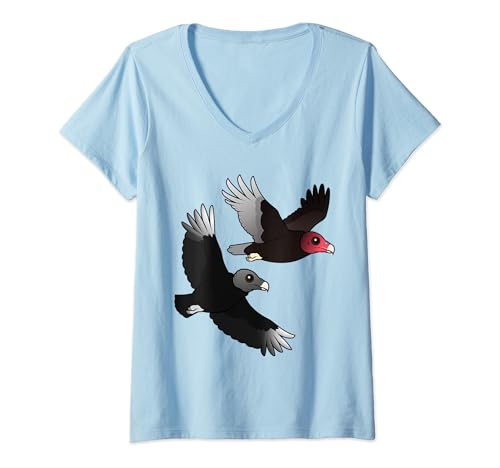
In 2023, highly pathogenic avian influenza reached the Arizona and Utah flock. By the middle of April the Fish and Wildlife Service had recorded 20 dead condors there, with the virus confirmed in half of them. The response was unprecedented: an emergency vaccine trial, tested first on American Black Vultures standing in for their rarer cousins, then extended to condors themselves. By February 2024, 94 condors had received at least a first dose.

Where Things Stand

On December 31, 2025, the US Fish and Wildlife Service counted 607 California Condors in the world. Of those, 392 were flying free, in flocks across California, Arizona, Utah and Baja California, and 215 were in captive breeding programs.

Twenty-three birds, all of them in cages, became 607 birds, most of them wild. It took nearly forty years, an enormous amount of money, hand puppets, and the patience of people who knew they might be doing all of it for nothing.

It's worth remembering this on a day set aside for vultures, because the news about vultures is mostly bad. Species are collapsing across Africa and Asia, and the causes are poison, persecution, habitat loss. The condor is the counterexample. It is proof that the decline is not a law of nature. 

What Would You Bring Back?

If you could return one bird to a place it used to live, which would you choose, and where? Tell us in the comments below!

We're celebrating Vulture Week because this Saturday, September 6th, marks International Vulture Awareness Day (IVAD). This commemorative day has been celebrated since at least 2009 and aims to highlight the importance of vultures and vulture conservation through education.

Birdorable Andean Condor

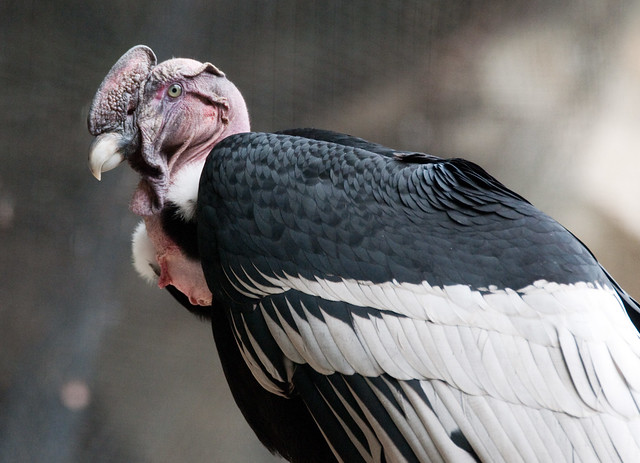
The Andean Condor is one of two types of condor, along with the California Condor. Both of these fall under the family Cathartidae, or New World Vulture. The Andean Condor is one of the world's largest flying birds, with a wingspan that may measure over 10 feet across. Among vultures found in the Americas, the Andean Condor is the only species to show sexual dimorphism. This means that males and females have a different appearance. Mature male Andean Condors have a large fleshy comb resting atop the head, which is reddish. Adult females have dark, uncombed heads. In most birds of prey, females are larger than males, but the Andean Condor defies this rule; males are larger than females.

Male Andean Condor
Male Andean Condor by Eric Kilby (CC BY-SA 2.0)

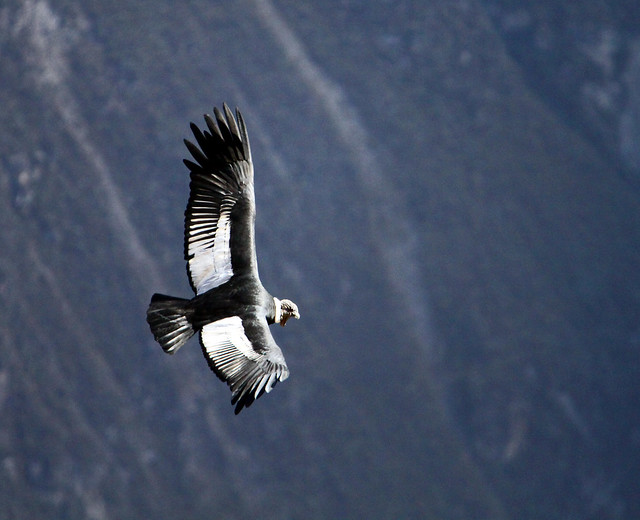
Like most other vulture species, the Andean Condor feeds primarily on carrion. They may travel 100 miles or more in a day in search of food, which includes the carcasses of large mammals like llamas, deer, cattle, and boar. Andean Condors are excellent at soaring using rising columns of hot air called thermals. Andean Condors can be found along the western mountain ranges of South America, including the Andes and the Santa Marta Mountains. Their range overlaps with other New World vulture species, and they may follow Turkey Vultures, Lesser Yellow-headed and Greater Yellow-headed Vultures to carcasses.

andean condor
andean condor by vil.sandi (CC BY-ND 2.0)

The Andean Condor is a national symbol for several South American countries, including Bolivia, where it is the official national bird. Condors were revered in Andean mythology and is sometimes considered to be a symbol of power and health. Andean Condors mate for life. They reach full maturity after five or six years and may live to be 50 years old or more in the wild; a captive condor lived to be at least 72 years of age. Pairs typically raise one chick every other year. The population trend for the Andean Condor is decreasing, and the IUCN Red List considers the species to be Near Threatened. They face challenges from habitat loss, secondary poisoning, persecution, and other man-made threats.

The California Condor has been selected as Audubon California's Bird of the Year for 2011. The endangered species won the title after receiving nearly 35% of the almost 10,000 votes cast in the annual election. The condor beat out the Black Oystercatcher, Western Snowy Plover, Sandhill Crane, and three other species.

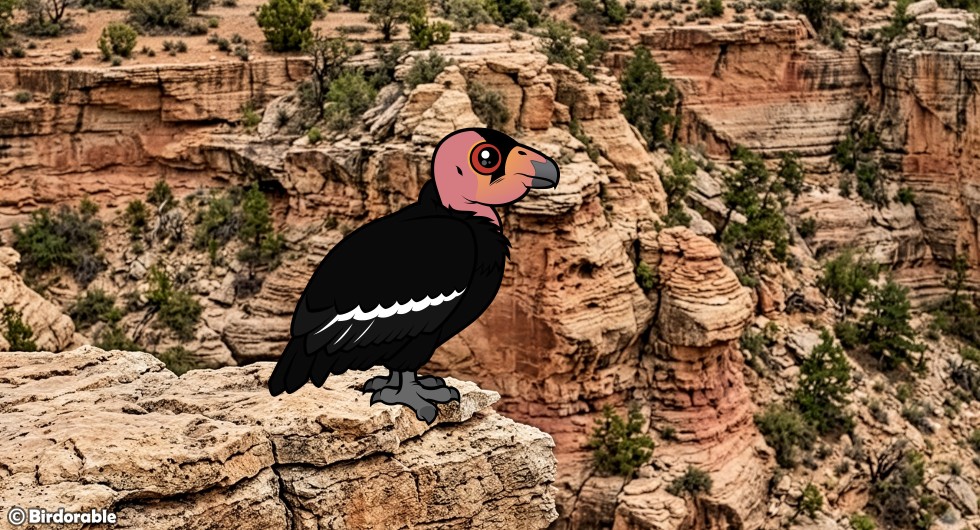
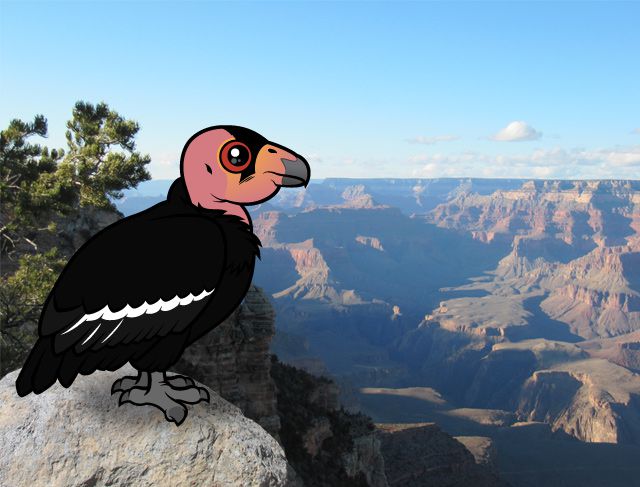
Birdorable California Condor

The California Condor is a critically endangered species that was down to just 22 wild birds in the late 1980's. These birds were captured and bred as part of a captive breeding program that continues to see limited but steady success. Today there are over 180 California Condors living in the wild. One totally unnecessary threat still facing California Condors is lead poisoning. If hunters would universally adopt lead-free ammunition, the U.S. Fish and Wildlife Service says that the California Condor recovery program "would [be] wildly successful." Unfortunately, lead-riddled carcasses limit the species' rebound. The California Condor's reign at Audubon California Bird of the Year 2011 highlights the plight of these special birds.

California Condor Gifts

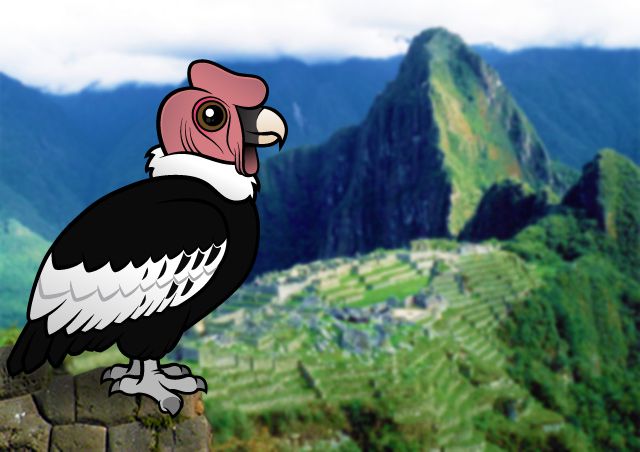
Birdorable Andean Condor

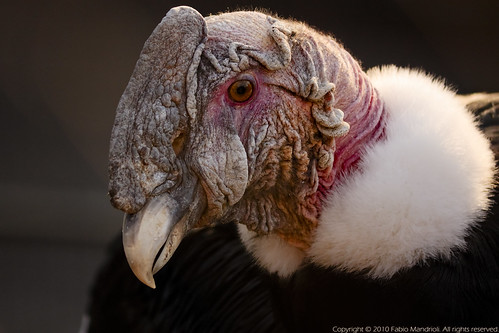
For 18 days we're adding a new Birdorable bird every day as part of our Birdorable Bonanza 2010. Today's bird is the endangered Andean Condor! Andean Condors are large birds that live in western parts of South America. They are among the largest flying birds, with a massive wingspan which may exceed ten feet! Andean Condors have relatively featherless heads, like other birds in the condor and vulture families. Males sport fleshy combs on the top of their heads and a wattle of skin on the neck. Both sexes sport a white fluffy neck "cowl."

January 10, 2010
Andean Condor by Fabio Mandrioli

Tomorrow's bird is a funny bird from Australia. Can you guess what it is?

International Vulture Awareness Day

Vultures Unveiled: 14 Must-Know Facts About Nature's Clean-Up Crew

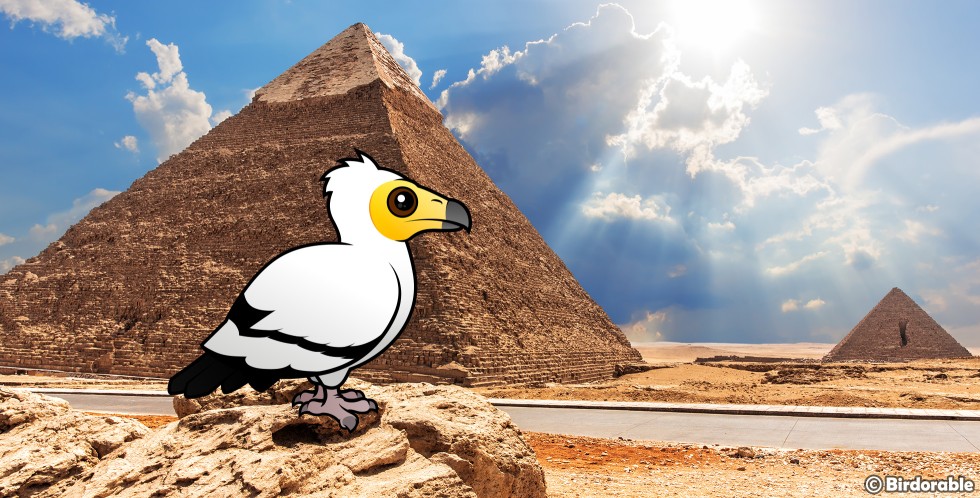
Birdorable Egyptian Vulture at the Pyramids of Giza in Egypt

Yes, vultures can be cute - our Birdorable vultures prove just that! Although vultures may be known for eating dead things, using projectile vomit as a defense measure and even cooling themselves by urinating on their own legs, these carrion-eating baldies aren't all about the ick-factor. For example:

  1. The Egyptian Vulture is one of the few species of bird to use tools. It will lift small rocks in its beak and smash them into ostrich eggs to crack the hard shell. Clever birds!
  2. While Lammergeiers don't use tools, they do have a clever way to get at their favorite food. They will drop large bones while flying in order to crack them into pieces. With clever strategies like that, who needs tools?!
  3. Several vulture species lack vocal organs so they are only able to hiss or grunt. No screaming banshees here!
  4. Several species including the Turkey Vulture are extremely gregarious. Birds will roost in large community groups which may include several hundred individuals. The vulture's motto: We Are Fa-mi-ly!
  5. California Condors are especially fastidious and may spend hours a day preening their feathers. Beauty queens!
  6. Courting Turkey Vultures will gather in a circle to perform hopping movements around the perimeter, with wings spread. Yes, they put on the dance moves to attract a sweetheart!
  7. The Rüppell's Vulture holds the height record for avian flight, with the ability to fly up to an altitude of 37,000 feet. These birds have their place in the avian extreme games!
  8. Vultures often remain inactive until the sun has warmed up the air with sufficient thermals to support soaring. These sleepyheads need the sun to get going on their day's work. I know some people like that!
  9. The Palm-nut Vulture is so named because its favorite food is the nut of the Oil Palm tree. A veg-loving vulture!
  10. The Cinereous Vulture is also known as the Monk Vulture, because its ruff of neck feathers resembles a monk's cowl. Even vultures get funny nicknames.
  11. Often vultures gorge so much they can’t fly. Vultures know how to pig out, and they aren't afraid to do it!
  12. The Turkey Vulture can glide for over six hours without flapping a wing. Another extreme avian sports contender, category: endurance.
  13. California Condors and several other vulture species mate for life. How romantic!
  14. The Hooded Vulture is abundant through most of its range and is usually unafraid of humans. They are sometimes called "garbage collectors" by locals. In fact all vultures are nature's original waste managers!
  15. Like many wildlife species vultures have suffered from loss of habitat and illegal hunting. Several vulture species have suffered up to a 99% population decrease in India and neighboring countries due to poisoning from livestock pharmaceuticals.

That last trivia point is not actually one of our favorites, but it is an unfortunate fact. Today is International Vulture Awareness Day 2009, which promotes vulture conservation. This post is part of the Blog for Vultures carnival coinciding with IVAD09. Learn more about vultures, vulture conservation and awareness by visiting the other participants in today's virtual event. Click on the nifty badge below to learn more!

Cute Birdorable Vulture Gifts

This video from the Ventana Wildlife Society gives an update on the 2009 nesting season for the endangered California Condors they monitor.

You can help the society by volunteering to help clean up the condor habitat or by making a donation. A portion of proceeds from some of our own Birdorable California Condor sales will also be donated to the Ventana Wildlife Society.