


Head-Bobbing Explained: How Pigeons and Other Birds Stabilize Vision
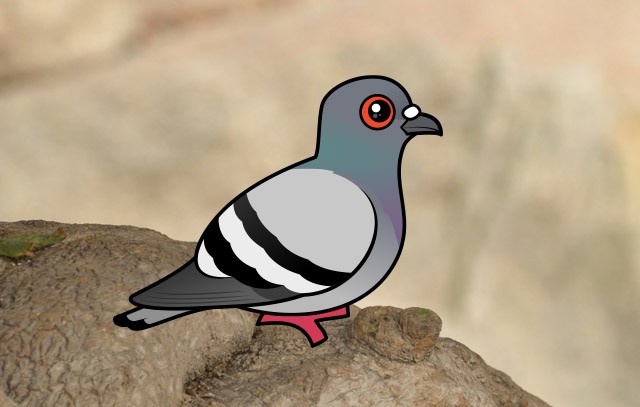
If you’ve ever watched a pigeon strut across a sidewalk, you’ve probably noticed its distinctive head-bobbing walk. It looks quirky, even a little funny, but there’s an important reason birds like pigeons move this way—it helps them see the world clearly as they move.
Birds rely heavily on vision to find food, avoid predators, and navigate their environments. For most bird species, sharp vision is critical. But unlike humans, birds don’t have the same head and neck structure to stabilize their view with eye movements alone. Instead, they use a clever trick: they move their heads in a way that keeps their vision steady while their body moves forward.
The key is a process called head stabilization. When a pigeon walks, it pushes its head forward, then holds it still in space as its body catches up. This pause creates a moment of stable vision, allowing the bird to clearly see objects in its environment. The head then snaps forward again, repeating the cycle. So what looks like a bobbing motion is actually a well-timed system of keeping the head still for just long enough to take in a clear image.
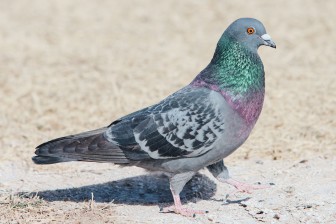
Studies using high-speed video have shown that the “bob” is made up of two phases: a hold phase, where the head stays in place, and a thrust phase, where it quickly moves forward. During the hold phase, the bird gets a steady view of the world. This is especially helpful for depth perception and detecting motion, both of which are harder if the entire field of view is constantly shifting.
Not all birds bob their heads, though. Species that fly a lot or hunt in the air, like hawks or swallows, tend to rely more on rapid eye movements and other methods of visual stabilization. But for ground-dwellers, especially those with relatively long necks, head-bobbing is an efficient solution. It’s even been observed in cranes, herons, and some parrots.
Interestingly, if you were to place a pigeon on a treadmill moving at the right speed, it will stop bobbing its head entirely. That’s because the bird’s body isn’t moving forward in relation to the ground, so there’s no need to stabilize its vision. The head remains still because the view doesn’t change.
This behavior gives a window into how birds have adapted their bodies and behaviors to suit their environments. It’s a great example of how something that looks funny to us serves a vital purpose in the wild. Next time you see a pigeon walking down the street with that familiar bob, you’ll know it’s not just being quirky—it’s using a built-in visual system to make sense of the world.




Comments
Leave a comment
Thank you!