Bluer than a Bluebird

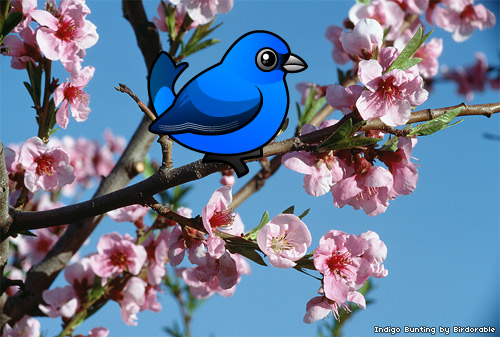
Birdorable Indigo Bunting

We recently added the Indigo Bunting to Birdorable. These birds are named for the striking bright blue plumage found in breeding males.
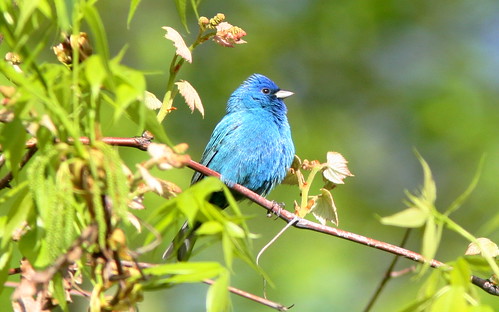
Indigo bunting
Indigo bunting by Henry McLin, on Flickr

Like many passerine birds, for safety the Indigo Bunting often migrates overnight. They use the stars as a directional tool in their travels. In captivity, since they cannot migrate, Indigo Buntings may experience disorientation in April and May and in September and October if they cannot see the stars from their cages.
Indigo Bunting
Indigo Bunting by drivebybiscuits1, on Flickr

We can expect Indigo Buntings to return here to northern Illinois very soon. They will visit back yard feeders and the males especially are hard to miss.
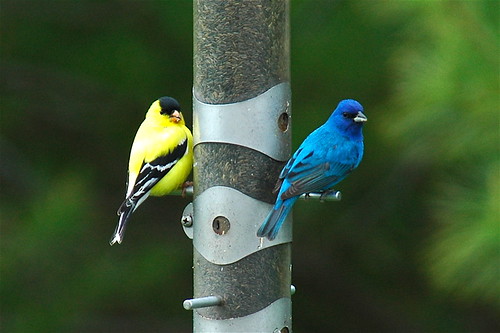
American Goldfinch and Indigo Bunting
American Goldfinch and Indigo Bunting by jackanapes, on Flickr

You can also listen for their song, which some birders describe as sounding like "fire! fire! where? where? here! here! see it? see it?"
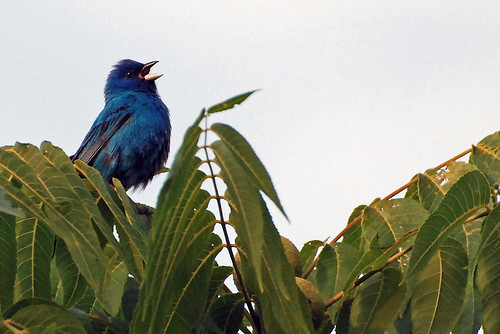
Calling For Love
Calling For Love by Chad Horwedel, on Flickr

Indigo Buntings summer across much of the eastern part of the United States. Do you have Indigo Buntings where you live? Have they already returned? While you wait, be sure to check out our cute Birdorable Indigo Bunting t-shirts & gifts! :)

Comments

Ashira on April 26, 2010 at 12:55 PM wrote:
ADORABLE! <3 I also LOVE your new mergy. I've been wanting one of those on here for months now : D

Leave a comment

Comments with links or HTML will be deleted. Your comment will be published pending approval.
Your email address will not be published
You can unsubscribe from these communications at any time. For more information on how to unsubscribe, our privacy practices, and how we are committed to protecting and respecting your privacy, please review our Privacy Policy. By clicking submit below, you consent to allow Birdorable to store and process the personal information submitted above to provide you the content requested.

Not Just Night Owls: The Truth About Owl Activity

Owls are often thought of as creatures of the night, silently hunting in the darkness with their piercing eyes and ghostly flight. While it’s true that many owl species are nocturnal, meaning they are most active at night, not all owls fit this stereotype. Some...

2017 Bonanza Bird #8: South Island Takahē

Take a look at this beauty! Today a colorful New Zealand rail joins Birdorable! Introducing our South Island Takahe! The South Island Takahē is a large flightless species of rail that was once thought to be extinct. A similar species, the...

Busting a Bird Myth: Can Owls Rotate Their Heads All the Way Around?

As part of our continuing series on bird myths, today we unravel the truth behind a familiar claim: Owls Can Turn Their Heads 360 Degrees. While this statement stretches the truth by nearly 100 degrees, the reality is no less astonishing. Owls are indeed masters of neck...

Meet the Comeñame: Puerto Rico's Distinctive Bullfinch

The Puerto Rican Bullfinch, known locally by the common names comeñame, capacho, or carpacho, is a distinctive songbird endemic to Puerto Rico. Measuring around 7 inches in length and weighing just over one ounce, this bird is easily recognized by its bulky figure, and...