Ten cool Crested Caracara facts

Crested Caracaras are distinctive birds of prey that live in parts of North, Central, and South America. Here are some cool facts about the Crested Caracara:

1) Crested Caracaras are fine at flying, but they can often be found walking around on the ground. Their long legs also make them strong runners.

2) While mostly quiet, the Crested Caracara has a distinctive social vocalization which is described as a rattle. The cackling, rattling sound is produced while the bird throws its head back in a move called the head-throwback display.
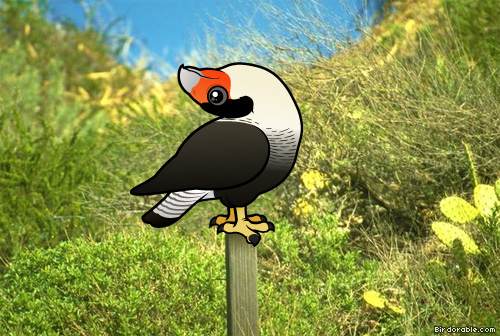
Crested Caracara head-throwback display

3) Caracaras are members of the falcon family.

4) Unlike many other falcon species, caracaras are not cavity nesters. They build stick nests high up in trees.

5) Like vultures, Crested Caracaras eat a lot of carrion.

6) The diet of a Crested Caracara may also include insects foraged through vegetation or eggs from ground-nesting birds.

7) Crested Caracaras look very distinctive, with dark bodies, a white neck, and a dark shaggy cap.

8) Baby Crested Caracaras have their dark cap from the time they hatch.
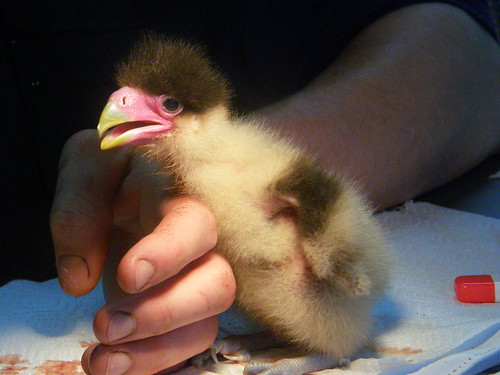
feeding time for the hungry baby caracara
feeding time for the hungry baby caracara by belgianchocolate [Creative Commons]

9) The national bird of Mexico is the Crested Caracara (an honor sometimes shared with the Golden Eagle).

10) To intimidate nest intruders, Crested Caracaras may clack their beaks, or break off dry twigs to make a snapping sound. If you can't get enough of Crested Caracaras, you're in luck! This unique species is one of our newest Birdorable birds! Check out our fun collection of cute Crested Caracara apparel and gifts.

Comments

billy bob on March 31, 2015 at 1:10 PM wrote:
i really like the caracara im researching it for my project. you gave me some great info. Thanks!!!!!!!!!!!!!!!!!!!!!!!!
billy bob on March 31, 2015 at 1:11 PM wrote:
billy bob isnt my real name
Nebu on December 8, 2015 at 3:46 PM wrote:
Hello. Do you know who raised that baby caracara? I rescued one and need as much information as possible. Thank you. You can see me feeding him at https://www.youtube.com/watch?v=pPDtrvph3oA&feature=youtu.be
Birdorable (Amy) on December 9, 2015 at 9:42 AM wrote:
Hi Nebu, the photo of the baby Caracara above was taken in a zoo. I would recommend that you contact a local wildlife rehabilitator or zoo for assistance with the Caracara. A young bird can imprint on humans and become unreleasable. It's best for the bird if you find some professional help. Good luck.
Vandana on May 14, 2016 at 1:25 PM wrote:
you have some great info for my power point thanks!!!!!!!!!!!!!!!!!
mkdaman on June 20, 2016 at 6:12 AM wrote:
i am epic like for banter
Louise Warner on February 27, 2017 at 8:08 AM wrote:
not a crested caracara, but a crested babababa babybaby!
tom on March 12, 2018 at 3:17 PM wrote:
Thanks for the great info really helped with my project<:
Andrew on September 26, 2018 at 4:32 PM wrote:
crested caracara is a medium bird
researching on July 27, 2020 at 2:16 PM wrote:
researching, thanks! Also using false email for reasons.
SPURWING PLOVER on November 21, 2023 at 11:37 PM wrote:
On the Mexican Flag Eating a Snake
Santiago Leal on January 28, 2026 at 12:05 AM wrote:
The national bird of Mexico is the golden eagle; it's even on its flag and coin.

Leave a comment

Comments with links or HTML will be deleted. Your comment will be published pending approval.
Your email address will not be published
You can unsubscribe from these communications at any time. For more information on how to unsubscribe, our privacy practices, and how we are committed to protecting and respecting your privacy, please review our Privacy Policy. By clicking submit below, you consent to allow Birdorable to store and process the personal information submitted above to provide you the content requested.

Did You Know? Pigeon Milk

Birdorable Rock Pigeon Did you know that some species of bird feed their chicks milk? It's true, but it's not the same kind of milk that mammal mothers feed their young. This baby bird food is secreted from the lining of...

T-Shirt Tuesday: Pair of Belted Kingfishers

If you live in North America and you love birds then you are probably familiar with the Belted Kingfisher, which can be found across the continent from coast to coast. This cute design features a pair of Birdorable Belted Kingfishers. Can you tell the difference between...

Species profile: White-throated Kingfisher

This week, we're celebrating the world's kingfishers! There are about 90 species of kingfisher in the world. These darling birds are often colorful, and they can be found all around the world. Join us as we highlight kingfishers on the Birdorable blog this week! Today we highlight the beautiful...

More Gull Frequently Asked Questions

When we had our first Gull Week in 2015, we answered some Frequently Asked Questions About Gulls. Today we're going to answer a few more fun FAQs about the species in this family of seabirds! What do gulls eat? Are...