Birdorable Indigo Macaw

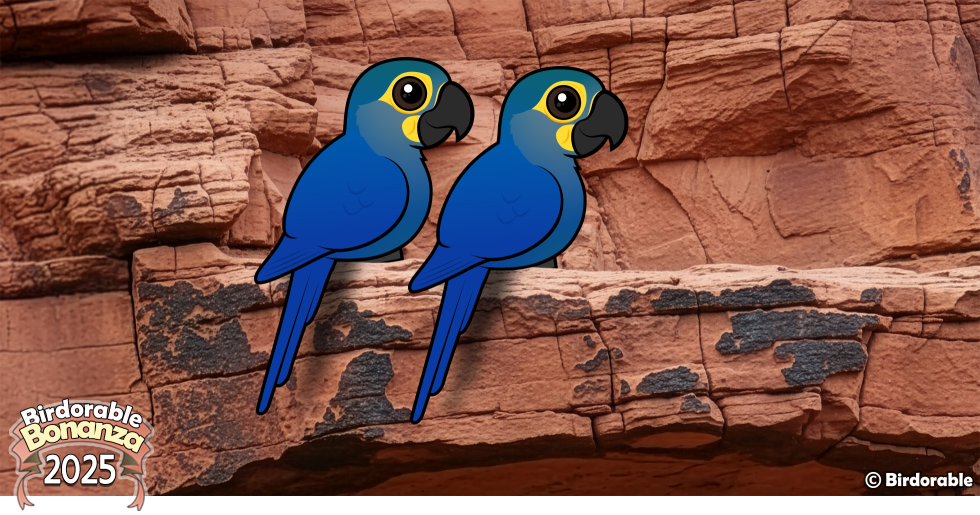
Today we’re excited to add a parrot to our family as part of our Bonanza. Help us welcome the Indigo Macaw to our parrot flock! This striking blue macaw, also known as Lear's Macaw, isn’t just a feast for the eyes, it also carries a fascinating story that makes it a perfect new addition to Birdorable.

The Indigo Macaw is one of the world’s rare blue macaws, a large parrot from northeast Brazil in South America. Its feathers are a deep metallic blue with a subtle greenish shade, and its head may appear slightly paler. A distinctive pale-yellow patch adorns the base of its strong black beak, and bright yellow eye-rings add a flash of contrast.

You might wonder about the Indigo Macaw's alternative common name. Why “Lear’s” Macaw?  Who was Lear? The name honors Edward Lear, a 19th-century English poet, illustrator, and bird-lover. As a teen in the early 1830s, Lear published a book filled with drawings and paintings of parrots in captivity. One of those illustrations resembles what we now know as Lear’s Macaw, though at the time it was mistakenly labeled as a Hyacinth Macaw, another large blue beauty. It wasn’t until 1856 that the French ornithologist Charles Lucien Bonaparte formally described the species and gave it its scientific name, Anodorhynchus leari, in honor of Lear’s earlier work.
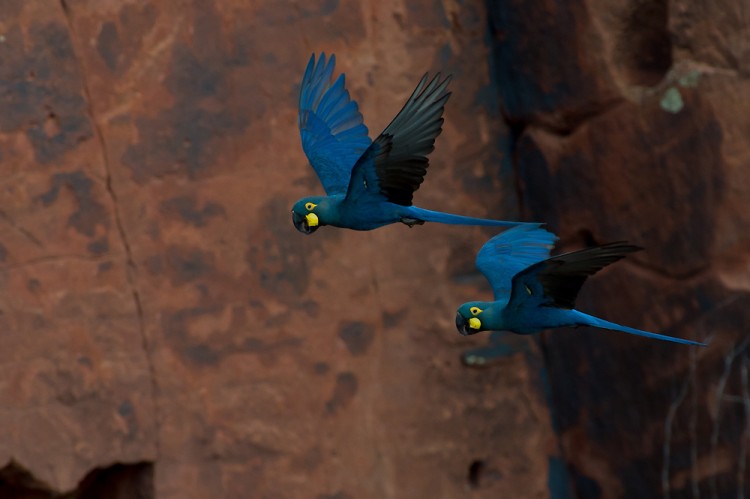
Indigo Macaws by Joao Quental [CC BY 2.0]

Despite appearing in art and captivity for many years, the real wild population of Indigo Macaws remained a mystery until 1978. That’s when the Brazilian ornithologist Helmut Sick located their home in a remote region of Bahia, Brazil, a dry, scrub-filled landscape known as the caatinga. There the birds roost and nest in sandstone cliffs, often in crevices high above the ground.

In the wild, Indigo Macaws mostly eat the hardy nuts from the licuri palm (a tree native to its region).  As with many macaws, their diet helps disperse seeds, a natural way they are an important part of their ecosystem.

The story of the Indigo Macaw is also one of hope and conservation. For a long time the species was extremely rare and poorly understood. By the late 20th century, many thought it might even be extinct in the wild. But thanks to dedicated conservation efforts, including habitat protection and monitoring of cliff roosts, numbers have slowly increased.

Welcome to the Birdorable family, Indigo Macaw! We hope that sharing the beauty and background of this species will help draw attention to the amazing world of birds and the need to protect them.

Indigo Macaw Swag

You can find new Indigo Macaw swag in our Amazon and Zazzle shops, both linked in our Birdorable store here. Some items from both shops are shared below.

You can also find this dynamic & funny "macaw-some" design, exclusively in our Etsy shop. Shown here on a kid's shirt, you can also pick up this design on t-shirts for adults, and adult sized sweatshirts and hoodies. As always, if you'd like to see this design on a different garment or gift item, please let us know!

For tomorrow, get ready for a petite island endemic with a misleading name. This fisher is much more interested in frogs than fish. Any ideas?

2023 Bonanza Bird #7

The Red-Bellied Macaw: A Glimpse into the Colorful World of a Tropical Parrot

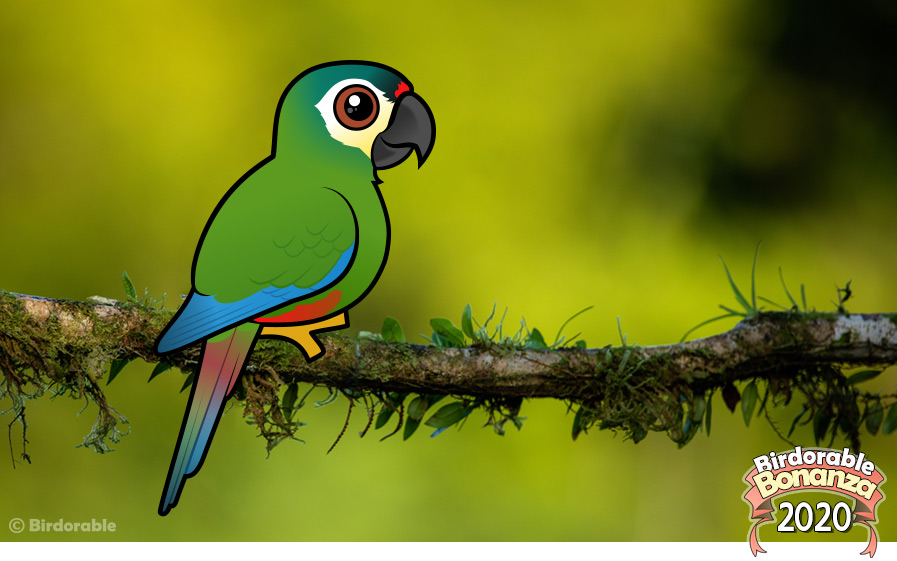
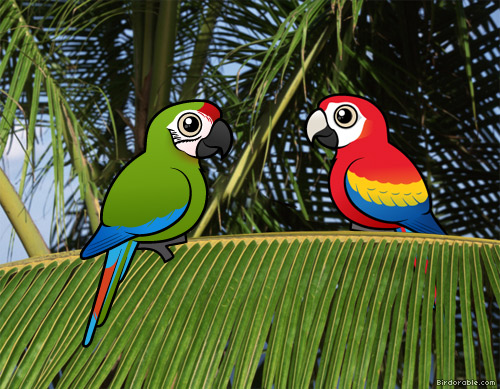
Today a species of Macaw joins Birdorable. The Red-bellied Macaw is our 15th species of Macaw.

The Red-bellied Macaw is a vibrant bird native to South America's tropical rainforests. Known for its bright green plumage, distinctive namesake red belly, and mustard-yellow bare face, this medium-sized parrot blends beautifully into the forest canopy.

This macaw primarily inhabits areas rich in palm trees, as its diet largely consists of the fruits and seeds of two different palm species (the moriche palm and the Caribbean royal palm). The bird's strong beak is especially adapted for cracking the hard, oily nuts of these plants, making it a specialized feeder within its ecosystem. Red-bellied Macaws also rely on palms for nesting -- they nest inside cavities of dead moriche palm trees.

Cute Red-bellied Macaw gifts

Guess tomorrow's bird ...

This charismatic bird calls the woodlands and scrublands of Mexico and Central America home. It has an extraordinarily long tail, which is nearly the length of its body, making it one of the longest tailed birds in the world. Tomorrow, we'll reveal the identity of this beautiful jay. Can you guess which bird species we're featuring tomorrow?

Birdorable Blue-winged Macaw

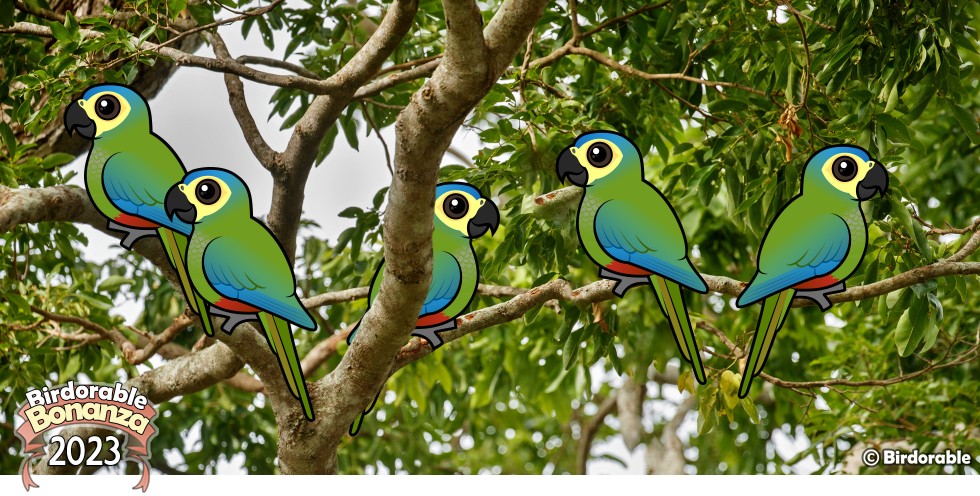
Today’s new bird is a small species of macaw. We welcome the Blue-winged Macaw to Birdorable!

Blue-winged Macaws are found in forest habitat in parts of Argentina, Paraguay, and Brazil. They feed on a variety of plant-powered foods, like seeds, fruits, and nuts. They can be recognized by their namesake blue wings and a small red patch at the forehead.

Blue-winged Macaws are popular in aviculture, where they are known as Illiger's Macaw. This name comes from the German Johann Karl Wilhelm Illiger. As pets, they are known to enjoy interaction with their owners. They are also known for their intelligence.

Tomorrow’s new species is found in Indonesian forest habitat. Common birds in their family are typically mostly grey, but these birds are colorful, as well as cute. They are named partly for their coloration and partly for their favorite food. Can you guess the species?

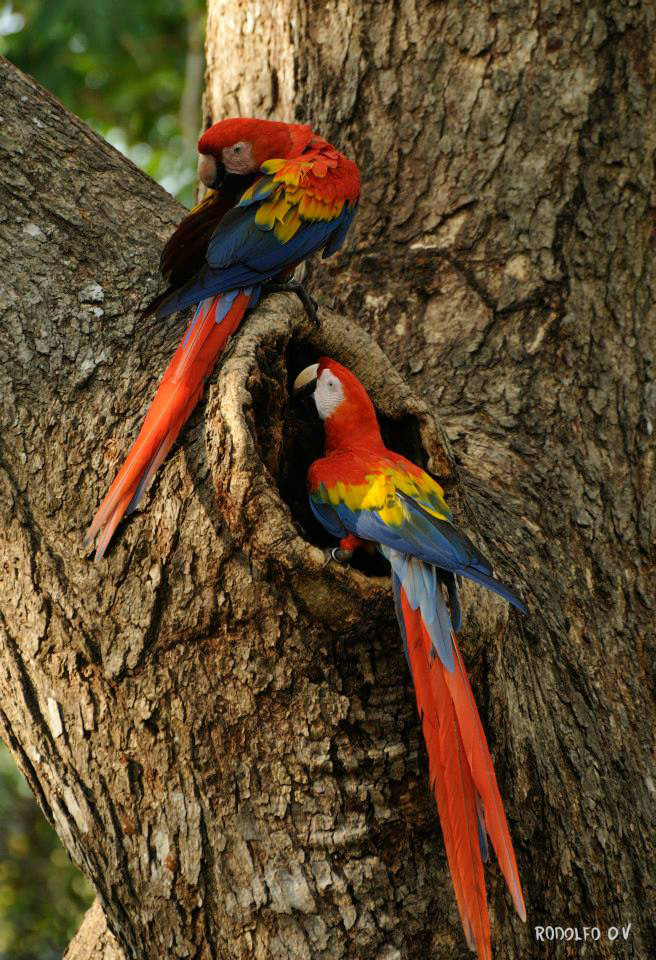
NATUWA Macaw Sanctuary works to protect native wildlife in Costa Rica. In this guest post, Rodolfo Orozco Vega from the project shares some of the important conservation work they perform with two species of bird.

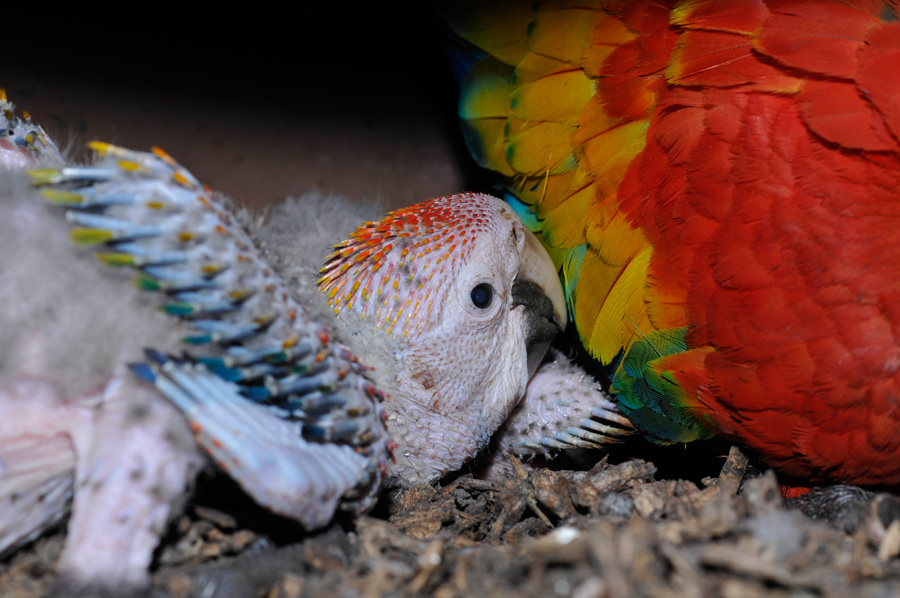
The Macaw Sanctuary NATUWA is an organization formed by Costa Ricans for the conservation of Costa Rica's biodiversity. Mainly NATUWA has worked with two species of Costa Rican macaw: the Scarlet Macaw (Ara macao) and the Great Green Macaw (Ara ambiguus) since 1994.

18 years ago in the community of Aranjuez de Puntarenas, NATUWA created a program to release Scarlet Macaws. With great success, and under the protection of the community of Aranjuez, the birds released by NATUWA are procreating by themselves and increasing the population of wild macaws.

The people of the community understand that with the arrival of the macaws, there are economic benefits for their families -- ecotourism activities focused on the protection of the species. If the birds are protected in the wild, everyone wins: the tourist; the local people; and the macaws.

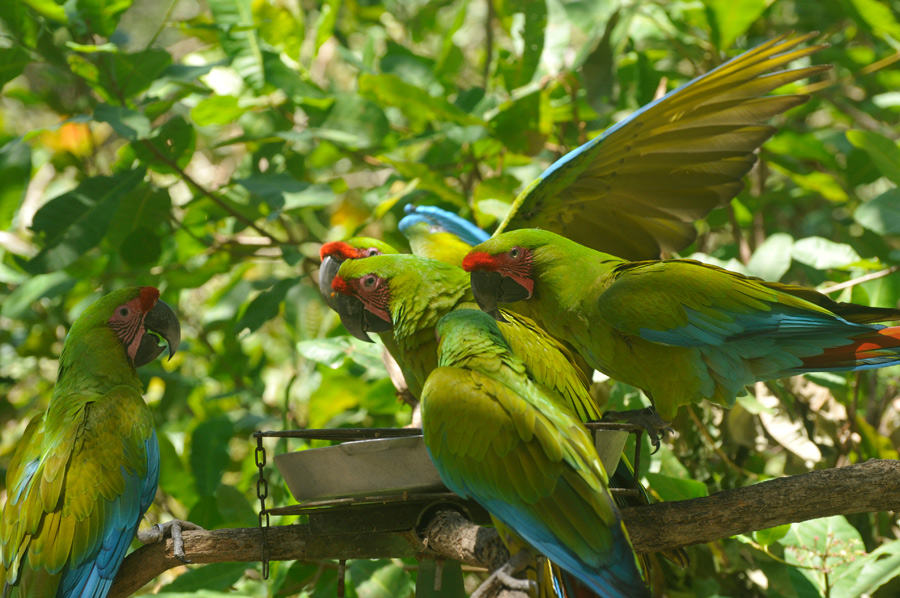
In addition, NATUWA has a reproduction program of Great Green Macaws for their release in the wild. Currently, it provides the largest enclosure in Central America in donut shape (200 meters in circumference) where they prepare the birds for their future release in the Atlantic zone of Costa Rica. If you want to know more about this beautiful project, visit http://www.natuwa.org

- Rodolfo Orozco Vega

Birdorable Blue-headed Macaw

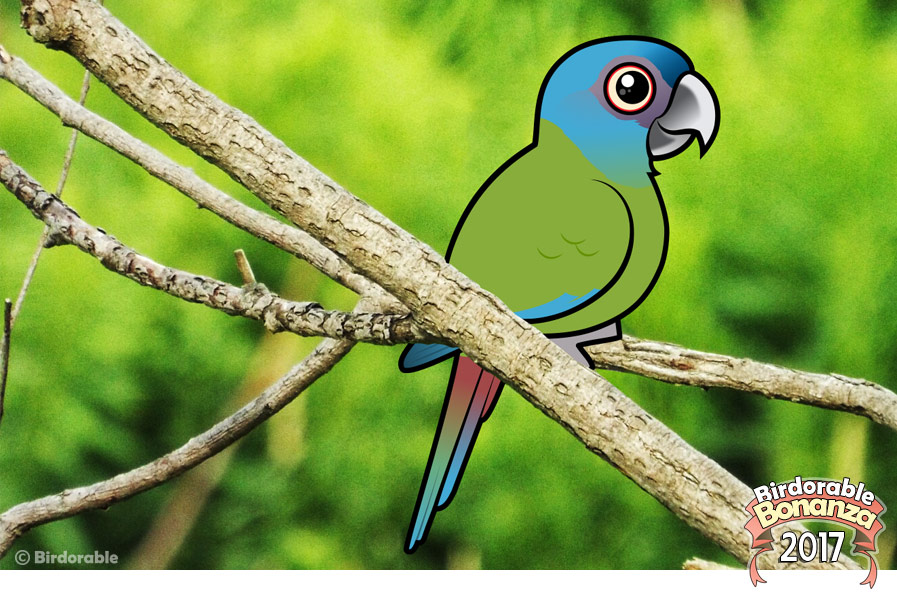
Today this pretty parrot joins Birdorable as the 4th bird in our 2017 Birdorable Bonanza: the Blue-headed Macaw!

Blue-headed Macaws are small macaws found in western parts of South America, where their preferred habitat is humid forest. They are often found near water.

Also known as Coulon's Macaw, this species is secretive in the wild and little is known of basic behaviors like breeding and feeding. As of November 2017 they are considered to be Vulnerable to Extinction by the IUCN Red List.

Tomorrow we'll add a widespread species related to starlings that is invasive in much of its current range. Can you guess the species?

Cute Blue-headed Macaw Gifts

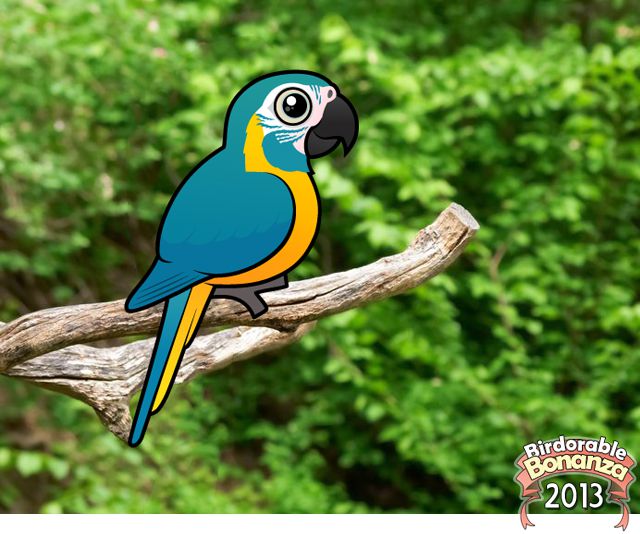
We're adding new birds each day until we reach our 500th Birdorable species! Today's Bonanza bird is the Blue-throated Macaw.

Birdorable Blue-throated Macaw

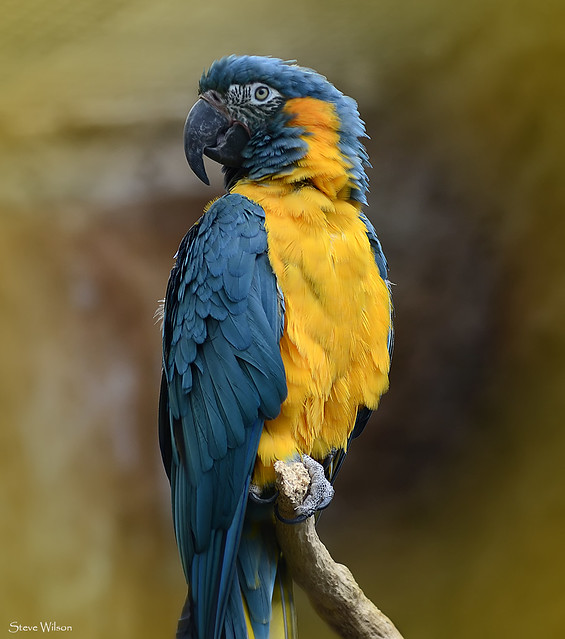
The Blue-throated Macaw is a large species of macaw endemic to Bolivia. These bright and beautiful birds are critically endangered in the wild. Some estimates put the wild population at less than 350 individuals.

Blue throated Macaw
Blue throated Macaw by Steve Wilson (CC BY 2.0)

The population suffered from exploitation from the pet trade in the past. Today, habitat loss is another factor in their critical situation. These beautiful parrots are popular in aviculture and the captive population is much greater than the current wild population. They can live up to 80 years.

blue-throated macaw

Color + behavior = the name of the common Eurasian species that will be added to Birdorable tomorrow.

bonanza-2013-preview-18

The ARA Project is a conservation group working to conserve two macaw species in Costa Rica: the Scarlet Macaw and the endangered Great Green Macaw. The group has been successfully breeding macaws for almost 30 years.

Birdorable Macaws

In 2011 they became the first group in the world to reintroduce Great Green Macaws back into the wild. With a population of fewer than 4000 individuals and a declining population trend, the successful work by The ARA Project is desperately needed to help the continued survival of the Great Green Macaw. Unfortunately, The ARA Project recently received an eviction notice on their main breeding facility. The group has secured a new site but desperately needs funding to build a new breeding facility and other infrastructure to keep the organization running. If you would like to help, you can donate to their Indiegogo campaign 180 Endangered Macaws are Being Made Homeless or directly on The ARA Project website using Paypal.

Cute Quilt!

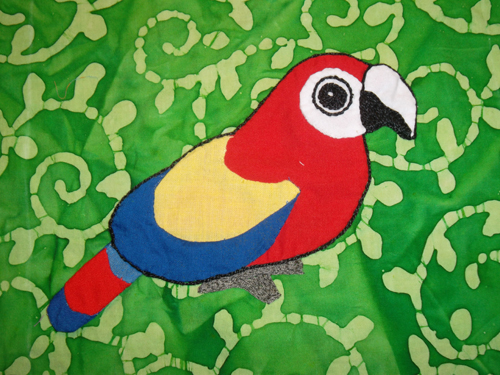
Earlier this year we were asked by quilter Kate C. if she could use our cute Scarlet Macaw illustration as an inspiration for part of a quilt she was making for her granddaughter. We kindly agreed! Kate send us this photo of the macaw in the finished quilt. Isn't that cute?!

Thank you, Kate!