


Birdorable Bonanza 2025 Bird #6
Get to Know the Canvasback: A Big North American Diving Duck
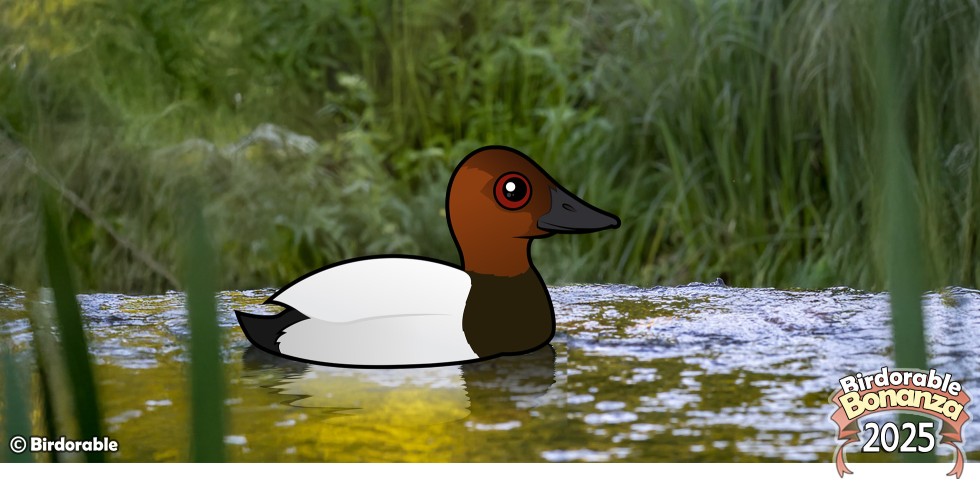
We’re diving headfirst into day six of our Birdorable Bonanza with a quacking new addition! The Canvasback paddles its way into our flock, bringing sleek style and ducky charm. Get ready to fall for this unique diving duck!
The Canvasback is a striking diving duck native to North America, easily recognized by its sloping forehead, red eyes, and long, dark bill. Males have a rich chestnut-red head and neck, black chest, and light grayish-white body, which looks almost canvas-colored, hence the name. Females are more muted, with brownish heads and pale bodies. Both sexes have a sleek profile that helps them dive with ease. On both sexes, the long sloping profile from the top of the head down to the bill is unlike most other ducks, giving it a sleek, aerodynamic look. This feature, combined with its bold plumage, makes it a favorite among birders and wildlife photographers.
Canvasbacks breed mainly in the prairie pothole region of Canada and the northern United States. They prefer wetlands with dense aquatic vegetation, where they build floating nests anchored to reeds or cattails.
Canvasbacks are part of the diving duck group, meaning they dive underwater to forage for food instead of dabbling at the surface like some other ducks. These ducks rely heavily on plants like wild celery, pondweeds, and tubers for food during the breeding season. Wild celery is especially important, offering the nutrients they need for successful nesting and rearing of ducklings. In fact, part of their scientific name, Aythya valisineria, is taken from the scientific name of wild celery, Vallisneria americana.
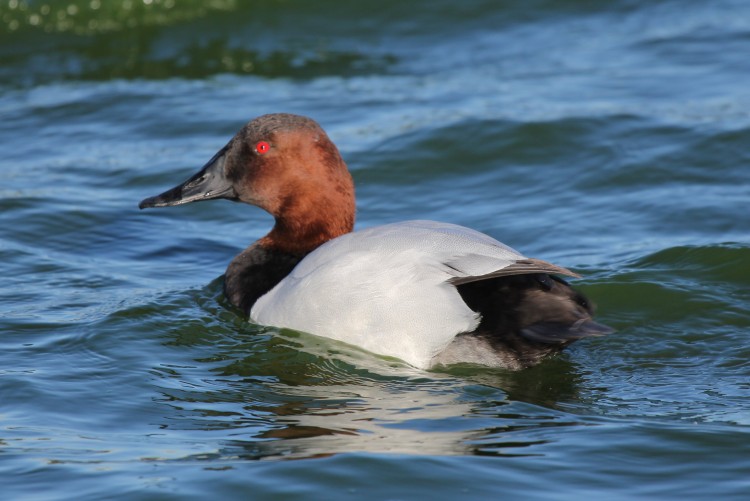
Canvasback by Jason Crotty [CC BY 2.0]
In winter, Canvasbacks migrate to the southern U.S. and parts of Mexico. They are considered strong fliers and can reach speeds up to 70 mph in flight. Their powerful build helps them cover long distances during migration. They gather in large numbers on lakes, reservoirs, and coastal bays, especially along the Gulf Coast and the Chesapeake Bay. They often mix with other diving ducks like Redheads and Scaup. Canvasbacks are powerful divers and swimmers, using their large webbed feet to reach aquatic plants below the water’s surface.
Once considered one of the most prized game birds in North America, Canvasback populations dropped in the early 1900s due to overhunting and habitat destruction. Conservation efforts, including hunting regulations and wetland protection, have helped their numbers recover to some extent. However, ongoing threats like climate change and habitat degradation continue to challenge their survival. Protecting breeding and wintering areas remains essential for the species.
Canvasback Shirts & Gifts
You can find new Canvasback items in our Amazon and Zazzle shops, both linked in our Birdorable store here. Some items from both shops are shared below.




It's time to get ready for tomorrow’s Birdorable Bonanza reveal! Our next little singer may not be the showiest bird in the patch, but it’s full of charm and loves a leafy hideaway. Subtle colors, sweet songs, and a name that hints at a favorite hangout, though its not always found in gardens. Can you guess which Old World bird is joining us next?



Comments
Leave a comment
Thank you!