


Birdorable Bonanza 2025 Bird #3
Soaring High: Meet the Beautiful Brahminy Kite
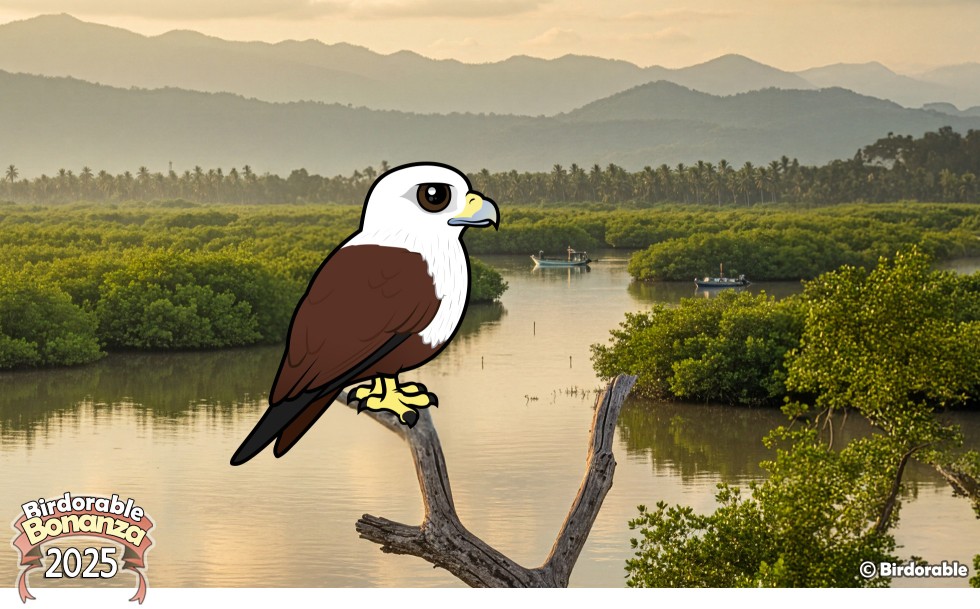
We’re excited to introduce the third bird of our 2025 Birdorable Bonanza: the striking and graceful Brahminy Kite. A medium-sized bird of prey, the Brahminy Kite is a perfect blend of elegance, power, and cultural meaning. It's a a worthy addition to any birder’s life list... or t-shirt collection! ;o)
The adult Brahminy Kite is easy to spot: it has a rich reddish-brown or chestnut body and wings, contrasted sharply by a clean white head and breast, plus darker wingtips. Its tail is rounded (not forked like some kites), and its flight is typically the angled, soaring glide characteristic of kites. Juveniles are browner and more muted, which can make them look somewhat different from adults.
The range of this kite is broad, from the Indian subcontinent through Southeast Asia and into parts of Australia. It tends to live where there is water: coasts, wetlands, mangroves, rivers, or marshes. The Brahminy Kite is primarily a scavenger: it feeds on fish, crabs, carrion, and sometimes small live prey. It may even snatch up leftovers near human-altered habitats, which helps explain why it can adapt to changing environments.

Brahminy Kites on the Daintree River
We were lucky to see a pair of these on a boat trip on the Daintree River when visited tropical north Queensland during our Australia adventure in October!
When it's time for breeding, Brahminy Kites build large platform nests from sticks in tall trees (often over water or in mangroves) and tend to reuse and enlarge the same nests year after year. Nesting seasons vary by region. In South Asia it’s usually between December and April; in Australia, breeding seasons shift depending on the area.
One especially fascinating part of this bird’s story is its name “Brahminy Kite.” “Brahminy” refers to “Brahmin,” the priestly caste in Hindu culture. The name was likely inspired by the bird’s regal and clean look; the white head and breast echo the purity and status associated with Brahmins. In parts of South Asia, the Brahminy Kite is regarded as sacred, sometimes associated with divine symbolism or holy mythology. That cultural reverence adds a layer of meaning; the bird isn’t just biologically interesting, it carries spiritual and symbolic weight as well.
For backyard birders, travelers, or anyone with an eye for majestic creatures, the Brahminy Kite offers a vivid reminder that even common birds can be marvelous. Its striking colors, adaptability, and fascinating cultural history make it a great bird to know about.
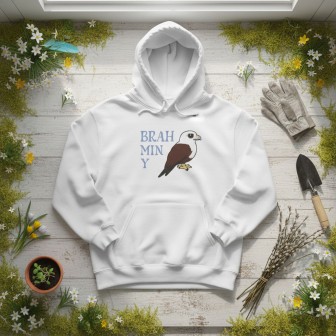
Brahminy Kite Gifts
You can find new Brahminy Kite items in our Amazon and Zazzle shops, both linked in our Birdorable store here. Some items from both shops are shared below.
You can also find this unique stacked name design exclusively in our Etsy shop. Shown here on an adult sized hoodie, you can also pick up this design on t-shirts for adults and kids, and adult sized sweatshirts, all in three different color choices (royal, charcoal, and white shown here). As always, if you'd like to see this design on another garment style or novelty item, please let us know!


Our Birdorable Bonanza will continue tomorrow with bird #4, a brilliant blue parrot with a name that hints at a deep, jewel toned color. It is alternatively known by a name honoring a famous poet and sometimes-naturalist. Can you guess which striking species will make its debut next?


Comments
Leave a comment
Thank you!