Happy Magpie Day!

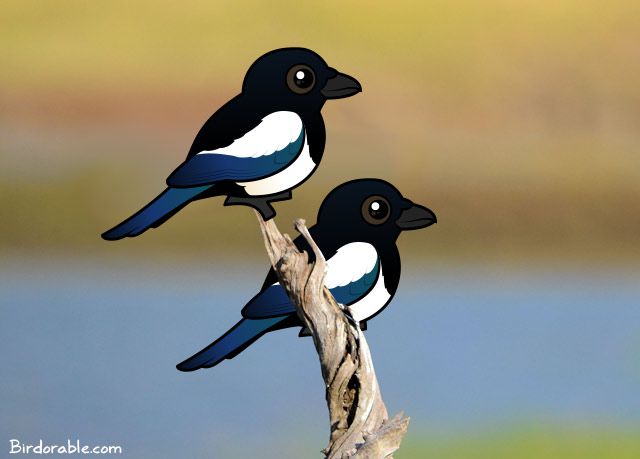
Two black-billed Magpies on a branch

Today, March 14, is traditionally celebrated as Pi Day -- because when the date is written 3/14, it represents the first three significant numbers of Pi. Pie day may be celebrated by eating pie, but since we like birds, today seems like a good day to celebrate the family of birds that has pie right in the name: Magpies!

There are three groups of true magpies. The four species of magpie in the genus Pica are the Holarctic, or black-and-white, magpies. The nine species of Oriental magpie are generally blue-green and are in the Urocissa genus and the Cissa genus. The azure-winged magpie belongs in the genus Cyanopica. Here are some fun facts about this group of intelligent and curious birds.

  • Magpies belong to the Corvid family, which makes them closely related to birds like jays, crows, and ravens.
  • The cartoon characters Heckle and Jeckle are a pair of magpies.
  • There are several collective nouns used to describe a group of magpies, including "a gulp of magpies" and "a mischief of magpies."
  • Magpies aren't the only birds with "pie" in their name. Another group in the Corvid family is the treepies. One bird in this group has a confusing name: the Black Magpie of Asia.
  • Another bird with a confusing name is the Australian Magpie. This species isn't a magpie at all! Although its black-and-white plumage is very magpie-like, this species belongs in a different genus and is closely related to the Butcherbirds of Australasia.
  • A recent taxonomical split may have added a new species of magpie to the list. The Azure-winged Magpie has an usual fragmented range with part of the population in southwestern Europe and part over in eastern Asia. Some ornithologists consider the two populations to be separate species, naming the European bird the Iberian Magpie.
  • The Javan Green Magpie is the most endangered species of magpie. Endemic to Indonesia, it is considered to be Critically Endangered by the IUCN. Other endemic species of magpie include the Sri Lanka Blue Magpie, found only in Sri Lanka, and the Yellow-billed Magpie, found only in the U.S. state of California.

Cute Mag PI Gifts by Birdorable

Comments

Louise Warner on February 6, 2017 at 6:06 PM wrote:
what s magpi day?
Louise Warner on February 25, 2017 at 12:40 PM wrote:
still don't know what magpie day is?
Spurwing Plover on January 24, 2022 at 7:13 AM wrote:
I have seen Magpies they hang around where the Livestock is some times
Spurwing Plover on January 25, 2022 at 8:26 AM wrote:
I saw one picture on the Internet a man puts on the Magpie Pendant he found dropped by a Racoon and he Turns into a Magpie
Spurwing Plover on May 26, 2022 at 11:29 PM wrote:
In Australia Beware of the Magpies they dont seem to like Cyclists

Leave a comment

Comments with links or HTML will be deleted. Your comment will be published pending approval.
Your email address will not be published
You can unsubscribe from these communications at any time. For more information on how to unsubscribe, our privacy practices, and how we are committed to protecting and respecting your privacy, please review our Privacy Policy. By clicking submit below, you consent to allow Birdorable to store and process the personal information submitted above to provide you the content requested.

Avian Vagrancy: Why Birds Sometimes Wander Far from Home

What Vagrancy Means In Bird Terms In the birding world, the term "vagrant" refers to a bird that has strayed far outside its usual range or migratory path. These wayward travelers often end up in unexpected places due to various factors such as weather events, navigational errors, or a...

T-Shirt Tuesday: Cute Backyard Birds

This adorable t-shirt design features four of our Birdorable birds that are common in back yards across the United States and Canada. The birds that are perched together in this original cartoon design are: American Goldfinch,

Designing with Birds in Mind: Solutions for Safer Glass Structures

It's Infrastructure Week on our blog! The series will dive into the fascinating intersection of urban development and bird conservation and other topics related to infrastructure and birds.  As our cities expand and evolve, so too does the need to consider our feathered friends in our architectural and...

Nature's Snowy Disguise: Turning White for Winter

Some birds have an incredible trick for surviving the winter: they change the color of their feathers to blend in with snowy landscapes. This seasonal camouflage helps them avoid predators and stay warm in harsh environments. One of the most famous examples is the Rock Ptarmigan. Rock Ptarmigans...