Birdorable Bonanza 2025 Bird #10

The Hadada Ibis: An Iconic Voice of Africa
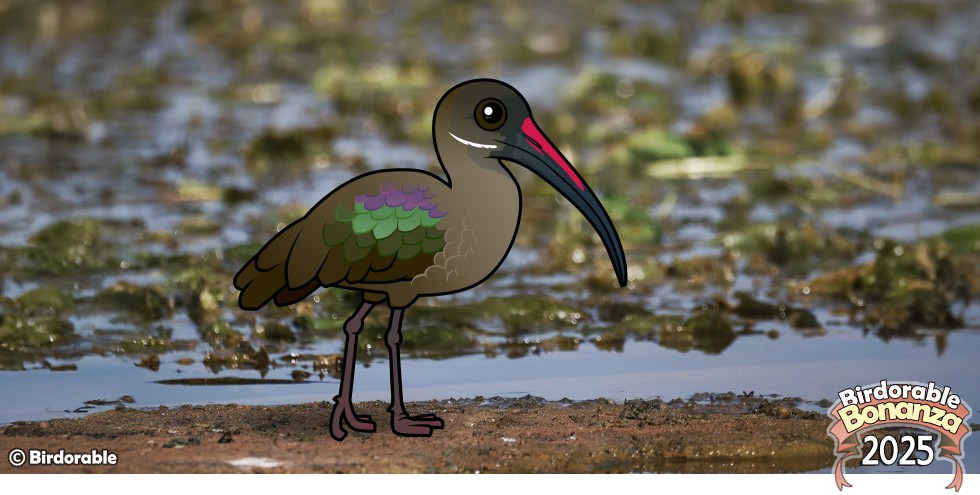
Birdorable Hadada Ibis

Today our 2025 Birdorable Bonanza comes to a close with the introduction of our 840th species: the Hadada Ibis!

The Hadada Ibis is a large, loud bird found across much of Sub-Saharan Africa. It’s instantly recognizable not only by its size, shape, and slightly curved bill, but also by its unmistakable call, for which it is named: a harsh "haa-haa-haa-de-dah" sound. These birds are often heard flying overhead or calling from rooftops, especially in the early morning or evening.

Hadada Ibises are primarily greyish-brown with an iridescent green or purple sheen on their wings that shines in the sunlight. They have long, sturdy legs and a heavy, curved bill adapted for probing the soil. They often forage in gardens, parks, wetlands, and even along roadsides. Their favorite foods include insects, earthworms, and other invertebrates, which they find by poking their bills into soft ground.

While their calls can be jarring, especially in suburban areas, Hadada Ibises are well-loved by many for their quirky personalities and adaptability. They've taken to urban environments easily, commonly seen in backyards and on golf courses where lawns make great foraging grounds. Their increasing presence in cities shows how well some wild birds can coexist with humans when given the chance.
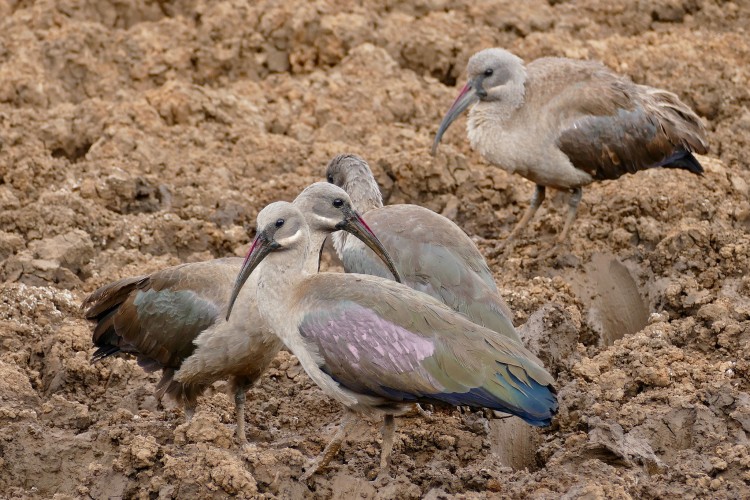
Hadada Ibises by Bernard DUPONT [CC BY-SA 2.0]

In flight, Hadada Ibises display slow, powerful wingbeats and fly with their necks outstretched. They often travel in pairs or small groups and are very vocal while flying. Their noisy habits may not be ideal for light sleepers, but their presence is a reminder of how wildlife can still thrive alongside human activity.

Breeding typically takes place during the rainy season. Hadada Ibises build large stick nests in trees, often close to water. Both parents share duties, including incubating the eggs and feeding the chicks. The young are fed through regurgitation and fledge after about six weeks.

Although not considered threatened, Hadada Ibises benefit from access to open spaces and healthy green areas. Their growing populations in urban areas have even made them unofficial ambassadors of biodiversity in some African cities. While they might be loud neighbors, they're also a fascinating and charismatic part of Africa’s birdlife.

Hadada Ibis Gifts

Comments

Boris Kapriev on December 10, 2025 at 12:19 PM wrote:
Welp, what now? Mind if you add another Christmas Poster?
Sabrina Salsa on December 12, 2025 at 6:06 AM wrote:
Hi, Arthur, Next Birdorable Bonanza in 18th Annual 2026 I Hoping Next 20 New Birds Because 20th Anniversary too?
Birdorable on December 12, 2025 at 1:33 PM wrote:
Thank you Sabrina, that's a great idea. We'll see what we can do. Thank you for following the blog. 🙂
Sharon Yanez on December 14, 2025 at 8:39 AM wrote:
Oh No.
Sabrina Salsa on December 15, 2025 at 8:43 PM wrote:
This good ideas, Birdorable List New Birds Species Would be Added in Birdorable Bonanza 2026 18th Annual (20th Anniversary) For Recommended Adding like Turquoise-browed Motmot, Rock Ptarmigan, Goldcrest, Ural Owl, Chukar Partridge, Greater Rhea, Great Cormorant and Along Other Birds Decide to chose (like Crimson Sunbird, Clay-colored Thrush, Red-footed Bobby too)?
Spurwing Plover on January 12, 2026 at 7:35 PM wrote:
The Ibis and the Curlew both have down curved Bills
CHAUNGOTAI1452 on January 31, 2026 at 8:18 PM wrote:
Yay! I Got Finished The Birdorable Bonanza 2025!!! And A HAPPY NEW YEAR 2026!!!!!!!!
LooneytunesFan on March 20, 2026 at 4:08 AM wrote:
Hopefully Adding New Birds in 2026 There’s More Honeyeaters, MORE Cuckoos, More Bird Of Paradises, Penguins, Ratties, Weavers, Grouse, Albatrosses & Allies, And More.

Leave a comment

Comments with links or HTML will be deleted. Your comment will be published pending approval.
Your email address will not be published
You can unsubscribe from these communications at any time. For more information on how to unsubscribe, our privacy practices, and how we are committed to protecting and respecting your privacy, please review our Privacy Policy. By clicking submit below, you consent to allow Birdorable to store and process the personal information submitted above to provide you the content requested.

Meet the Hooded Vulture: Africa's Scruffy Scavenger Species Profile

The Hooded Vulture is one of Africa’s most distinctive scavengers, easily recognized by its bare, pinkish head and scruffy, hood-like feathers that give this bird its name. Found across sub-Saharan Africa, the Hooded Vulture is typically seen patrolling the skies or perched near human settlements, where it...

Design Spotlight: Just Yapping Around

Meet the Black-necked Stilt: Nature’s Noisy Neighbor At Birdorable, we love capturing the unique personalities of birds in our designs, and our latest creation, added recently and being highlighted as our Avocet & Stilt Week comes to a close, is no exception! The Black-necked Stilt is a bird that...

Summer Bird Feeding Tips and Safety Reminders

Feeding birds in the summer can be just as rewarding as in winter, but the warmer weather brings different challenges. Birds still appreciate easy access to food, especially during breeding season when they’re raising hungry chicks. However, it’s important to follow some summer-specific tips to keep...

Discover the Red-headed Woodpecker: A Striking Bird with Unique Habits

The Red-headed Woodpecker is one of the most striking birds in North America, easily recognizable by its bold crimson head, white body, and black wings with large white patches. This vibrant bird stands out in both appearance and behavior, making it a favorite among birdwatchers. With its...