2020 Bonanza Bird #15

Asia's Feathered Gem: Introducing the Birdorable Red-billed Blue-Magpie
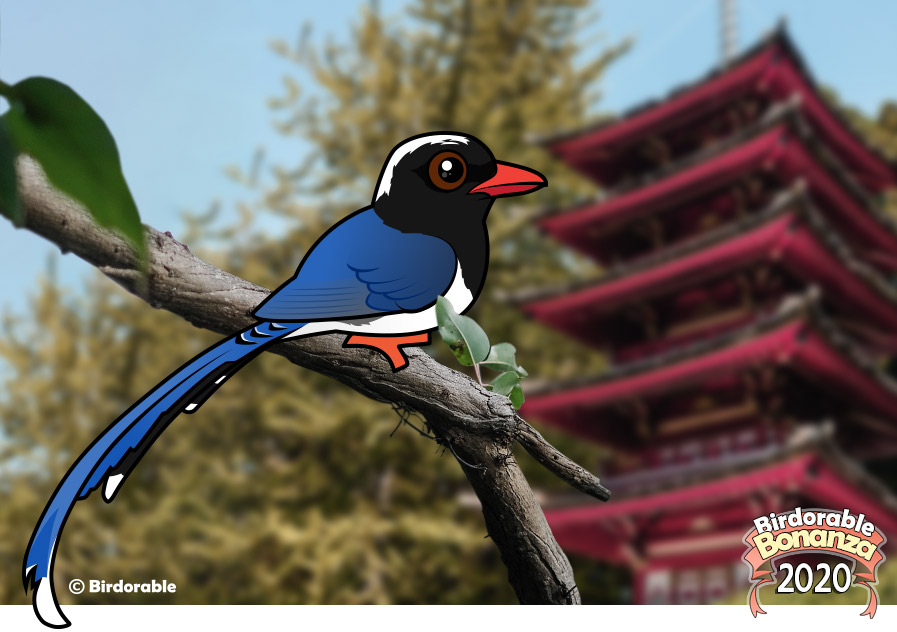
Birdorable Red-billed Blue-Magpie

The Red-billed Blue-Magpie, scientifically known as Urocissa erythroryncha, is a beautiful member of the corvid family. These striking birds are primarily found in various parts of Asia, where their vibrant plumage and distinctive features make them a true marvel of nature.

One of the most remarkable characteristics of the Red-billed Blue-Magpie is its extraordinarily long tail, which stands out as one of the lengthiest among all corvid species. This impressive tail adds to their overall elegance and sets them apart from their avian relatives.

The plumage of these magpies is a captivating blend of dark blue, black, and white. Their striking appearance, characterized by contrasting colors, ensures that they are easily distinguishable in their habitat. The bright red-orange bill provides a stark contrast to their predominantly dark plumage, making it a standout feature.

Red-billed Blue-Magpies are known for their social nature and are often observed in the company of their peers. These birds form small feeding flocks, typically consisting of 6-8 individuals. Their gregarious behavior allows them to forage more effectively and increases their chances of locating food sources.

The Red-billed Blue-Magpie's natural habitat includes a range of wooded environments, from lush forests to wooded hillsides. They can be found in various regions across Asia, where they thrive in the diverse landscapes provided by the continent.
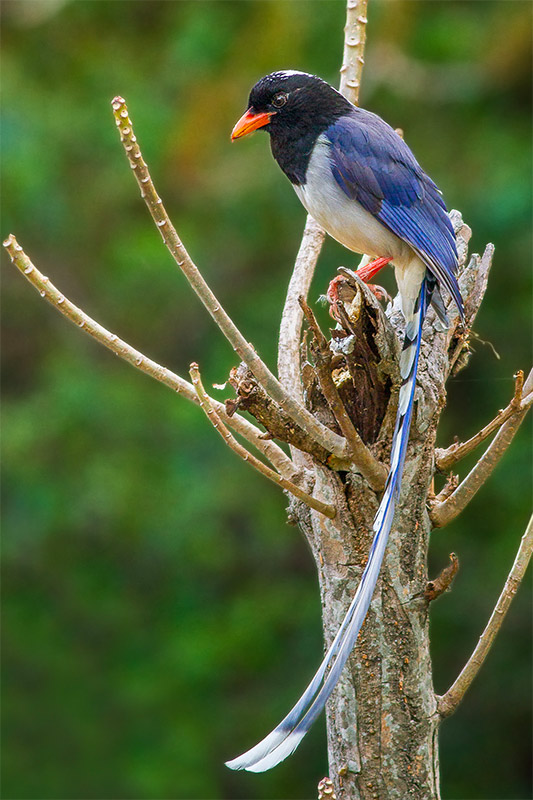
Red-billed Blue Magpie
Red-billed Blue Magpie in Timlipani, Uttarakhand, India by soumyajit nandy (CC BY-SA 2.0)

Tomorrow we’ll add a species of swallow found in open habitat in South America. This cutie is named after the color of its rump! Can you guess the species from this cheeky clue?
Cute Red-billed Blue-Magpie Gifts

Comments

Just Another Birder on December 8, 2020 at 2:38 PM wrote:
This one stumped me earlier! Is the next one a White-Rumped Swallow?
Birdorable (Arthur) on December 9, 2020 at 7:19 PM wrote:
Yes, you were correct, Just Another Birder. It is the White-rumped Swallow.
Spurwing Plover on May 21, 2022 at 9:32 PM wrote:
Just one of the more colorful Corvids

Leave a comment

Comments with links or HTML will be deleted. Your comment will be published pending approval.
Your email address will not be published
You can unsubscribe from these communications at any time. For more information on how to unsubscribe, our privacy practices, and how we are committed to protecting and respecting your privacy, please review our Privacy Policy. By clicking submit below, you consent to allow Birdorable to store and process the personal information submitted above to provide you the content requested.

Truth or Tale? The Egyptian Plover and the Myth of the Crocodile Bird

The Egyptian Plover is a beautiful species of wader that lives in parts of sub-Saharan Africa. Despite the common name, their present range does not extend to any part of Egypt. The bird is sometimes known by another name: Crocodile Bird. During his travels to Egypt in 459...

Crane Week 2018: Introduction

Join us in the following days as we celebrate all things cranes! It's time for our second ever Crane Week! Our first Crane Week was back in 2015. We chose today to kick off Crane Week because the birds are honored each year in...

Nature's Prism: Inside the Life of a Violet-green Swallow

The Violet-green Swallow (Tachycineta thalassina), with its iridescent plumage that shimmers in hues of green and violet under the sunlight, is a stunning sight for birdwatchers and nature lovers alike. This bird is not only admired for its stunning appearance but also for its remarkable traits and...

Meet the Lesser Spotted Woodpecker: Europe's Smallest Woodpecker

Today an Old World woodpecker joins Birdorable! We welcome the Lesser Spotted Woodpecker to our flock. Lesser Spotted Woodpeckers have a large range in temperate and boreal forests across much of Europe and Asia. At least 10 subspecies are recognized, with a...