


Meet North America’s Tiny Champion: The Downy Woodpecker!
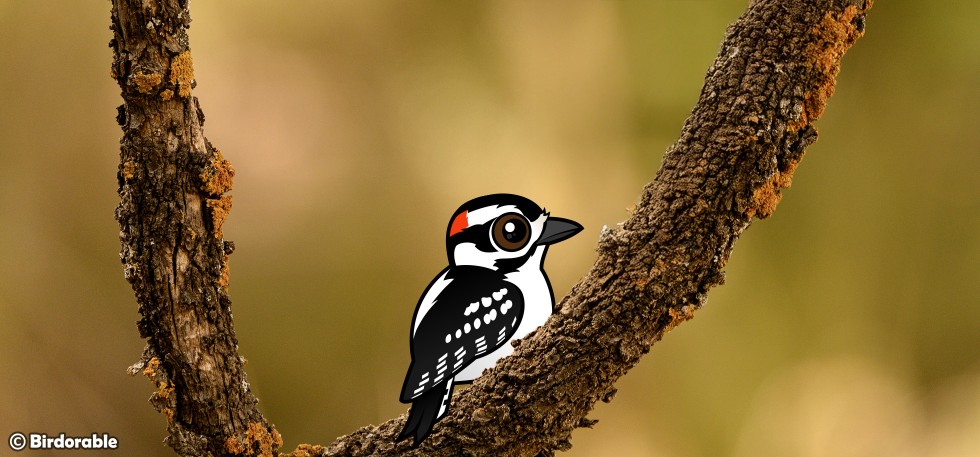
With hundreds of woodpecker species drumming on tree trunks across the globe, today we're featuring a bird that holds a special title: the Downy Woodpecker is North America's smallest woodpecker!
No bigger than a house sparrow, and a good bit lighter than one at that, these energetic little birds pack a huge personality into a tiny, feather-packed package.
Where Do They Live?
The Downy Woodpecker (Dryobates pubescens) is native to North America. Its range spans most of the continent north of Mexico, from the dense forests of Alaska and Canada all the way down to Florida and California. There are just two big gaps on the map: the parched deserts of the Southwest, and the treeless tundra of the far north, both tough places for a bird that makes its entire living on wood!
Across their range, they are resident birds, meaning they don't migrate long distances for the winter. Once a Downy Woodpecker finds a forest, park, or suburban neighborhood with plenty of trees, it stays put year-round!
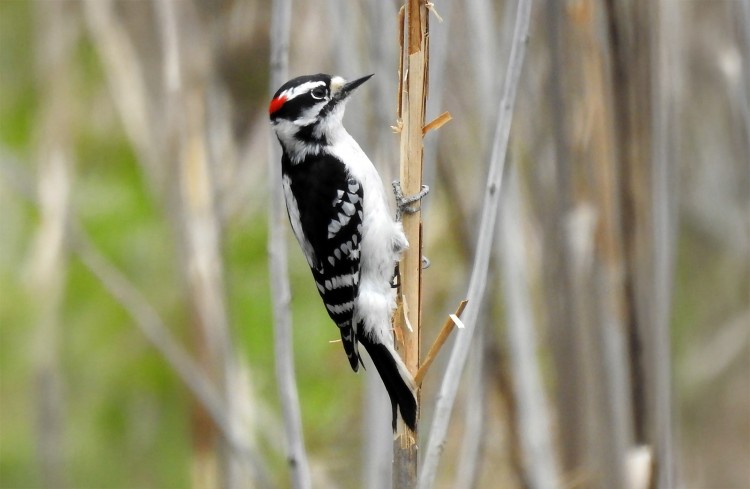
Male Downy Woodpecker
How to Spot One
At just 5.5 to 6.7 inches (14 to 17 cm) long and weighing less than an ounce (under 30 grams), the Downy Woodpecker is built for quick movements and nimble climbing. Key field marks include:
- Bold Pattern: A bright white belly, dark black wings speckled with crisp white spots, and a thick white stripe running down the middle of its back.
- Head Markings: Distinct black and white facial stripes.
- Male vs. Female: Males sport a small, fiery red patch on the back of their head (the nape), while females have only black and white feathers on their head.
- Tiny Bill: A short, delicate bill that is shorter than the total length of its head.
Downy vs. Hairy: The Classic ID Challenge
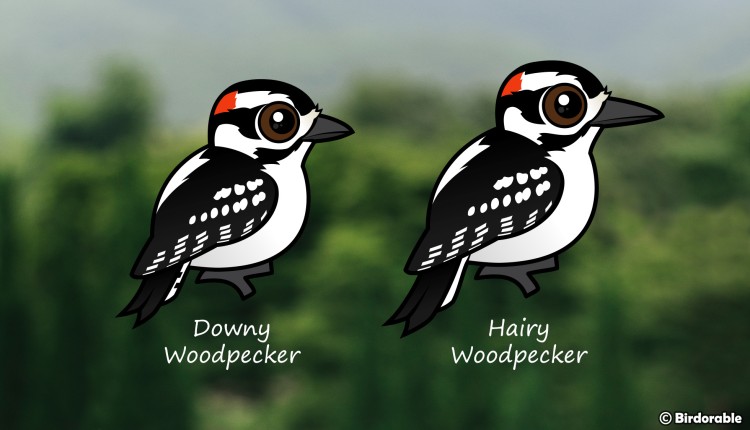
Birdwatchers across North America frequently ask: Is that a Downy or a Hairy Woodpecker?
Both species share much of the same habitat and look nearly identical in color and pattern, but they are easy to tell apart once you know what to look for!
| Feature | Downy Woodpecker | Hairy Woodpecker |
| Size | Small (~6 inches / 15 cm, sparrow-sized) | Medium (~9 inches / 23 cm, robin-sized) |
| Bill Length | Short (less than half the head length) | Long & sturdy (as long as its head) |
| Outer Tail Feathers | White with tiny black spots/bars | Pure, plain white |
| Feeding Style | Nimble; feeds on thin twigs & weed stalks | Prefers large tree trunks & major limbs |
Amazing Adaptations: Built for Drilling
How can a bird spend all day hammering its head against solid wood without getting a headache? Woodpeckers everywhere share incredible physical adaptations:
- A Skull Built for Hammering: For decades, it was assumed that woodpecker skulls worked as shock absorbers. The idea even inspired helmet designs. Then in 2022, researchers filmed woodpeckers pecking in ultra-slow motion and discovered the beak and the brain decelerate in perfect lockstep. There's no cushioning at all! The head works as a stiff hammer, which is exactly what makes it such an effective drill, since any give would waste the energy of the blow. So why isn't the bird knocked silly? Because its brain is tiny, and small masses can shrug off impacts that would concuss a much bigger one.
- Zygodactyl Feet: Unlike songbirds with three toes facing forward and one back, woodpeckers have two toes pointing forward and two pointing backward, giving them an exceptionally strong grip on vertical bark.
- Built-in Kickstand: Stiff, reinforced tail feathers act as a third point of support against tree trunks while climbing and hammering.
- Super Long Tongue: A barbed, sticky tongue that can extend far past the beak to extract insects from tiny crevices. It's so long that when it retracts, it has to curl up and over the outside of the skull, tucked away beneath the skin and anchored right up in the bird's upper bill.
Feeding Habits
In North American yards, Downy Woodpeckers are enthusiastic visitors to birdfeeders, especially those offering suet, peanuts, or black oil sunflower seeds. Out in nature, they use their tiny beaks to pick beetle larvae, ants, and spiders out of bark crevices and galls.
What About You?
Have you ever spotted a Downy Woodpecker in the wild, or do you have a favorite local woodpecker species where you live? Tell us in the comments below!


Comments
Be the first to comment
Thank you!