Peregrine Falconry and Recovery

Falconry is the sport of hunting with a trained bird of prey. Peregrine Falcons have been popular birds among falconers for thousands of years. When the species became endangered due to pesticide use in the 1950s, 60s and 70s, the expertise of falconers was instrumental in the eventual recovery of the species. In 1970, the North American population was believed to be just 10 or 20 percent of its historical average. The species was added to the Endangered Species list in 1975; at that time there were just 324 known nesting pairs in the United States. Harmful pesticides like DDT were banned, but the population needed additional help in order to increase their numbers.
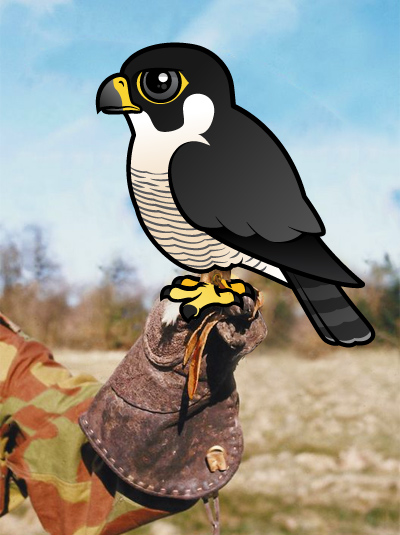
Birdorable Peregrine Falcon on a glove

Because Peregrine Falcons breed successfully in captivity, falconers continued to raise and hunt with captive-reared birds during the time it became endangered in the wild. Later, captive breeding and release programs in the United States, Germany, and elsewhere were extremely successful. These were done with cooperation between government agencies, non-government conservation groups, and experienced falconers. Today, the Peregrine Falcon is no longer on the Endangered Species list and populations have rebounded across much of their near-worldwide range. Peregrines have adapted to nest in urban and suburban settings. In the United States, many urban Peregrine Falcon nests are monitored by volunteers or via remote cameras. Birdorable fans know that our favorite Peregrine Falcon camera is the Rfalconcam in Rochester, New York.

Comments

Samantha on October 13, 2012 at 6:34 PM wrote:
I want to be a falconer someday... :) My dad's friend's friend's dad owns the falconry program at JFK Airport, and they train the falcons to keep birds away from the airport.
Sarah on October 27, 2012 at 5:04 PM wrote:
I also want to become a falconer. They should make falconer supporting tees. :D good luck.
Bridget on November 26, 2012 at 12:42 PM wrote:
I am a falconer and am so glad that Birdorable posted something so nice about how the falconers and scientists brought the Peregrine back. Can we please get some falconry-related birdorable art? That would be awesome!
Grace Shumway on October 31, 2015 at 5:13 PM wrote:
I DEFINETLY love birds, especially the peregrine!!!!!!!!! I want to be a falconer when I grow up! Birddorable is awesome! I am so glad the peregrine is still alive today
Heather Richards on January 5, 2017 at 4:42 PM wrote:
Random
Spurwing Plover on June 1, 2022 at 7:09 AM wrote:
There is a movie Zambezia takes place in Africa involving this young Falcon who leaves his home toa City of Birds in the big tree on top of Victoria Falls

Leave a comment

Comments with links or HTML will be deleted. Your comment will be published pending approval.
Your email address will not be published
You can unsubscribe from these communications at any time. For more information on how to unsubscribe, our privacy practices, and how we are committed to protecting and respecting your privacy, please review our Privacy Policy. By clicking submit below, you consent to allow Birdorable to store and process the personal information submitted above to provide you the content requested.

Baby Birdorable: Barn Swallow

If you think our Birdorable birds are cute as adults, what about when they are babies? Below are some baby photos (shared via Flickr Creative Commons) of the Barn Swallow. Barn Swallows build a nest of mud, often on a man-made structure. Both the male and female...

2020 Bonanza Birds #1-4: North American Finches

Today we start our 2020 Birdorable Bonanza with a bang! Actually… make that an IRRUPTION! We’re kicking off 29 days of new birds by dropping four finches in this “finch invasion” winter season. A bright spot in 2020, many birders are...

How Birds Survive Winter: Torpor, Hibernation, and Migration

As winter storms still rage across parts of the United States, birds are preparing to move north for spring migration. As temperatures finally warm up, we wonder about how our feathered friends spent the cold, harsh winter months.  When temperatures drop and food becomes scarce, animals...

Amazing Bird Behavior: Sydney’s Clever Cockatoos Master Public Water Fountains

A recent study published in the journal Biology Letters documents how Sulphur‑crested Cockatoos in western Sydney, Australia, have developed a novel behavior: operating twist-handle public drinking fountains (“bubblers”) by gripping and turning the valve with their feet to access water. Researchers observed this behavior in an area that...