Warbler Week: Four New Birdorable Warblers
Birdorable warblers

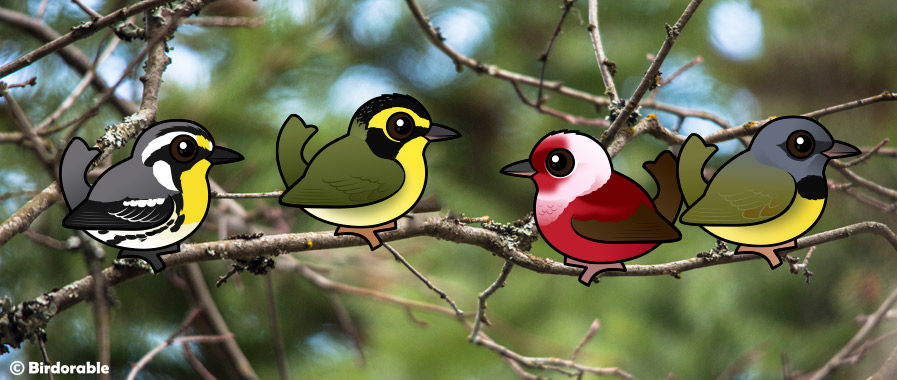
We're celebrating warblers this week on the Birdorable blog! We're starting off this Warbler Week with the introduction of four new Birdorable warblers!

The Mourning Warbler is a small warbler with a chunky appearance. They can be recognized by their grey heads, olive backs, and yellow underparts. They also have a black chest patch. Our Birdorable bird is an adult male; females have a similar color scheme but with more muted tones.

The Yellow-throated Warbler breeds mainly in the east and southeast of the United States. These migratory birds can be recognized by their grey, black, and white plumage highlighted by a bright yellow throat and breast.

The Kentucky Warbler migrates between breeding grounds in the southeast United States and winter territory through parts of Central America. They have olive upperparts and yellow underparts and a contrasting black and yellow pattern on the face. Their song sounds like "p-chee, p-chee, p-chee."

The Pink-headed Warbler is a New World species that is a year-round resident in its range through parts of Guatemala and Mexico. The live in highland habitat. Pink-headed Warblers are appropriately named; they can be recognized by their beautiful red body plumage and pretty light pink heads.

These four New World warbler species join 24 other Birdorable warblers, bringing our total to 28. Thanks for joining us as we celebrate warblers this week! Come back tomorrow for more warbler fun.
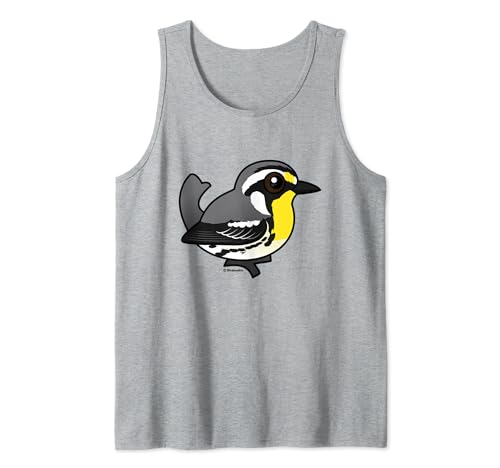
New Birdorable Warbler Apparel

Comments

Andrew on September 26, 2018 at 5:00 PM wrote:
four songbirds of so many birds
Spurwing Plover on November 22, 2025 at 12:59 PM wrote:
The American Redstart is a type of Wood Warbler their very good at keeping control of Caterpillars that ham Trees

Leave a comment

Comments with links or HTML will be deleted. Your comment will be published pending approval.
Your email address will not be published
You can unsubscribe from these communications at any time. For more information on how to unsubscribe, our privacy practices, and how we are committed to protecting and respecting your privacy, please review our Privacy Policy. By clicking submit below, you consent to allow Birdorable to store and process the personal information submitted above to provide you the content requested.

The Hidden Ears of Birds: How Avian Hearing Works

Do birds have ears? You might think about birds like Great Horned Owl, with their ear-like feather tufts. But those aren't ears. What about birds with 'ear' in their name, like the Eared Grebe, named for the golden feathers breeding adults have at the...

T-Shirt Tuesday: Birdorable Kakapo BOOOOOM!

This week's featured t-shirt design is our Birdorable Kakapo in BOOOOOM!!! which is shown here on a Kids' Basic Long Sleeve T-shirt from Zazzle. The model shown above is 4'7" and is wearing a small. The...

Digging Into The Fascinating Life of Burrowing Parakeets

Birds are known for their diverse nesting habits, constructions, and detail, from the basic yet functional pressed grass nests of American Robins, to the simple pile of sticks that Mourning Doves call nests, to the complex and intricately woven hanging nests of Baltimore Orioles. Today we'll...

Interesting Crane Facts

It's Crane Week, which means we're celebrating the cranes of the world! Today's post contains some interesting and fun crane FAQs. Where do cranes live? They have a nearly cosmopolitan distribution. Cranes are found on all continents except for Antarctica and South America. How big are cranes? Cranes are...