Birdorable's Newest Addition: The Majestic Golden Eagle

Birdorable Golden Eagle

We're excited to announce the addition of the Golden Eagle to our Birdorable family! These majestic birds, known for their impressive wingspan and powerful build, are a sight to behold across the northern hemisphere. Common in western North America, the Golden Eagle ranks as the third largest bird of prey in the region, trailing only behind the Bald Eagle and the California Condor. However, these grand birds tend to steer clear of the eastern United States, preferring less populated areas to make their homes.

Golden Eagles possess an incredible adaptability, thriving in a variety of habitats, from mountain ranges to open plains. Yet, despite their versatility, they have not been immune to the impacts of human expansion and habitat destruction. Europe has witnessed a particularly noticeable decline in Golden Eagle populations, a stark contrast to the days when they were numerous across the temperate plains. Human activity has forced these eagles to retreat to more secluded areas, with the species now mostly confined to the mountainous regions of the Alps and the Carpathian Mountains in Eastern Europe.

The significance of the Golden Eagle extends beyond its natural majesty; it holds a place of honor as the national bird of Austria, Germany, Kazakhstan, and Scotland. This bird embodies the strength, freedom, and resilience that these nations value, making it a symbol of national pride and cultural heritage.

Falconry in Kazakhstan is a tradition steeped in history, showing a deep-rooted connection between humans and birds of prey, particularly the majestic Golden Eagle. Known locally as "burkut" or "berkut," these eagles are revered for their hunting prowess and are integral to the nomadic lifestyle that persists in the region. The practice of falconry, passed down through generations, is much more than a method of hunting; it's a cultural heritage that embodies the symbiotic relationship between the Kazakh people and the natural world. Training a Golden Eagle requires patience, respect, and skill, with the bond between the falconer and the bird being of paramount importance. These trained eagles are used to hunt foxes and wolves, playing a vital role in the community by controlling predator populations and providing fur for warmth. Falconry, recognized by UNESCO as an Intangible Cultural Heritage of Humanity, continues to be a source of pride and tradition in Kazakhstan, preserving a way of life that has harmonized with the environment for centuries.
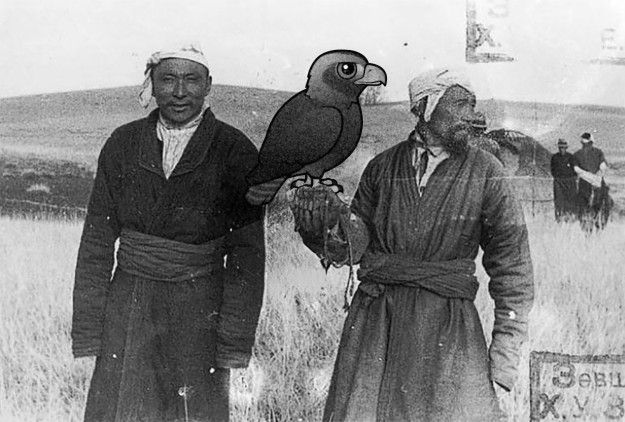
Two Kazakh hunters with a Golden Eagle on an expedition in 1938


From Desert Skies to Urban Allies: The Harris Hawk's Journey

Birdorable Harris Hawks

The Harris Hawk stands out not just for its striking appearance but for its unique social behavior, especially in the world of raptors. Thriving in the diverse landscapes from the southwestern United States down to Chile and central Argentina, these birds have adapted remarkably to their environments.

One of the most intriguing aspects of the Harris Hawk's life is its communal hunting strategy. Unlike the solitary hunting tactics common to most raptors, Harris Hawks have developed a cooperative method, hunting in groups ranging from two to six. This behavior is particularly adapted to their desert habitats, where the collective effort allows them to take down larger prey such as hares, which might be too challenging for a lone hawk. This teamwork not only highlights their intelligence but also their adaptability to harsh environments.

The Harris Hawk's social structure is a rarity among birds of prey. These group dynamics extend beyond hunting, as they also share responsibilities in nesting and raising their young. This level of cooperation is a fascinating departure from the more commonly observed competitive nature in the wild, offering valuable insights into the evolutionary benefits of social structures among birds.

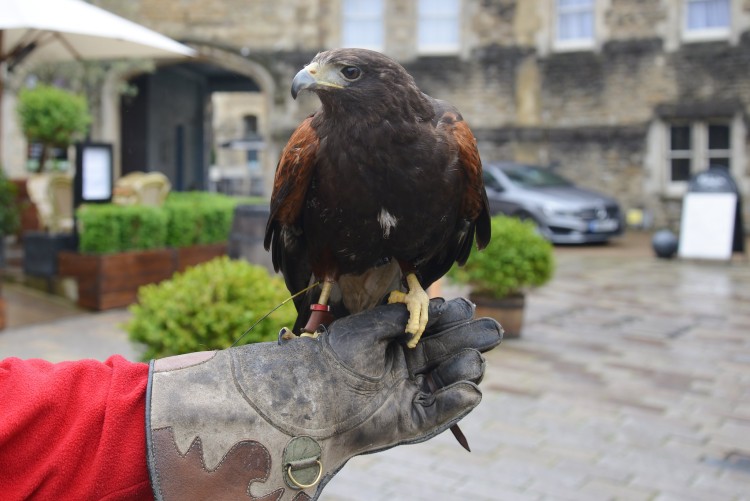
Their remarkable nature extends into the world of falconry, where the Harris Hawk is highly valued for its easy-going temperament. Their willingness to work alongside humans makes them excellent partners in the sport, a practice that dates back thousands of years but remains vibrant today. In Europe, these hawks play a vital role in urban and agricultural settings, employed to deter pigeons and starlings from public spaces. This method of bird control is not only effective but also environmentally friendly, reducing the need for harmful deterrents.

Furthermore, Harris Hawks have become crucial in maintaining safety at airports. Their presence is instrumental in scaring away birds from runways, significantly reducing the risk of bird strikes with airplanes. This application of their natural hunting skills in modern human environments underscores the adaptability and intelligence of these birds, making them invaluable allies in mitigating wildlife-related challenges.

The conservation status of Harris Hawks, like many raptors, is closely monitored due to their importance in the ecosystem and their appeal in falconry and wildlife management. Protecting their habitats and ensuring sustainable practices in falconry are essential to preserving these magnificent birds for future generations to admire and learn from.

In summary, the Harris Hawk is not just another bird of prey. Its unique social behaviors, adaptability to diverse environments, and the crucial role it plays in human activities make it a standout species in the avian world. Whether soaring in the skies of the American Southwest or aiding in falconry and wildlife management across the globe, the Harris Hawk continues to captivate and contribute.

Photo of Harris Hawk on glove