


Dancing with the Sun: Australia's Iconic Brolga
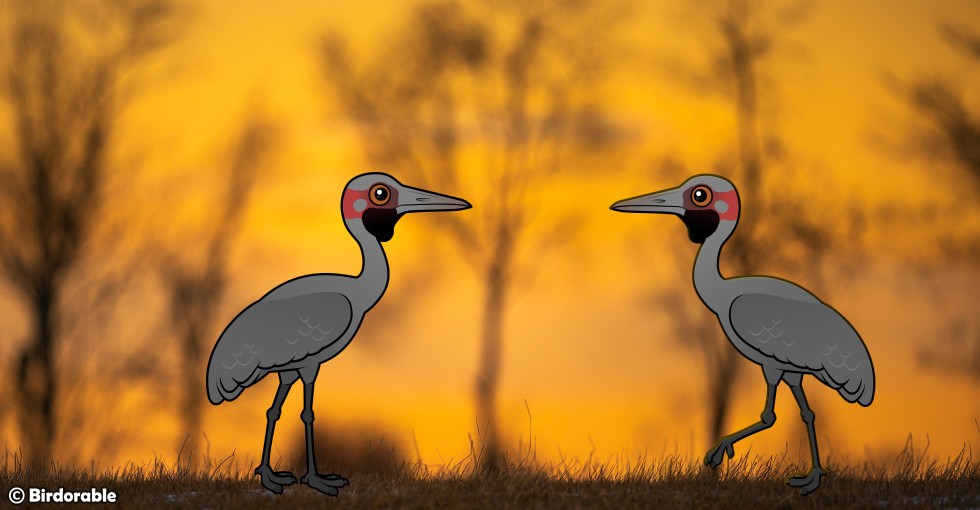
If you ever find yourself looking out across the vast, sun-drenched wetlands of northern or eastern Australia, you might witness one of the most mesmerizing spectacles in the natural world: a pair of tall, silver-gray birds stepping gracefully in sync, tossing their heads, leaping into the air, and spreading their broad wings in a synchronized dance.
Meet the Brolga, Australia's famous native crane!
The Famous Dancers of the Outback
For thousands of years, Aboriginal peoples across Australia have celebrated the Brolga's dancing. The bird appears in stories of the Dreaming belonging to many different nations, and its courtship and social dances inspired ceremonial and traditional dance movements that are still performed today.
Unlike many birds that only dance to attract a mate, Brolgas dance all year round, and at almost any age!
How to Dance Like a Brolga:
- The Bow: Stand tall, then lower your head and bow deeply to your partner.
- The Leap: Spring about 3 feet (1 meter) straight into the air with wide, outstretched wings!
- The Prance: Walk in light, graceful circles while shaking your feathers.
- The Toss: Pick up a stick, grass clump, or small twig with your beak and toss it high into the air, catching it on the way down!
In the video below, a Brolga shows off some of these moves:
How to Identify a Brolga
Standing up to about 4.5 feet (1.4 meters) tall, and with a wingspan stretching nearly 8 feet (2.4 meters) across, the Brolga (Antigone rubicunda) is one of Australia's largest flying birds. You'll find them across northern and eastern Australia, from Queensland down to Victoria, and in southern New Guinea too.
Here are its standout features:
- Plumage: A sleek, silver-gray body with black flight feathers at the wingtips.
- Red Head, Grey Cap: Bare, fiery red-orange skin covers the face, cheeks, and back of the head. The crown on top stays a neat grey-green, like a little cap.
- The Dewlap: A dark pouch of skin hanging under the chin. It's biggest and floppiest on adult males.
- Legs & Eyes: Long, blackish-grey legs made for wading through shallow water, and bold yellow-orange eyes.
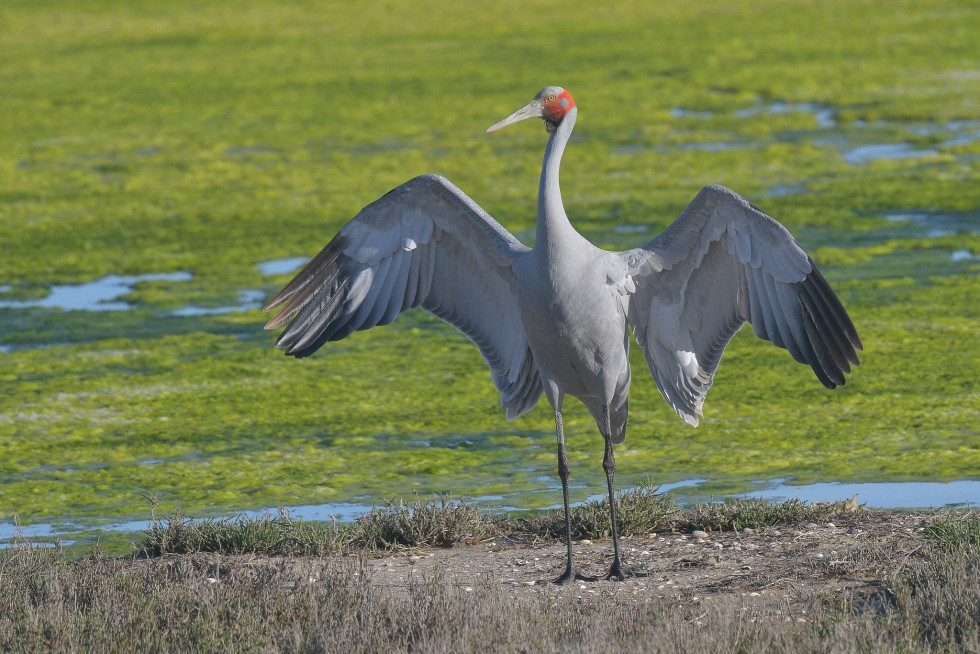
Photo by Dorothy Jenkins (CC BY-SA 2.0)
Brolga vs. Sarus Crane: A Case of Double Identity
Birdwatchers visiting Australia often run into a tricky identification challenge! Australia is home to another tall crane: the Sarus Crane. The two species even live side by side in northern Queensland.
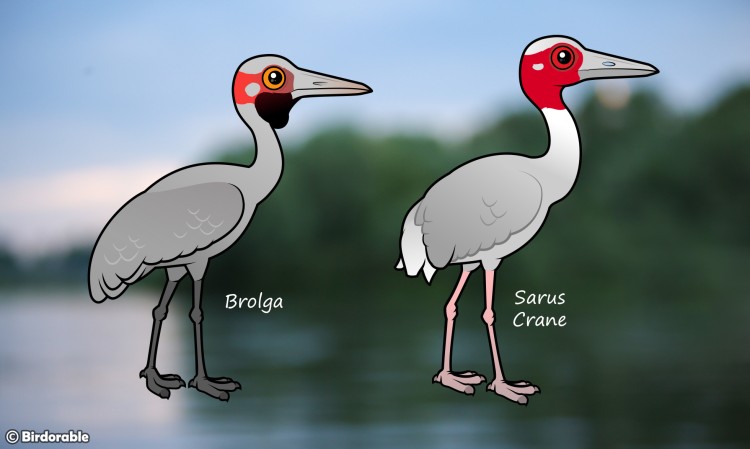
While they look almost identical at first glance, three features will sort them out:
| Feature | Brolga | Sarus Crane |
| Legs | Blackish-grey | Pink |
| Red skin | Stops at head | Runs partway down the neck |
| Chin | Dark dangling dewlap | No dewlap |
The legs are the giveaway. You can pick them out from far across a paddock, long before you could ever make out a dewlap!
Champion Diggers: What Do They Eat?
Brolgas are omnivores equipped with long, heavy bills built for digging. They spend their days wading through shallow swamps, floodplains, and agricultural fields.
Up in the tropical north, their favorite meal is bulkuru sedge tubers, sweet, nutrient-rich roots that grow in the mud underwater. Brolgas use their powerful beaks like mini shovels, digging deep holes to reach them, and these tubers keep the northern birds going right through the dry season. Bulkuru doesn't grow in the south, so Brolgas down that way eat more grain and other tubers instead.
Wherever they live, they'll also snack on:
- Insects (especially grasshoppers and beetles)
- Small frogs, lizards, and fish
- Mollusks and crustaceans
- Grains and seeds
Life in the Wetlands
Brolgas form strong, lifelong pairs. During the wet season, parents work together to build a nest, a giant mound of grass, reeds, and other plants piled up on a small island or right in the middle of shallow water to keep predators away.
Both the mother and father take turns sitting on their two speckled eggs for about a month. Once the chicks hatch, they can walk and follow their parents within just a few hours!
There are still plenty of Brolgas across northern Australia, but the smaller population down south in Victoria and New South Wales has been shrinking as wetlands are drained, so those southern dancers need their wetlands protected.
Over to You!
If you could learn a dance inspired by any animal in the wild, which animal's moves would you want to try? Let us know in the comments below!


Comments
Be the first to comment
Thank you!