


Red-breasted Toucan Facts: The Fruit-Loving Toucan With an Amazing Bill
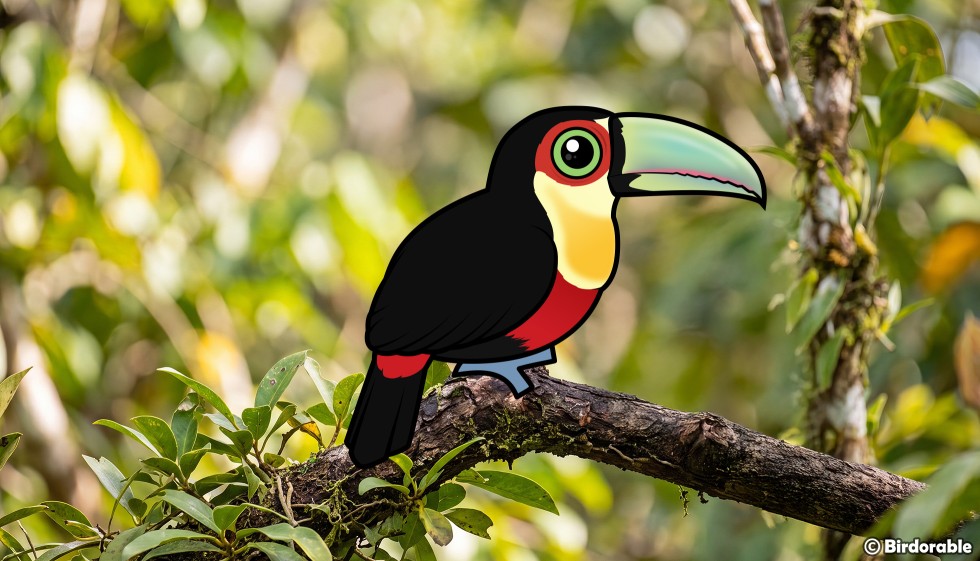
Birdorable Red-breasted Toucan
Listen closely on a morning hike through the mist-shrouded mountain forests of southern Brazil, and you might hear what sounds like a tiny croaking frog high up in the trees. Look closer through your binoculars, and you won't find an amphibian, you'll spot a flash of scarlet and gold tumbling through the fruit trees.
Meet the Red-breasted Toucan (Ramphastos dicolorus), also known as the Green-billed Toucan, one of the Atlantic Forest's most energetic acrobats. It ranges through southern and southeastern Brazil into eastern Paraguay, Bolivia, and the far northeast of Argentina, and it's the smallest member of the toucan genus Ramphastos.
That croak, by the way, is a family trait. Ornithologists split the big Ramphastos toucans into two camps by voice: the "yelpers" and the "croakers." Our little friend is firmly a croaker.
The Rainforest’s Ultimate Fruit Handler
While many tropical birds spend their days hunting insects on tree trunks or sweeping over rivers, this toucan has one primary mission: finding ripe fruit.
Because they live high in the canopy, reaching food can be tricky. A heavy branch might hold a bird's weight, but the juiciest figs and palm fruits usually hang at the very tips of flimsy, fragile twigs.
That's where the beak comes in handy. It's actually on the short side by toucan standards, only about 4 inches long, but it works like a lightweight pair of long-handled kitchen tongs, letting the bird snatch fruit off delicate branches without ever leaving the safety of a sturdy perch. Once they grab a piece of fruit, they toss their head back with a quick flick, letting gravity slide the treat straight down their throat.
Not Just Fruit: A Sneaky Rainforest Hunter!
Fruit might make up the bulk of their daily menu, but Red-breasted Toucans are far from strict vegetarians! They are clever omnivores and opportunistic hunters that won't pass up a high-protein snack.
When they aren't foraging for berries, they use their keen eyesight and long beaks to:
- Hunt insects: Snatch up large beetles, caterpillars, and cicadas from the foliage.
- Grab other creepy-crawlies: Spiders and other arthropods are fair game too.
- Catch small prey: Small tree frogs and lizards moving through the leaves.
- Raid nests: During the breeding season, toucans have a bit of a sneaky reputation: they will raid other birds' nests for eggs and nestlings to feed their own growing chicks!
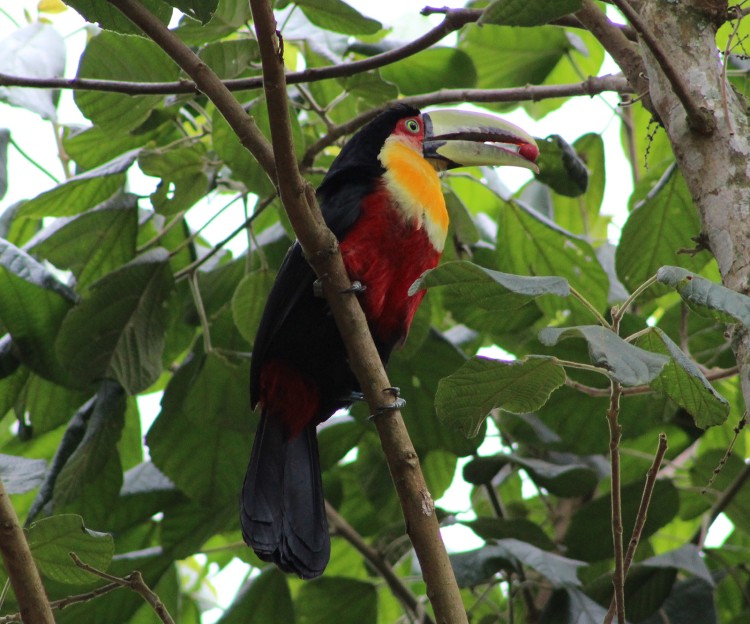
Red-breasted Toucan
A Bill That Doubles as a Radiator
At first glance, a bird with a big pale-green bill, a golden throat and chest, and a blaze of red across its lower belly seems like it would stand out like a neon sign. And honestly? It does.
But the bill is doing something far stranger than looking pretty. In 2009, researchers pointed thermal cameras at toucans and discovered that the bill is a living radiator. It's packed with blood vessels, and the bird can dial blood flow to it up or down to dump body heat or hold it in. Relative to body size, it turns out to be one of the largest "thermal windows" in the entire animal kingdom, right up there with an elephant's ears. On a hot afternoon a toucan's bill glows on infrared; as the bird settles down to sleep, it shuts the flow off and tucks the bill under its wing to stay warm.
Look closely at that bill and there's more going on than plain green, too: a black stripe rings the base, the base and tip are washed with red, and the cutting edges are lined with pale, tooth-like serrations for gripping slippery fruit.
As for the rest of the outfit, the toucan's back, crown, and tail are glossy black, so a hawk passing overhead mostly sees a dark shape against dark leaves. The scarlet and gold are saved for the front, where the birds that matter most can see them: other toucans.
Over to You!
If you were a rainforest bird, would you want a big, giant beak like a toucan, or super fast wings like a hummingbird?


Comments
Leave a comment
Thank you!