


Birdorable Bonanza 2026 Bird #1
Meet the Little Bee-eater, Africa’s Tiniest Bee Catcher
Birdorable is turning 20! 🎉 To celebrate, we’re introducing a brand-new bird every day for 20 days. Welcome to the 2026 Birdorable Bonanza, and welcome to bird number one.
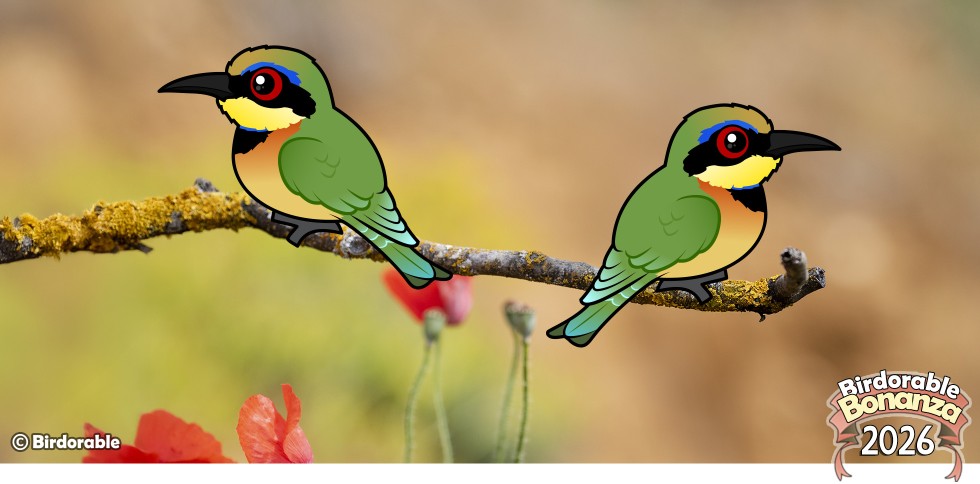
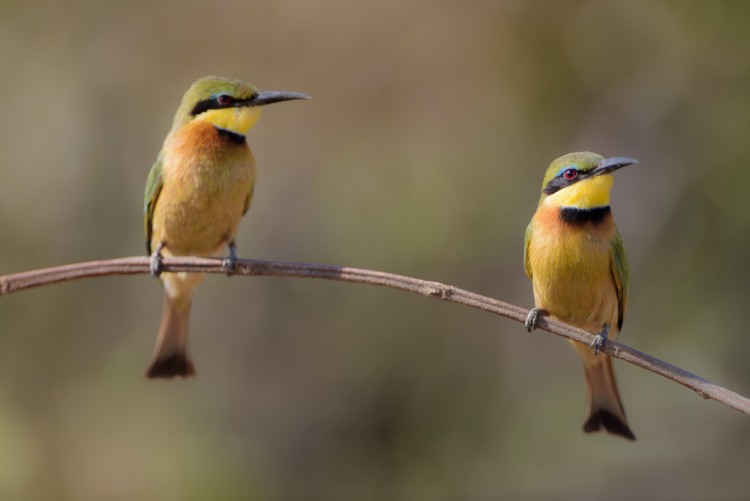
A flash of green zips off a low branch, snaps something out of the air, and lands again on its perch. That’s the Little Bee-eater, the smallest bee-eater in Africa. It’s only about 6 inches long (15 to 17 cm), roughly the length of an American dollar bill, but it’s one of the most colorful birds around. Its back and wings are leaf green, its throat is sunny yellow, and a black band sits underneath like a little necktie. Below that, its chest glows a warm brown that fades to buff on the belly. Males and females look alike. Many bee-eaters have long, pointy streamers sticking out of their tails, but this one doesn’t. Its tail is square or just slightly notched at the end.
How to Eat a Bee Without Getting Stung
Bees, wasps and hornets are a Little Bee-eater’s favorite foods, and it catches every one of them in flight. It waits on a low perch, sometimes only about 3 feet off the ground, and watches. When an insect buzzes past, the bee-eater darts out, grabs it in midair and carries it back to a perch. Then comes the clever part. Holding the insect in its bill, the bird hits it against the branch over and over until the stinger is gone. Only then does it swallow its meal.
When it’s time to raise a family, a pair of Little Bee-eaters digs a tunnel into a sandy bank, or sometimes into the roof of an old aardvark hole. Many kinds of bee-eaters nest together in big, busy colonies, but Little Bee-eaters usually nest on their own. The female lays 4 to 6 round white eggs, and both parents help care for them.
At night, Little Bee-eaters gather together to sleep, lined up side by side along a tree branch in a neat row of tiny green birds. You might spot them across much of Africa south of the Sahara Desert, in savannas and bushy open country, usually not far from water. They are common birds and are listed as a species of Least Concern, which means they are not considered at risk right now.
Coming Up Tomorrow
Tomorrow we’re flying to the rivers of the Amazon to meet a glossy black bird with a bright orange-red face. It eats almost anything it can find, and it has a very unusual job: helping tapirs get rid of pests in their fur. Can you guess who it is? Come back tomorrow for bird number two in the Birdorable Bonanza!

Cute Little Bee-eater Gifts




Comments
Leave a comment
Thank you!