


Swallows Live Fast, But Few Live Long
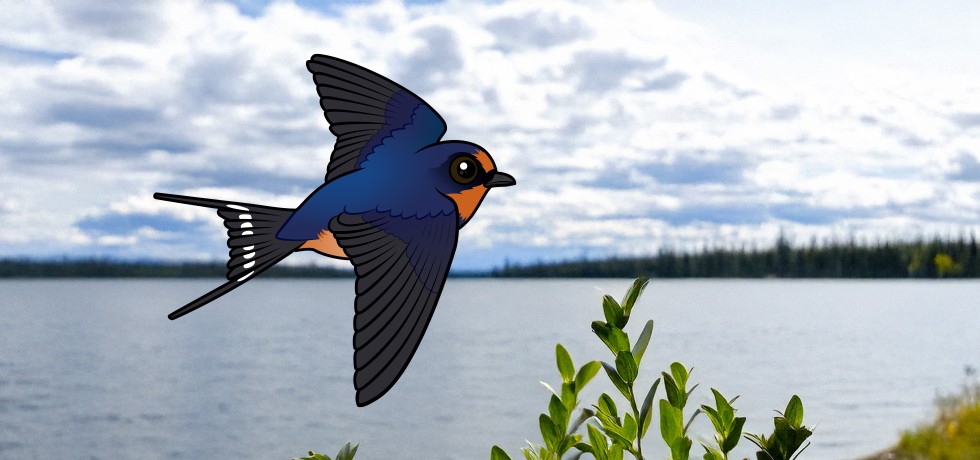
In July 1933, a bird bander in Illinois slipped a tiny metal band onto the leg of a young Purple Martin. The bird was found again in Illinois in 1947. By then it was at least 13 years and 9 months old, which makes it the oldest of all the North American swallows in the banding records.
So how long do swallows live? Most live short, busy lives of just a few years. But a handful of tough little fliers have lived past ten, and their stories tell us a lot about what a swallow’s life is like.
How Banding Reveals a Swallow’s Age
You can’t tell how old a swallow is just by looking at it. Instead, scientists and trained volunteers catch birds in soft nets, or at their nests, and put a small, lightweight band on one leg. Each band has its own number, like a license plate. When that bird is caught again, or found, the number tells us when and where it was first banded.
The ages from banding are always the minimum age a bird could be. The count starts from the bird’s age when it was banded, and the bird might have kept living for years after the last time anyone saw it. So every record below means “at least this old.”
The Oldest Swallows on Record
Here are the oldest known wild birds for each of our North American swallows, from the North American Bird Banding Program:
- Purple Martin: at least 13 years, 9 months. The Purple Martin is the largest swallow in North America, and it holds the age record too.
- Cave Swallow: at least 12 years, 2 months. A hatchling bird was banded and later refound in New Mexico.
- Tree Swallow: at least 12 years, 1 month. This bird was banded as a youngster in Ontario, Canada, in June 1986 and caught again in Ontario in July 1998.
- Cliff Swallow: at least 11 years, 10 months. This male was banded in Nebraska in 1993 and caught again all the way in California in 2004.
- Barn Swallow: at least 10 years. This female was banded in Maryland in 2006 and caught again in Maryland in 2015.
- Violet-green Swallow: at least 9 years, 1 month, a male from California.
- Bank Swallow: at least 8 years. This one was recaptured and released at a banding station in Wisconsin.
- Northern Rough-winged Swallow: at least 7 years, 10 months. This female was banded in Ontario in 2018 and caught again there in April 2025, so this record is relatively new.
Almost all of these record birds were let go after they were checked, so they flew off to keep on living. Some of them may have gotten even older.
Barn Swallows Usually Live About Two Years
The record holders are the rare ones. Barn Swallows also live in Europe, and in Britain, bird banders (known there as “ringers”) have followed them for a very long time. According to the British Trust for Ornithology, a Barn Swallow usually starts nesting when it is just one year old, and a typical lifespan for a Barn Swallow that reaches adulthood is about two years. In any one year, only a little more than one in three adults survives to the next. Britain’s oldest banded Barn Swallow lived at least 11 years and 1 month, a record set way back in 1936.
That means a swallow that reaches ten years old has beaten the odds many times over. It has made the long trip south for the winter and back again about ten times, raising a family nearly every summer along the way.
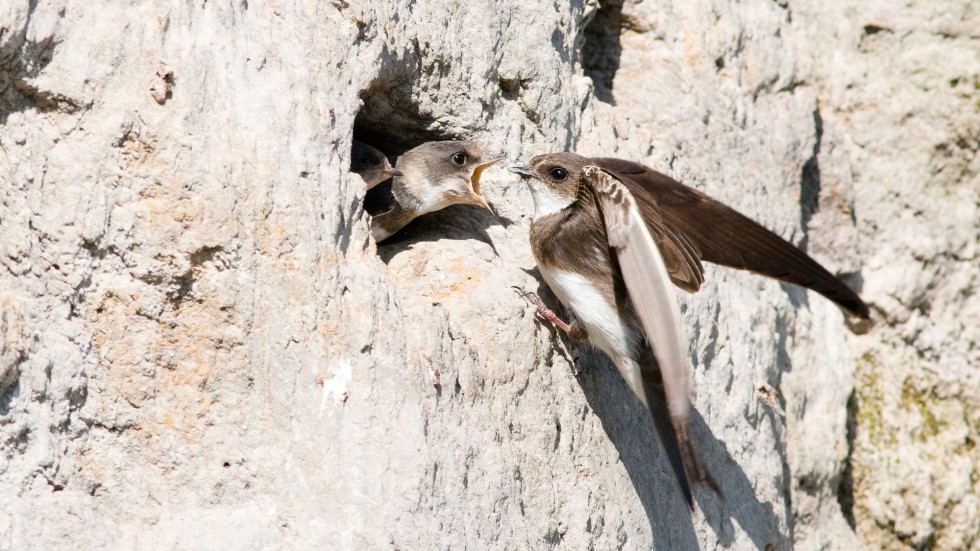
A Bank Swallow brings food to its young at their burrow in a sandy bank. The oldest Bank Swallow on record lived at least 8 years.
Cold, Rainy Weather Is Hard on Swallows
Swallows eat flying insects, which they catch in the air. That works beautifully on a warm summer day when the air is full of bugs. But when the weather turns cold and rainy for days at a time, the insects stop flying, and swallows have nothing to eat.
Scientists studying Cliff Swallows in western Nebraska saw this happen in late May 1996. Six days of unusually cool, wet weather meant almost no flying insects, and thousands of Cliff Swallows starved. The population they were studying dropped by about half. Events that bad are rare, but they show how much a swallow’s life depends on the weather and the bugs.
What’s Your Favorite Swallow?
Ours might be that Cliff Swallow that was banded in Nebraska and turned up in California almost eleven years later. Which swallow do you like best, and have you ever spotted one nesting near your home? Tell us in the comments!


Comments
Be the first to comment
Thank you!