Late summer is a great time for berry-loving birds. As wild berries ripen, many species take advantage of the sweet, energy-rich food source. These fruits provide a boost for birds preparing for fall migration or molting. Here are five birds that especially enjoy berries this time of year.

Cedar Waxwing

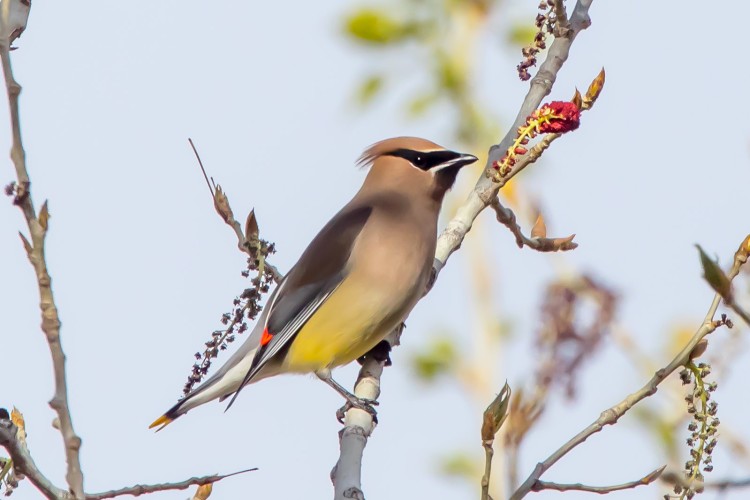
Cedar Waxwings are perhaps the most famous berry-eaters in North America. These sleek birds with silky plumage and bright red wing tips are often found in flocks near fruiting trees and shrubs. In late summer, they gorge on dogwood, serviceberry, and elderberry. Cedar Waxwings are such fruit fanatics that they’re one of the few North American birds that can survive almost entirely on fruit for weeks at a time. They’re also known to pass berries to one another as part of their courtship behavior.
American Robin

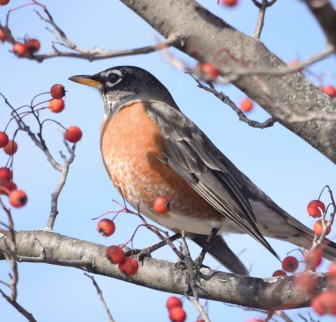
Though often associated with earthworms, American Robins are also big fans of fruit. In late summer, their diet shifts toward berries like chokecherries, mountain ash, and wild grapes. Robins are commonly seen in backyards hopping between berry-laden bushes or perched in fruiting trees. These berries help fuel their southward migration and also support young birds, just learning how to be a bird, that fledged earlier in the season.

Baltimore Oriole

Bright and bold, Baltimore Orioles are nectar and insect feeders in spring, but they also go crazy for berries later in the summer. They’re especially attracted to dark fruits like mulberries and blackberries. If you live in the eastern U.S., you might spot them plucking ripe fruit with their pointed bills. At this time of year, orioles are getting ready for a long migration to Central and South America, and berries give them the energy they need.

Gray Catbird

Gray Catbirds are noisy mimics that love dense shrubs—especially those loaded with fruit. Late summer is prime time for catbirds to load up on berries like elderberry, viburnum, and honeysuckle. They’re often heard before they’re seen, giving their signature mew call. If you want to attract catbirds, planting native berry-producing shrubs is a great way to start.
Northern Mockingbird

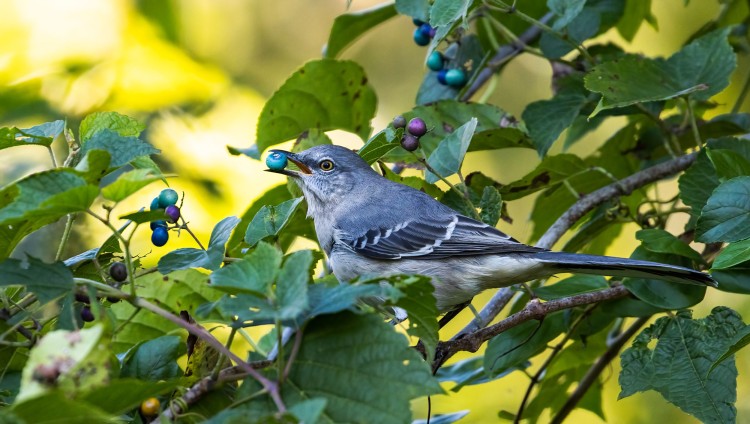
Northern Mockingbirds are known for their ability to mimic other birds’ songs, but they also have a strong preference for berries, especially in late summer. They’ll fiercely defend berry bushes from other birds, claiming the food for themselves. Look for them around fruiting trees like holly or firethorn, where they may perch conspicuously and chase away intruders. Mockingbirds often remain on territory year-round, so plants that offer late summer berries are important for both feeding and defending their space.

If you want to support berry-loving birds in your yard, consider planting native fruiting shrubs and trees. Species like serviceberry, elderberry, dogwood, and chokecherry are excellent choices. Avoid invasive plants like multiflora rose and bush honeysuckle, which can do more harm than good to local ecosystems.

Here in Florida and across the southeast, American Beautyberry shrubs provide good fuel for migratory birds that spend the winter here, and for the many migrants that stop off in the Sunshine State before heading further south for the season.

Watching birds feast on berries is a late-summer treat. Whether you're in a city park, backyard, or forest edge, keep an eye out—you might see these birds at their hungriest and most active.

Cedar Waxwing: The ABA Bird of the Year for 2020

Cedar Waxwing eating berries

Recently the American Birding Association announced their Bird of the Year for 2020. The Cedar Waxwing holds the honor for the first year of this new decade.

The Cedar Waxwing is an excellent choice to be a "bird ambassador" for the ABA in 2020. These gregarious birds are known for their beauty, with striking plumage that includes a dramatic black mask and wax-like red tips to their secondary wing feathers.

These migratory songbirds can be found in much of North America -- summer-only across parts of Canada and only in the winter across roughly the southern half of the continent. Here in Florida, we enjoy flocks of them feasting on berries throughout the late winter and early spring.

Cedar Waxwing by Ron Knight (CC BY 2.0 DEED)

The Cedar Waxwing is the 10th Bird of the Year from the organization. Previously honored birds are as follows, with links to our Birdorable version when available.

If you want to learn more about Cedar Waxwings, have a look at these links:

Cute Cedar Waxwing Gifts

Bohemians on the move!

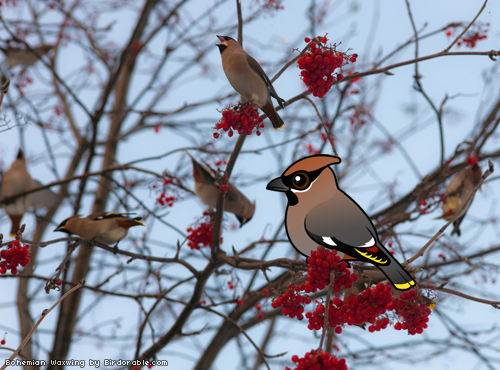
Bohemian Waxwings are on the move this winter! A poor berry crop in their northern range may be driving them outside of their usual winter haunts. Flocks have been seen around southern Lake Michigan and individuals have been reported in many northeastern states in the U.S. The birds have also been reported in the Netherlands, where they rarely make an appearance.

Bohemian Waxwings aren't the only northern birds showing up further south this winter. Evening Grosbeaks, crossbills, Red-breasted Nuthatches, redpolls and other finch species are irrupting all over. Have you had any special winter visiters at your feeders so far this season? The Bohemian Waxwing was added to Birdorable on November 13, 2012. If you love these beautiful birds, be sure to check out our fun and cute Bohemian Waxwing t-shirts and gifts!

From Fruit Fanatics to Wax Tips: Cool Facts about Cedar Waxwings

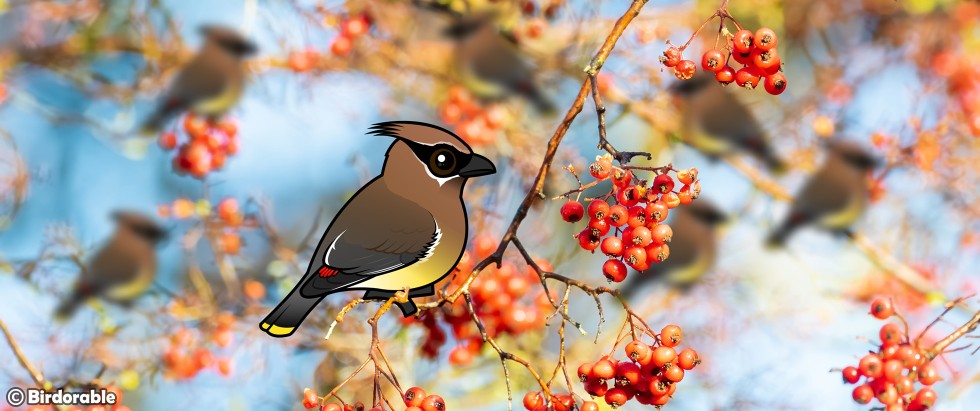
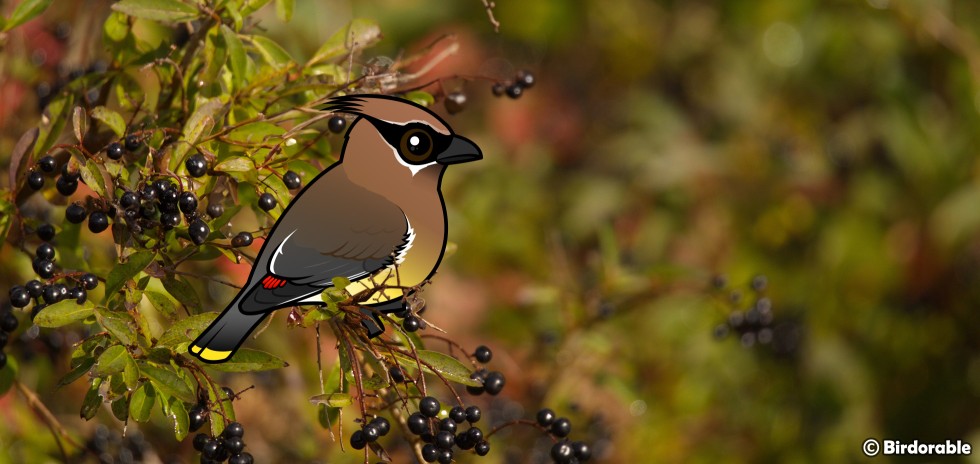
Birdorable Cedar Waxwing in tree with berries

Cedar Waxwings boast a range of unique features and behaviors that set them apart in the bird world. From their distinctive appearance to their unusual dietary habits, here are some cool facts about the Cedar Waxwing, offering a glimpse into their lives and habits:

  • Waxy Red Tips: Cedar Waxwings are named for the distinctive waxy red tips on their secondary feathers, which increase in number and size as they age.
  • Fruit Lovers: These birds have a strong preference for fruit and can survive on a fruit-only diet for several months.
  • Cowbird Chicks Struggle: Brown-headed Cowbirds that hatch in Cedar Waxwing nests often don't survive due to the high-fruit diet of the Waxwings.
  • Intoxicated Behavior: Waxwings can become drunk from eating overripe, fermenting berries, sometimes leading to flocks colliding with windows.
  • Unique Vocalization: Cedar Waxwings don't sing traditional songs but communicate with quiet trilling or buzzing sounds.
  • Tail Band Coloration: While typically yellow, some Cedar Waxwings developed orange tail bands in the 1960s in the northeastern U.S., a change attributed to non-native honeysuckle berries in their diet.
  • Polite Eating Habits: These birds eat in shifts, with one group feeding first before giving way to the next, displaying more courteous behavior than most birds.
  • Group Names: A group of waxwings is called an "ear-full" or a "museum" of waxwings.
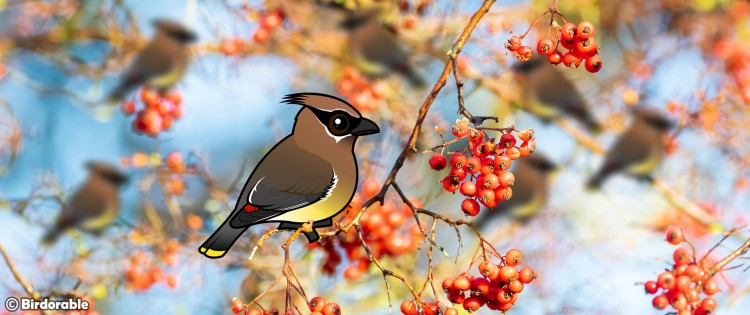
  • Birdorable Feature: The Cedar Waxwing has been a part of the Birdorable collection since September 2006. Check out our cute waxwing t-shirts and gifts!