We're celebrating Vulture Week because today marks International Vulture Awareness Day! This commemorative day has been celebrated since at least 2009 and aims to highlight the importance of vultures and vulture conservation through education.

Why are vultures bald?
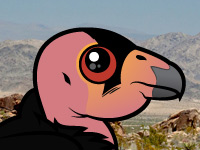
Bald VultureWhen vultures feed on animal carcasses, they may poke their heads into some messy spots to pick out yummy bits to eat. Having a bald head means that they won't get dirty feathers at mealtime, saving them from picking up nasty bacteria and carrying it around in their heads. Vultures may also regulate their body temperature by adjusting the amount of bare skin that's exposed to the environment. Some vultures do have feathers on their heads, like the Lammergeier and Palm Nut Vulture. Carrion is not the main source of food for these species.


How can I tell the difference between Black Vultures and Turkey Vultures?

Both of these New World vultures can be found throughout much of Central and South America. In North America, both Turkey and Black Vultures occur in the southeast. There are a few ways to tell the species apart. Black Vultures are smaller than Turkey Vultures. Turkey Vultures have red heads; the Black Vulture's head is very dark grey. While soaring, Turkey Vultures fly with their wings in a slight V-shape, known as a dihedral angle. The entire trailing edge of the Turkey Vulture's wing is light grey or white. In the Black Vulture, only the very outer flight feathers appear white.
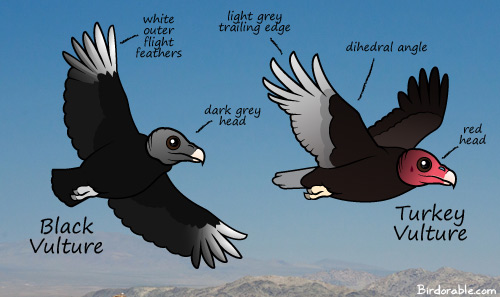
Differences between Black Vulture and Turkey Vulture

Why are vultures endangered?

Vultures around the world are facing various threats. Yesterday we covered some of these threats in our blog post Threats Facing Vultures.

Are vultures and buzzards the same?

The short answer is no. Technically speaking, vultures and buzzards belong to very different families of birds. Vultures are large carrion-eating birds. Buzzards are buteos -- North America's Red-tailed Hawk (Buteo jamaicensis) and Europe's Common Buzzard (Buteo buteo) are both part of this family. North Americans call buteos "hawks", while the rest of the world may know this same family of birds as "buzzards". In North America, a common colloquial name for vulture is buzzard. Early settlers may have called all of the large birds they saw "buzzards" -- and this common name stuck to the vultures.
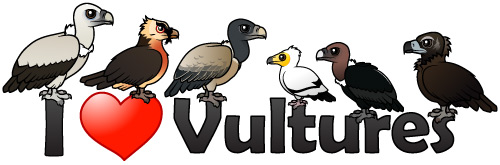
I Love Vultures

Why do vultures vomit?

New World species of vulture may vomit when they feel threatened. This serves two purposes. Vomiting empties the stomach and lightens the bird if it needs to make a quick get-away. Vulture vomit is also extremely foul, and the putrid puke may serve to repel or at least distract any potential predators or threats.

Why do vultures fly in circles?
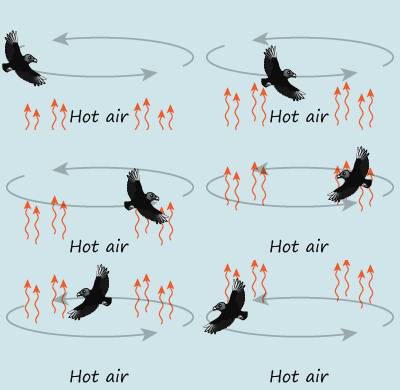
Black Vulture circlingWhen you see vultures circling above, they are not loitering in the sky waiting for a potential prey item to die. Vultures do use thermals, or naturally occurring rising columns of hot air, to assist in soaring flight. In this way they are able to conserve energy as they search for carrion.


Where do vultures live?

New World vultures are found in the Americas, while Old World vultures inhabit parts of Europe, Africa, and Asia. Vultures are found on every continent except for Antarctica and Australia. We have this informative Vultures of the World map available for download or purchase.
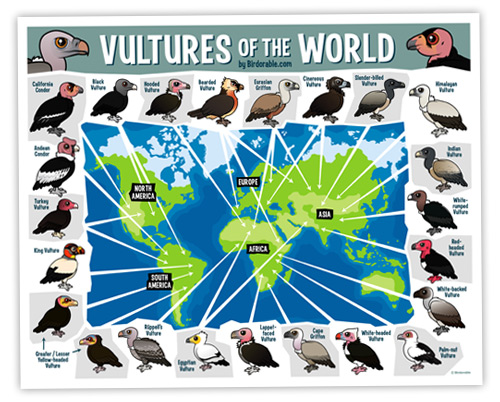
Vultures of the World Map

We're celebrating Vulture Week because this Saturday, September 6th, marks International Vulture Awareness Day (IVAD). This commemorative day has been celebrated since at least 2009 and aims to highlight the importance of vultures and vulture conservation through education.

Vultures around the world are in trouble. Over half of the world's vulture species are considered to be threatened with extinction or endangered. What are some of the threats facing these ecologically important birds?

Poison, including secondary poisoning

Vultures feed on carrion. In some places, a primary source of food for vultures is domestic cattle. Cattle that has been medicated may be toxic to the vultures that consume them. The anti-inflammatory livestock drug diclofenac is a huge problem for vultures across parts of Asia and Africa. Lead poisoning is a particular problem for the California Condor. Lead ammunition falls into the food chain when hunted animals are left behind by irresponsible hunters. Big game poachers in Africa are also accused of deliberately poisoning vultures to help conceal the sites where their illegal poaching takes place.

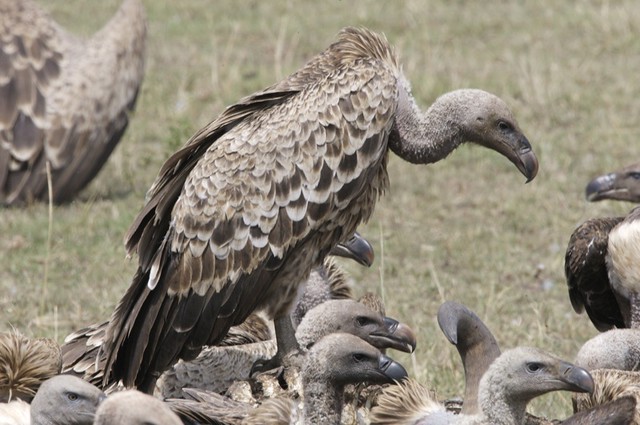
Top of the pile
Top of the pile by Lip Kee Yap (CC BY-SA 2.0) (Rueppell's Vulture)

Persecution

Some cultures believe vultures to be harbingers of death. There is also belief that vultures threaten healthy domestic livestock. These mistaken beliefs lead to direct hunting or persecution of vultures. Power lines and windmills Due to their large size and tendency to soar in flight, vultures are particularly vulnerable to power line collisions and electrocution. Windfarms placed in areas with strong wind currents may be sharing space with large birds that use these same currents to conserve energy during flight. Windfarms are dangerous for vultures and many other species of bird, especially when mills are placed close to known bird migration routes.

Collisions with vehicles

Vultures that live in populated areas often find roadkill to be an easy source of food, but a dangerous one as well. Roadside dining is unsafe and vultures may suffer the same fate as their last meal.

What can you do to help vultures?

Keep Calm & Save VulturesVultures can use all the friends they can get! Do your part to help make the world a better place for our vulture friends. You can support policies and lawmakers that favor vultures and the environment. If you know someone that hunts, talk with them about using lead-alternative ammunition and practicing wildlife-friendly habits. If you find yourself driving by birds on the roadside, slow down and be prepared to stop if needed and if it is safe to do so. Consider your own use of pesticides or any other cases of adding chemicals to the environment. Learn about the vultures that live in your area and what specific threats they may be facing. Visit local wildlife centers to learn more about vultures. You might even get to meet a vulture in person!

We're celebrating Vulture Week because this Saturday, September 6th, marks International Vulture Awareness Day (IVAD). This commemorative day has been celebrated since at least 2009 and aims to highlight the importance of vultures and vulture conservation through education.

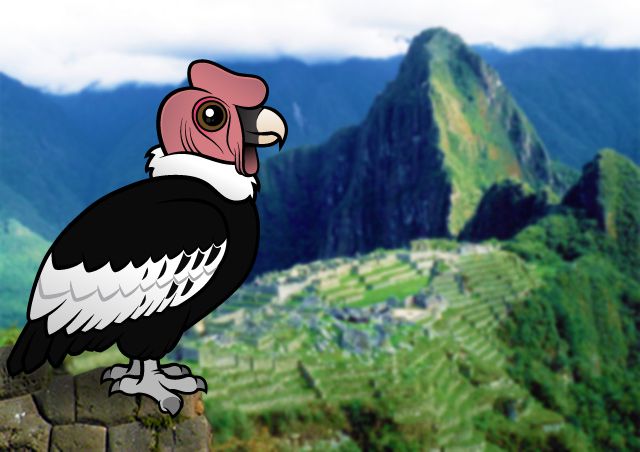
Birdorable Andean Condor

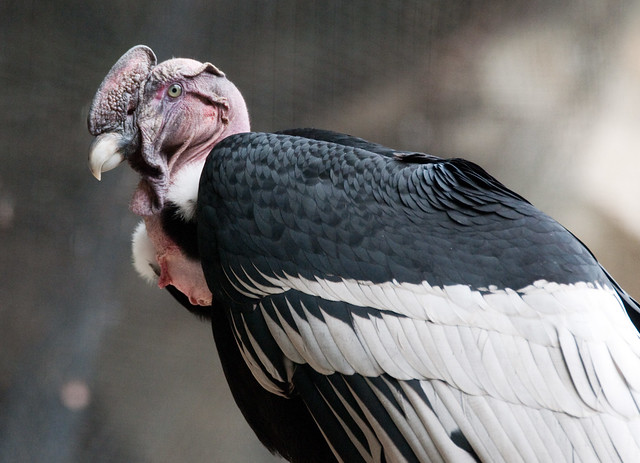
The Andean Condor is one of two types of condor, along with the California Condor. Both of these fall under the family Cathartidae, or New World Vulture. The Andean Condor is one of the world's largest flying birds, with a wingspan that may measure over 10 feet across. Among vultures found in the Americas, the Andean Condor is the only species to show sexual dimorphism. This means that males and females have a different appearance. Mature male Andean Condors have a large fleshy comb resting atop the head, which is reddish. Adult females have dark, uncombed heads. In most birds of prey, females are larger than males, but the Andean Condor defies this rule; males are larger than females.

Male Andean Condor
Male Andean Condor by Eric Kilby (CC BY-SA 2.0)

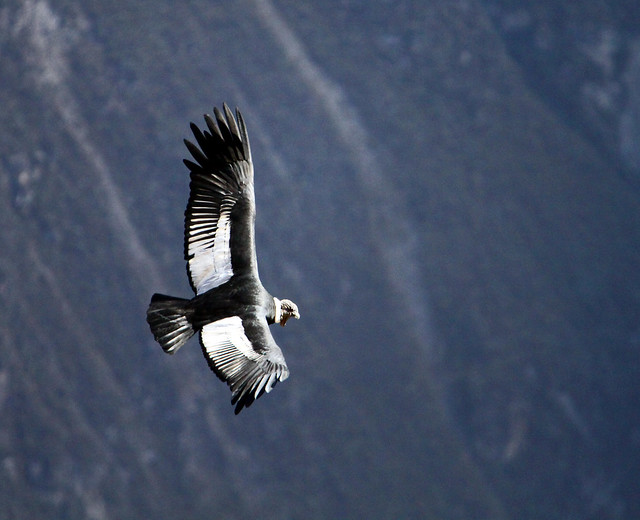
Like most other vulture species, the Andean Condor feeds primarily on carrion. They may travel 100 miles or more in a day in search of food, which includes the carcasses of large mammals like llamas, deer, cattle, and boar. Andean Condors are excellent at soaring using rising columns of hot air called thermals. Andean Condors can be found along the western mountain ranges of South America, including the Andes and the Santa Marta Mountains. Their range overlaps with other New World vulture species, and they may follow Turkey Vultures, Lesser Yellow-headed and Greater Yellow-headed Vultures to carcasses.

andean condor
andean condor by vil.sandi (CC BY-ND 2.0)

The Andean Condor is a national symbol for several South American countries, including Bolivia, where it is the official national bird. Condors were revered in Andean mythology and is sometimes considered to be a symbol of power and health. Andean Condors mate for life. They reach full maturity after five or six years and may live to be 50 years old or more in the wild; a captive condor lived to be at least 72 years of age. Pairs typically raise one chick every other year. The population trend for the Andean Condor is decreasing, and the IUCN Red List considers the species to be Near Threatened. They face challenges from habitat loss, secondary poisoning, persecution, and other man-made threats.

Cute Andean Condor Gifts

This Saturday, September 6th, marks International Vulture Awareness Day (IVAD). This commemorative day has been celebrated since at least 2009 and aims to highlight the importance of vultures and vulture conservation through education. We'd like to focus on vultures this week through a series of blog posts featuring these important families of birds. As an introduction, here are some vulture highlights from our blog and website archives.

Birdorable Vultures of the World Map in English and Spanish
  • Our Vultures of the World map shows where all of the world's 23 vulture species can be found. This is a free printable poster download (the map is also available for purchase in larger formats).
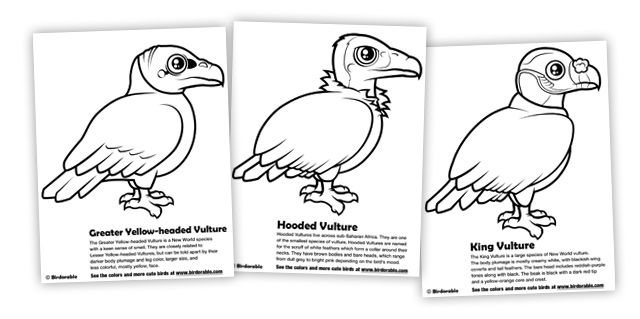
Vulture Coloring Pages

Join us this week as we highlight vulture species, vulture biology and other fun vulture topics in the coming days! We're excited to gear up to celebrate another International Vulture Awareness Day!

Today marks the 100 year anniversary of the death of Martha, the last of her species, the Passenger Pigeon. With her death our planet lost another species forever to extinction.

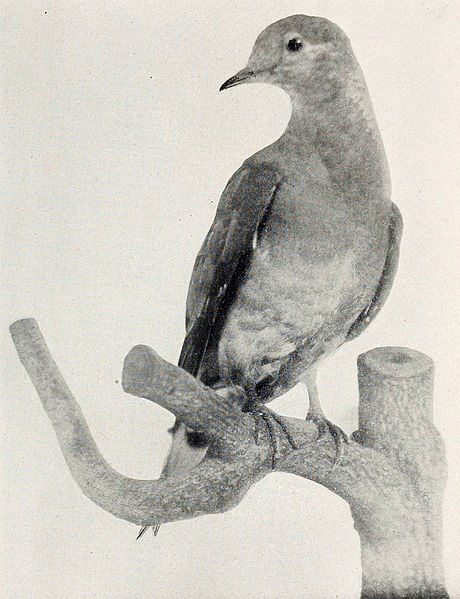
Martha
Martha as a mounted specimen, by Robert W. Shufeldt, 1921

Monday, September 1st will mark the 100 year anniversary of the death of Martha, the last of her species, the Passenger Pigeon. With her death our planet lost another species forever to extinction. This week we'd like to share some of the commemorative events and educational opportunities that are taking place to mark this important centenary.

We know the exact moment that the Passenger Pigeon went extinct, because the last of the species was a known captive individual named Martha. The last known individual of a species (or sub-species) is sometimes known as an endling.

Martha is not the only endling known to the world. Here are some other notable individuals that were the last of their kind.

The Tasmanian Tiger was extinct in the wild by 1930. The last captive individual died at the Hobart Zoo on September 7, 1936. Since 1996, Australia has annually commemorated the date as National Threatened Species Day.

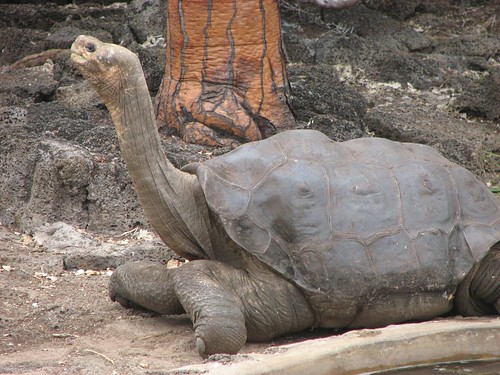
Very recently, a Pinta Island Tortoise named Lonesome George passed away on the Galapagos Islands. He was the last of his kind, a subspecies of Galápagos Tortoise. He was thought to be at least 100 years old when he passed away on June 24, 2012.

Lonesome George 2
Lonesome George 2 by Mike Weston (CC BY 2.0)

The Quagga was a subspecies of the Plains Zebra that lived in South Africa. Dutch settlement of South Africa doomed the Quagga as it was in competition for food with domestic animals. The last wild Quagga died in South Africa by 1878. The last individual Quagga on earth died at the Artis Zoo in Amsterdam on August 12, 1883.

The Carolina Parakeet is another species of bird that went extinct in North America in the early 1900s. The last known wild bird was killed in 1904, while the last captive individual, a male named Incas, died at the Cincinnati Zoo on February 21, 1918.

Monday, September 1st will mark the 100 year anniversary of the death of Martha, the last of her species, the Passenger Pigeon. With her death our planet lost another species forever to extinction. This week we'd like to share some of the commemorative events and educational opportunities that are taking place to mark this important centenary.

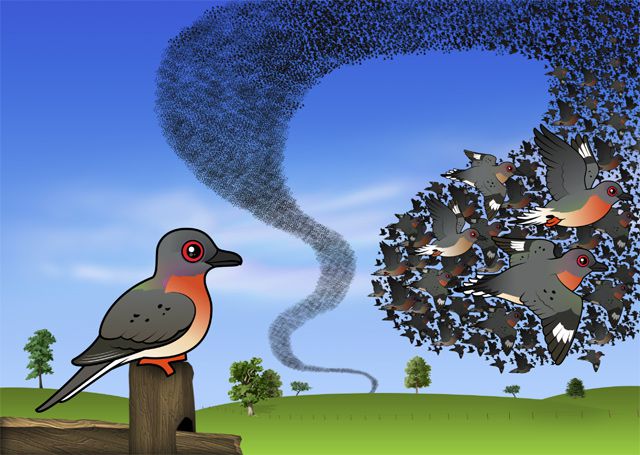
Passenger Pigeons once ranged across a wide part of eastern North America. Their preferred breeding habitat was deciduous forest; winter roosting sites were either in swamps or pine forests. Here are some more interesting facts about this species.

 
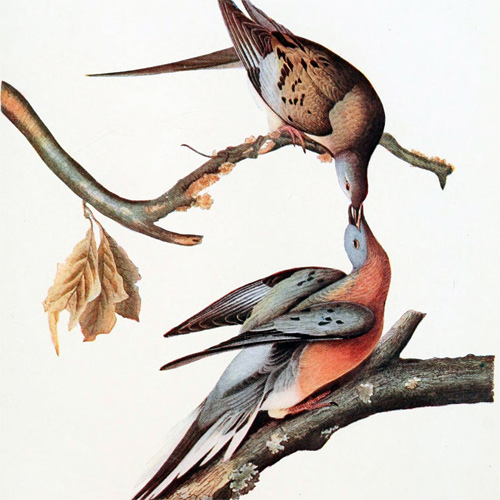
Passenger Pigeons by John James Audubon

1) When Europeans first arrived in North America, there were an estimated 3 to 6 billion Passenger Pigeons on the continent. They were certainly the most abundant bird species in North America, and possibly the entire world.

2) Passenger Pigeons could fly 50 to 60 or more miles per hour. They had very strong breast muscles and long wings for strong flying.

3) Passing flocks of Passenger Pigeons would darken the sky and take days to pass an area.

Billions of Passenger Pigeons

4) Passenger Pigeons were larger than the familiar Mourning Dove. From head to tail they measured 15 to 16.5 inches long and weighed 12-14 ounces.

5) Adult Passenger Pigeons pairs would raise just one chick per year. Both parents would incubate the egg and care for the growing chick.

6) Passenger Pigeon chicks were called squabs (as are other pigeon and dove babies). Fat Passenger Pigeon squabs would fall from the nest before their first flight. The baby would remain on the ground until it was able to fly, usually a few days later.

7) Passenger Pigeons nested in huge colonies, some covering up to 850 square miles or more. A single tree may have held up to 500 nests at one time.

8) Passenger Pigeons dined primarily on nuts: acorns, chestnuts, hickory nuts, and beech nuts.

9) The term "stool pigeon" originates from the culture of hunting Passenger Pigeons. A single captured pigeon would be tied to a stool and then dropped onto the ground. Pigeons flying above the unfortunate captive would take this as a sign to land in the same spot. In this way, entire flocks could be easily captured or shot.

Team Passenger Pigeon

10) After decades of decline due to both over-hunting and rapid deforestation, the last Passenger Pigeon, an individual named Martha, died at the Cincinnati Zoo on September 1, 1914. Her exact age was unknown, but she may have been as old as 29.

Monday, September 1st will mark the 100 year anniversary of the death of Martha, the last of her species, the Passenger Pigeon. With her death our planet lost another species forever to extinction. This week we'd like to share some of the commemorative events and educational opportunities that are taking place to mark this important centenary.

There's no shortage of books written about Passenger Pigeons. Their journey from incredible abundance to shocking extinction is well-known. Here are just a few titles relating to Martha and her species.

This book about the Passenger Pigeon, the first new major work about the species in over 50 years, was published earlier in 2014. A Feathered River Across the Sky: The Passenger Pigeon's Flight to Extinction by Joel Greenberg tells the epic story behind the extinction of the Passenger Pigeon while drawing ties to our current relationship with the natural world.
The Passenger Pigeon by W. B. Mershon was first published in 1907. Unlike modern works, here the author gives a first-hand account of interacting with the species, its decimation at the hand of man, and its apparent impending loss.
The Passenger Pigeon by Errol Fuller is another title being released in this anniversary year. Fuller has experience writing about extinct species; he has authored books about the Dodo, the Great Auk, and other Lost Animals.
The Silent Sky: The Incredible Extinction of the Passenger Pigeon, first published in 1965, tells the extinction story in readable novel form. The book follows the life and death of the last known wild Passenger Pigeon.

Monday, September 1st will mark the 100 year anniversary of the death of Martha, the last of her species, the Passenger Pigeon. With her death our planet lost another species forever to extinction. This week we'd like to share some of the commemorative events and educational opportunities that are taking place to mark this important centenary.

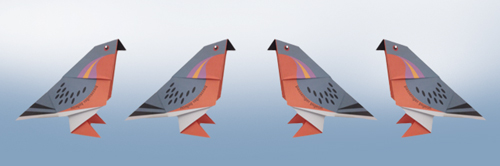
Fold the Flock is a project to help us remember the amazing Passenger Pigeon flocks of the past. The project involves participants folding origami pigeons; their goal is to accumulate a virtual flock of one million folded pigeons by the end of the year. The flock is now just over 300,000 400,000 birds strong.

Fold the Flock

Participants can download a free PDF origami sheet to fold, or purchase origami kits containing 50 sheets. Folding a origami Passenger Pigeon is fun and easy! The PDF download has clear instructions; this animation of the folding process clearly shows all the steps.

Once you've got the hang of it, using recycled paper can make your flock colorful and unique as well as environmentally friendly. Once you've folded one or more pigeons, add your bird(s) to the flock - an online registry of all of the origami Passenger Pigeons folded by participants around the world.

Monday, September 1st will mark the 100 year anniversary of the death of Martha, the last of her species, the Passenger Pigeon. With her death our planet lost another species forever to extinction. This week we'd like to share some of the commemorative events and educational opportunities that are taking place to mark this important centenary.

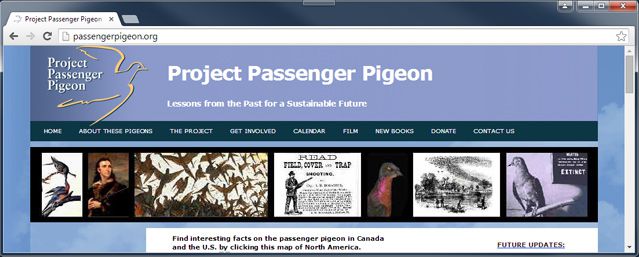
Among other goals, Project Passenger Pigeon (PPP) was created with the aim to "familiarize as many people as possible with the history of the passenger pigeon and its extinction; raise awareness of how the issue of extinction is ecologically, culturally, and morally relevant to the 21st Century; encourage and support respectful relationships with other species; motivate people to take actions to prevent human-caused extinction, and to promote biodiversity through habitat preservation and restoration, captive breeding programs, government initiatives, and other measures."

Project Passenger Pigeon

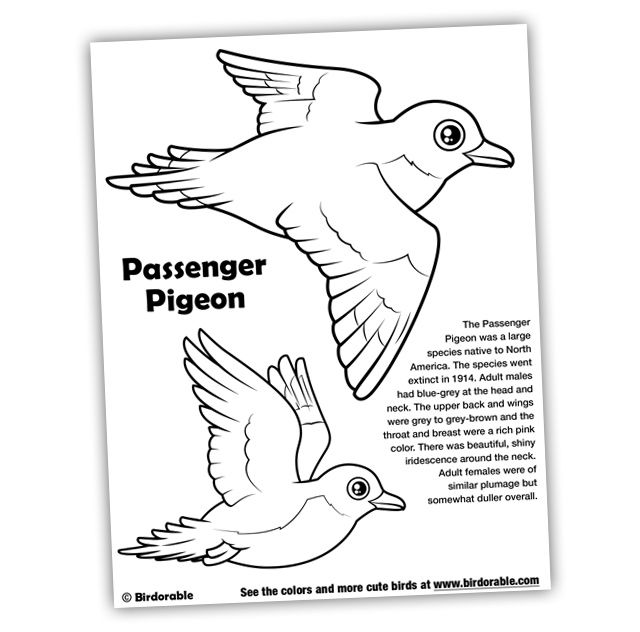
There are a lot of educational resources and activity ideas available on the site. In order to reach as many people as possible, PPP has listed several different ideas for getting everyone involved. These include lesson plans for elementary and high school students; a shareable Powerpoint presentation; theatrical plays; a symphonic composition; and more. If you are looking for an easy activity for younger children, consider downloading our free Birdorable Passenger Pigeon coloring page.

Birdorable Passenger Pigeon Coloring Page