There are just a few more days to go in our Bonanza! On Wednesday we will reveal our 500th bird, but today we introduce #26 in the Bonanza and #495 overall - the European Bee-eater.
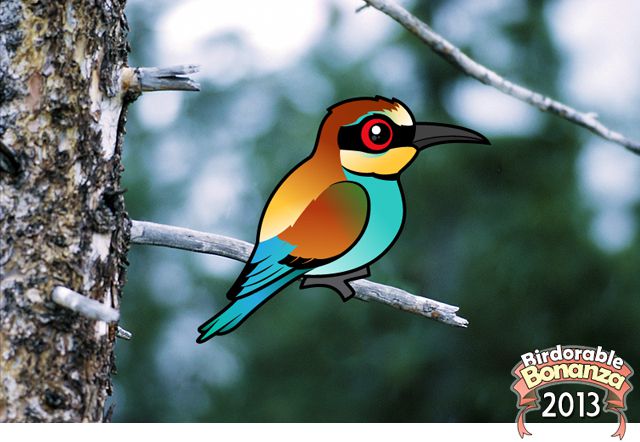
Birdorable European Bee-eater

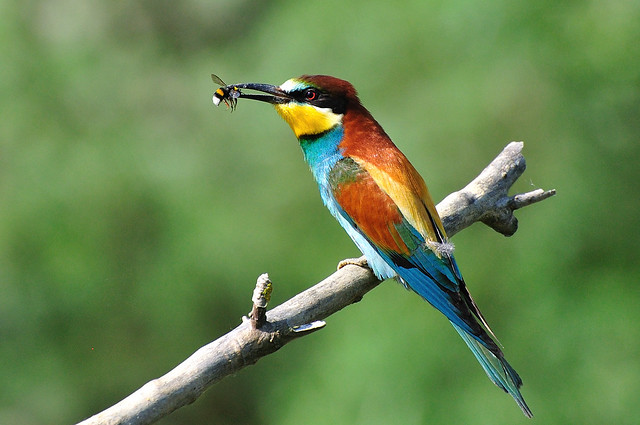
The European Bee-eater is an extremely colorful species of bird that breeds across much of Europe. These striking feathered jewels are migratory and most spend the winter across the southern half of Africa. There are 26 species of bee-eater in the world. This family is appropriately named - they are known to eat a lot of bees!
Guêpiers d'Europe
European Bee-eater by Sandra (CC BY 2.0)

Bees have stingers and venom, so how do bee-eaters safely consume them? After a bee (or wasp or other stinging insect) is captured, the bird beats the insect on a hard surface. This act both removes the stinger and extracts most of the venom. Once this is complete, the insect is consumed. European Bee-eaters eat other insect too, but only flying ones. Prey is always captured on the wing -- perched insects are simply ignored!

european bee eater

Tomorrow's new species is a bird of prey from Africa that, like today's bee-eater, is named in part for what it likes to eat.

bonanza-2013-preview-26

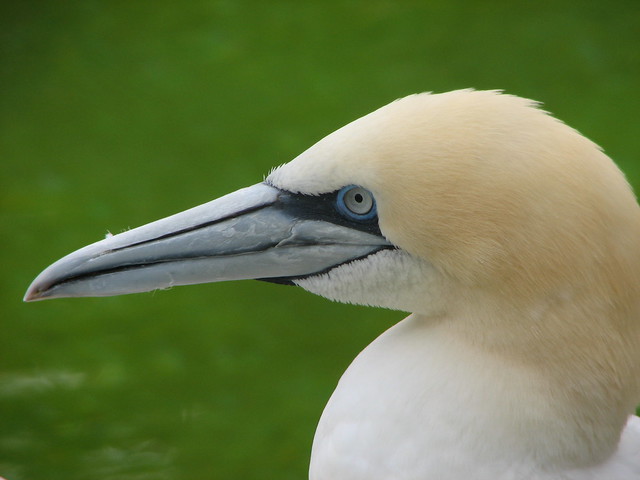
We're adding new birds each day until we reach our 500th Birdorable species! Today's Bonanza bird is the Northern Gannet.
Birdorable Northern Gannet

The Northern Gannet is a large species of seabird found around northern waters of the Atlantic Ocean. They breed off of North America and Europe.

Gannet
Northern Gannet by Amy Evenstad (your blogger)

Northern Gannets feed in a spectacular fashion. They dive into the water to catch fish. A Northern Gannet may begin its dive from over 100 feet above the water, tucking their wings back and aiming down headfirst. They may reach speeds of 60 mph before hitting the water and diving down 15 feet or more. Once caught, the prey of the Northern Gannet is always consumed underwater.

northern gannet

Tomorrow's new bird is a very colorful European breeder that has a special fondness for a certain family of insects.

bonanza-2013-preview-29

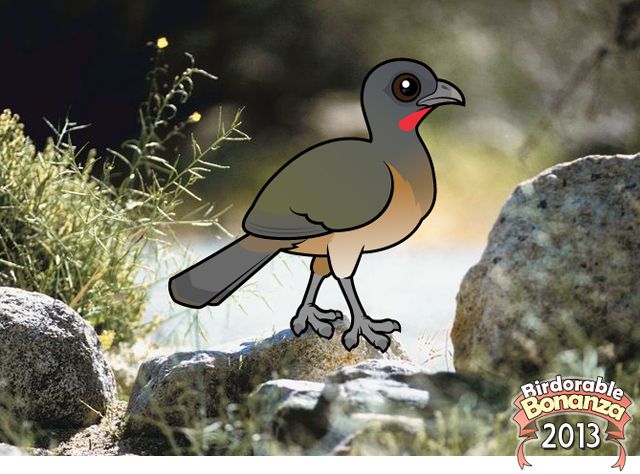
The end is in sight! We're continuing to add new birds and today's is the 24th species in the current Bonanza. Today's Bonanza bird is the Plain Chachalaca.

Birdorable Plain Chachalaca

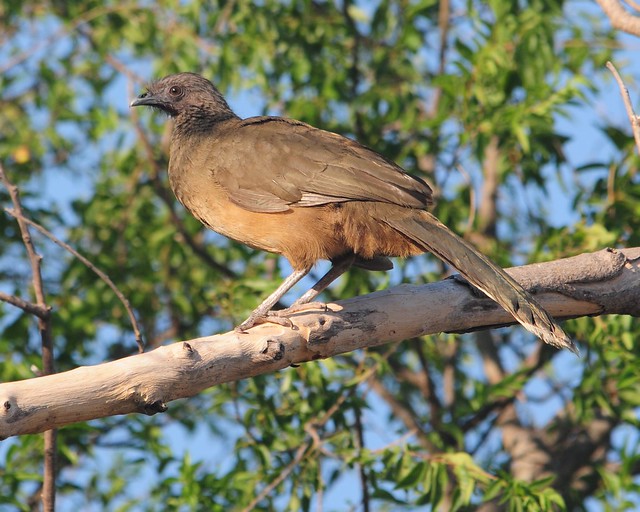
Plain Chachalacas are large grouse-like birds related to curassows and guans. They are found in a rather large range across much of eastern Central America and Mexico. Their range extends up to the southernmost tip of Texas, making the species a specialty sought-after by North American birders visiting the Lone Star State.

Plain Chachalaca (<I>Ortalis vetula</I>), San Ygnacio, Texas
Plain Chachalaca by Vince Smith (CC BY-SA 2.0)

Plain Chachalacas spend much of their time on the ground. Though they can fly, they have relatively weak wing muscles so they much prefer to get around on foot. They will even flee from danger by running rather than flying, if they can. They are also ground nesters.

Plain Chachalaca merchandise

Tomorrow's new species is a large seabird found in and around northern Atlantic waters.

bonanza-2013-preview-30

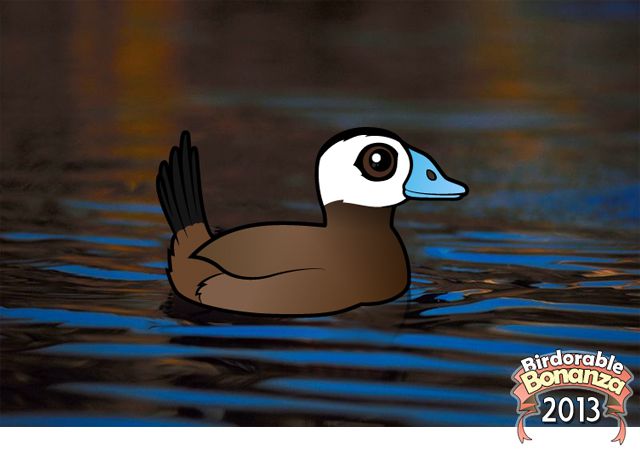
Our Bonanza rolls on! We're adding new birds each day until we reach our 500th Birdorable species! Today's Bonanza bird is the White-headed Duck.

Birdorable White-headed Duck

White-headed Ducks are diving ducks. This means that they dive under the water for food. They are omnivorous, though they often prefer vegetation to taking prey. They are found in freshwater habitat in North Africa, Spain, and across central Asia.

malvasía cabeciblanca 02 - ànec cap-blanc - white-headed duck -  oxyura leucocephala
White-headed Duck by Ferran Pestaña (CC BY-SA 2.0)

White-headed Ducks are in the "stiff-tailed" duck subfamily. This grouping includes the Ruddy Duck and the extinct New Zealand Stiff-tailed Duck.

White-headed Duck sample products

Tomorrow's new species is considered to be a specialty for birders visiting south Texas. The name of this bird is an onomatopoeia for its loud song.

bonanza-2013-preview-24

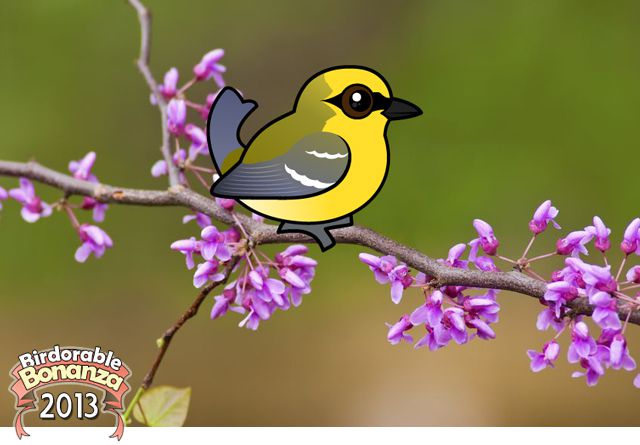
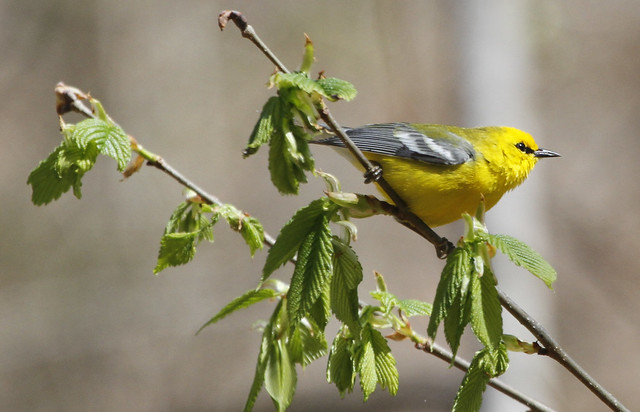
Happy Monday! Our 2013 Birdorable Bonanza continues today with our new bird, the Blue-winged Warbler.

Birdorable Blue-winged Warbler

The Blue-winged Warbler is a lovely species of New World warbler that breeds across a range in eastern North America. They are migratory; winters are spent in the Caribbean and Central America.

Blue-winged Warbler
Blue-winged Warbler by Joseph F. Pescatore (CC BY-ND 2.0)

Blue-winged Warblers are closely related to Golden-winged Warblers. The two species often hybridize; offspring are called either "Brewster's Warbler" (who take after the Blue-winged parent) or "Lawrence's Warbler" (who more resemble the Golden-winged parent).

blue-winged warbler

Tomorrow we'll add a species of duck that faces a threat from a very close relative.

bonanza-2013-preview-23

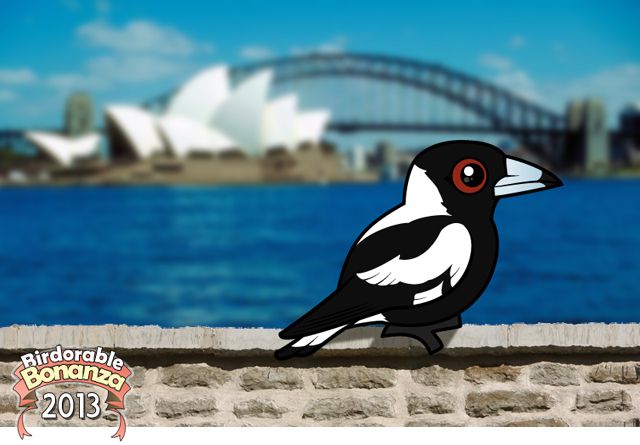
We're adding a new bird each day until we reach our 500th Birdorable species! Today's Bonanza bird is the Australian Magpie.

Birdorable Australian Magpie

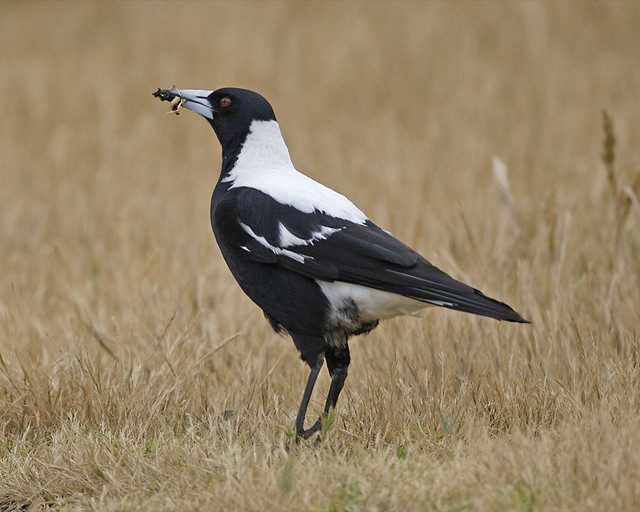
Australian Magpies are not closely related to the magpies found in Europe or the Americas. When European naturalists came to settle in Australia, they noted the plumage of the new Australian species was similar to the Eurasian Magpie. They named the bird after their old familiar. Did you know that the American Robin was named in the same fashion? It is not related to the European Robin, but both species share a brownish plumage with a rich reddish-orange breast.

Australian magpie wb
Australian Magpie by Lip Kee (CC BY-SA 2.0)

Australian Magpies are conspicuous and common within their range. They are omnivorous and are well-adapted to a variety of habitat types. They enjoy popularity in Australia and are the mascot for several sports teams as well as the official emblem of the Government of South Australia. Although they are popular, during breeding season they can be a menace as they fiercely protect their nest site. They may swoop down on anyone they perceive as a threat to their territory. August to October is the peak season for magpie attacks, and both pedestrians and cyclists are deemed fair game.

australian magpie

Tomorrow's new species is a North American songbird with a buzzy song and blue wings.

bonanza-2013-preview-22

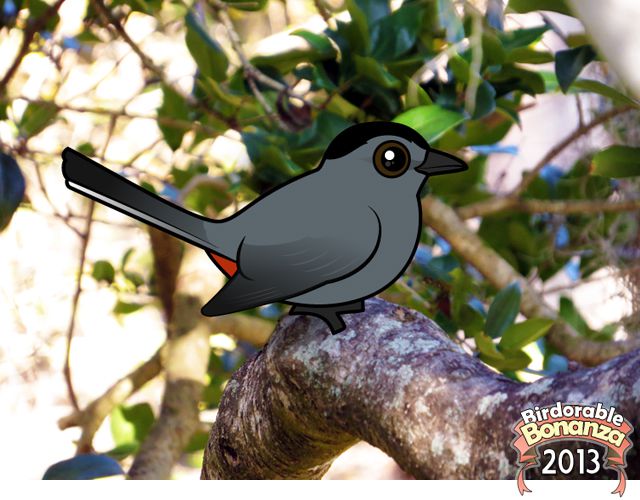
We're adding a new species every day until we reach our 500th Birdorable species! Today's Bonanza bird is the Gray Catbird.

Birdorable Gray Catbird

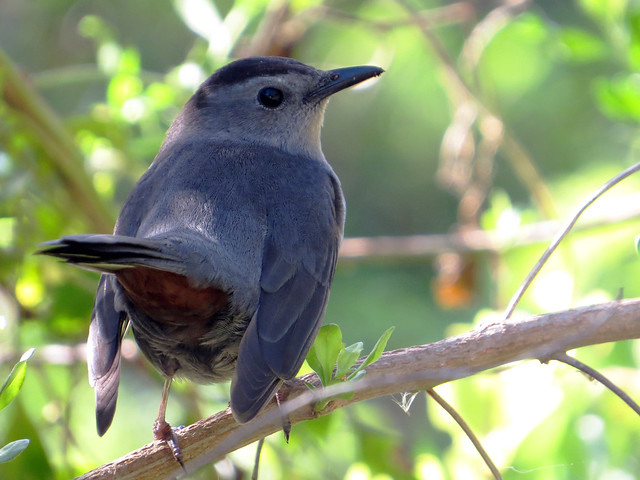
Gray Catbirds are migratory birds in the mimid family. Other mimids include mockingbirds and thrashers. Mimids are known for their ability to mimic sounds made by others. The Gray Catbird has a cat-like mewing call but is also skilled at mimicking other birds, frogs, and even mechanical noises.

Grey Catbird
Gray Catbird (photo by blogger)

Gray Catbirds tend to lurk low in vegetation. They are well-adapted to living in suburban landscapes and careful observation may reveal them visiting back yard feeding stations to partake of jelly, suet, mealworms, or even seed.

gray catbird
Tomorrow's Bonanza bird is a conspicuous and popular species found Down Under.
bonanza-2013-preview-21

We're adding one new bird each day until we reach our 500th Birdorable species on the last day of July. Today's Bonanza bird is the King Bird-of-paradise.

King Bird-of-paradise

The King Bird-of-paradise is the smallest of the bird-of-paradise family. It lives in Papau New Guinea and on outlying islands. Males are stunning with red body plumage, a white chest, blue feet, and long green-tipped tail feathers that extend nearly five inches from end to end. All male birds-of-paradise have remarkable colorful plumage and special feathers that they use in dances or other rituals in order to attract females. This short video shows a male King Bird-of-paradise performing part of its dance.


King Bird-of-Paradise video copyright Cornell Lab of Ornithology

If you'd like to see more King Bird-of-paradise action, check out this video from the Smithsonian: Dancers on Fire: King Bird-of-Paradise. It includes a female King Bird-of-paradise, so you can clearly see that the species is sexually dimorphic (males and females have different plumage).

king bird of paradise

Tomorrow's new Bonanza bird makes a sound like another animal, and that's how it got its name. bonanza-2013-preview-20

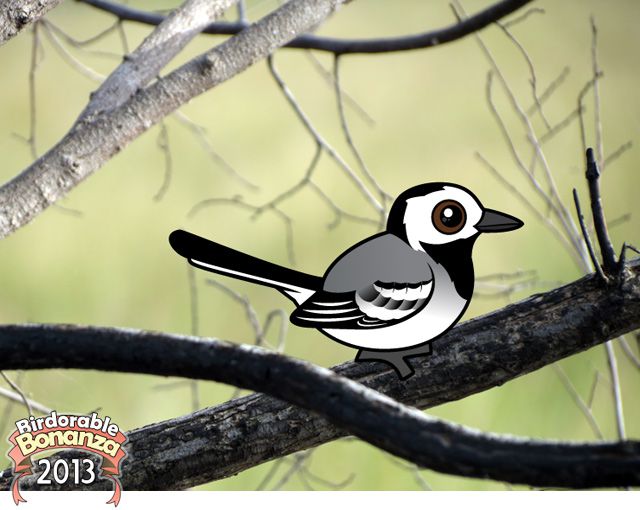
We're 18 days into July, which means that today we are revealing the 18th bird in our 2013 Birdorable Bonanza! Today we introduce our latest new species, the White Wagtail.

Birdorable White Wagtail

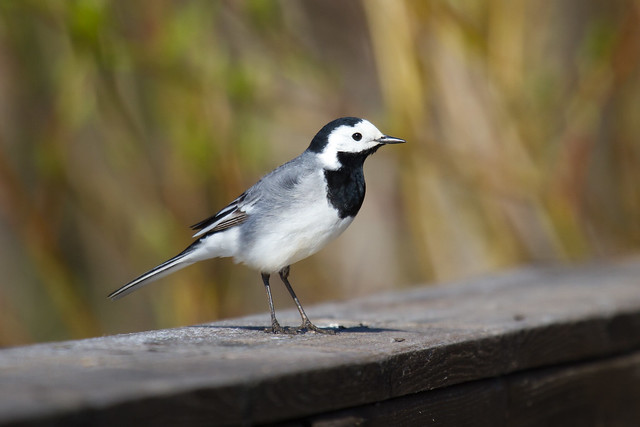
White Wagtails are found across much of Europe and Asia. There are at least nine subspecies of White Wagtail -- some taxonomies recognize up to eleven. This large variety means that you can find White Wagtails sporting many different plumage variants.

White Wagtail - Motacilla alba
White Wagtail by Lars Falkdalen Lindahl (CC BY 2.0)

These subspecies also go by many different regional common names. If you're talking about a Pied Wagtail, Moroccan Wagtail, a Masked Wagtail, Amur Wagtail, or Black-backed Wagtail, you're talking about the same species.

white wagtail

Tomorrow we'll add a bird in a family known for amazing plumage and even more amazing courtship dances.

bonanza-2013-preview-19

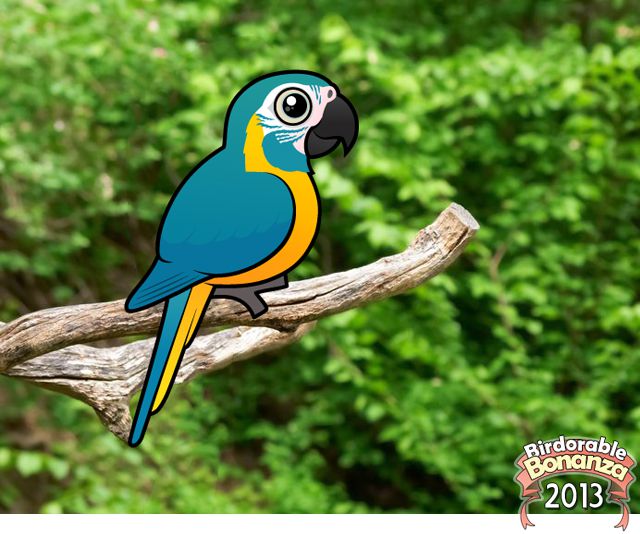
We're adding new birds each day until we reach our 500th Birdorable species! Today's Bonanza bird is the Blue-throated Macaw.

Birdorable Blue-throated Macaw

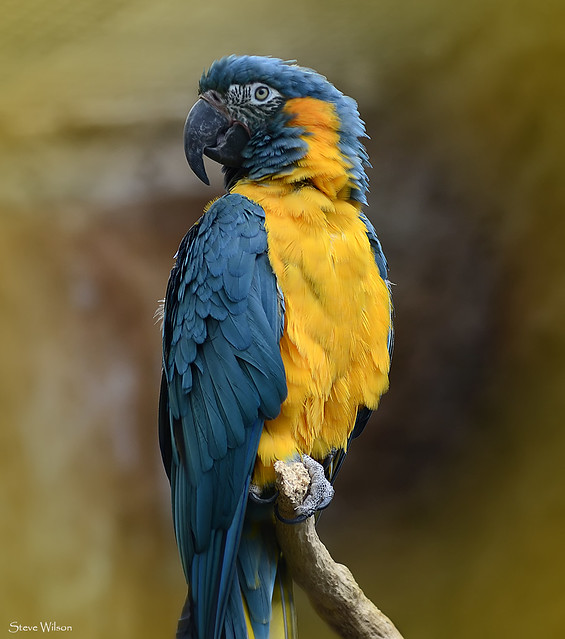
The Blue-throated Macaw is a large species of macaw endemic to Bolivia. These bright and beautiful birds are critically endangered in the wild. Some estimates put the wild population at less than 350 individuals.

Blue throated Macaw
Blue throated Macaw by Steve Wilson (CC BY 2.0)

The population suffered from exploitation from the pet trade in the past. Today, habitat loss is another factor in their critical situation. These beautiful parrots are popular in aviculture and the captive population is much greater than the current wild population. They can live up to 80 years.

blue-throated macaw

Color + behavior = the name of the common Eurasian species that will be added to Birdorable tomorrow.

bonanza-2013-preview-18