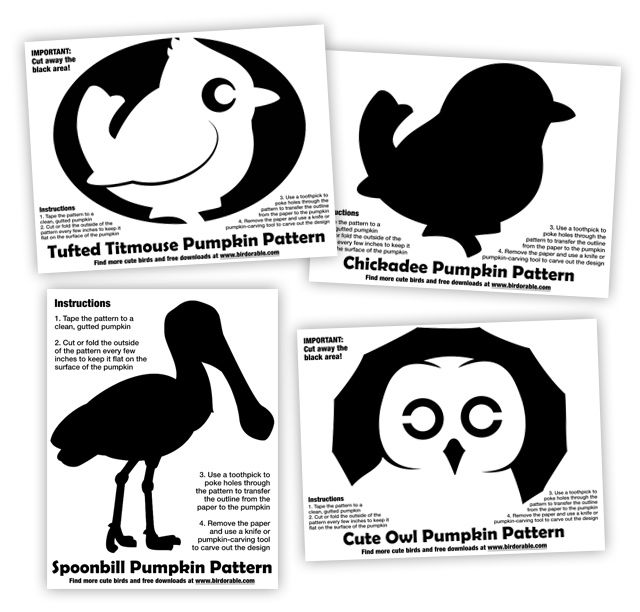
Get ready to dress up your pumpkins this Halloween with some cute Birdorable birds! Below you can download four different cute bird pumpkin carving patterns of varying skill levels as free downloads. Two of our patterns are simple bird cut-outs, and two are inverted designs where the area around the bird must be carved away. Just click on a pattern thumbnail to download the PDF and get carving!
Birdorable Bird Pumpkin Patterns

  • Our first free pumpkin carving pattern is a cut-out Birdorable chickadee. Chickadees love Halloween, you know! After all, they are always singing, "Trick or treat-treat-treat-treat," aren't they?!
  • Next, our free spoonbill pumpkin pattern is another cut-out, though a bit more involved. You know, I bet that spoon-shaped bill would be very handy at cleaning out pumpkin guts this time of year!
  • Our cute owl pumpkin cut-away pattern has the owl looking out from inside the pumpkin, how adorable! Owls own the night - even on Halloween - and this little cutie is no exception.
  • Finally, we have our cute Birdorable Tufted Titmouse pumpkin pattern. This is another cute-away job, and requires a steady hand to leave enough pumpkin to keep the bird afloat. Be careful carving that wing, too!

Have you used any of our free printable downloads at home, in your classroom, or at an event? We’d love to hear about it! Send us photos of the pages in action, or the final result – we may showcase them on our blog!
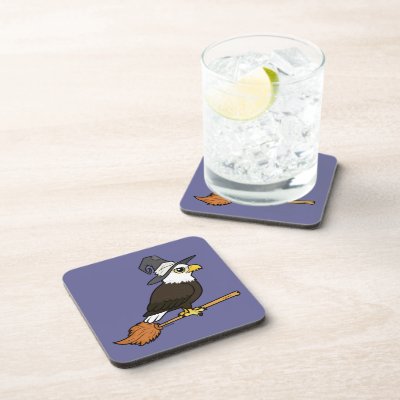
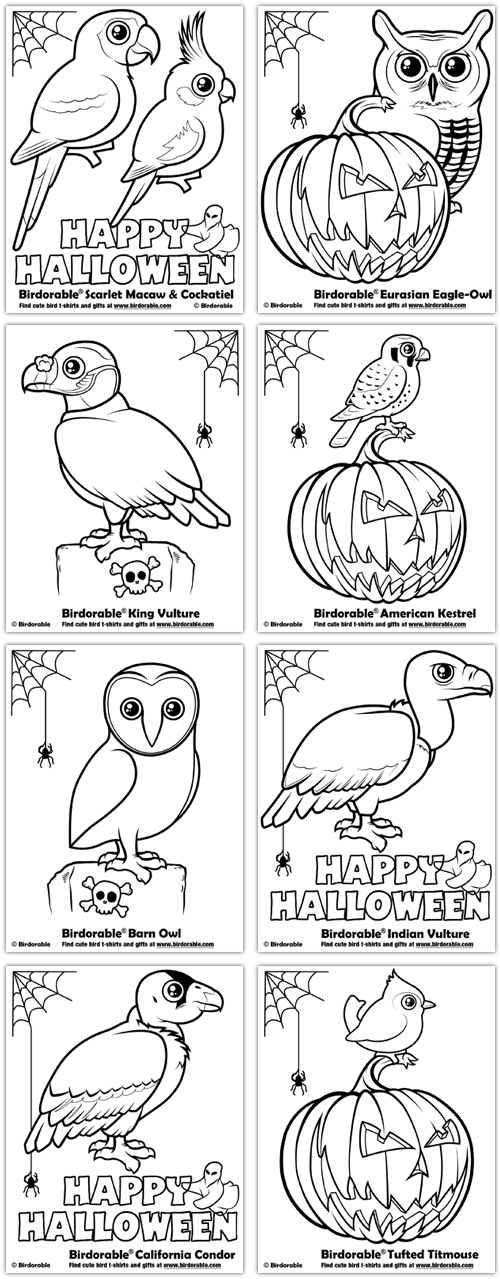
We've added eight brand-new coloring pages for Halloween with some of our favorite birds! That's more coloring pages than we've ever added before at one time. Among the new coloring ages are a Eurasian Eagle-Owl hiding behind a carved pumpkin, Scarlet Macaw and Cockatiel together on a "Happy Halloween" page and a cute King Vulture perched on a grave stone. Download them here:

Birdorable Halloween Coloring Pages

Check here for more coloring pages. Subscribe to the Birdorable Blog by RSS feed or by email to get notified when new downloads like this are added. Have you used our coloring pages at home, in your classroom, or at an event? We’d love to hear about it! Send us photos of the pages in action, or the final result – we may showcase them on our blog!

Cute gifts with these birds

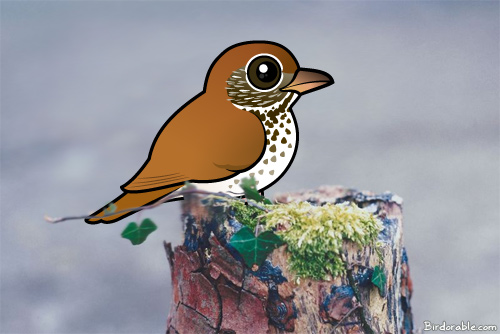
Today we have added a new species to Birdorable: the Wood Thrush.

wood-thrush

The Wood Thrush is a medium-sized songbird in the thrush family. Related birds include the familiar American Robin as well as the Blackbird of Europe. Wood Thrushes breed across parts of eastern North America and winter across parts of Central America. The song of the Wood Thrush is very beautiful. Wood Thrushes have a double voice box, which allows them to sing a melodious harmony with themselves. This specialized voice box is called a syrinx. Some say that the song of the Wood Thrush is the most beautiful of all bird songs. What do you think?

If you can't get enough of this amazing songster, be sure to check out our selection of apparel and gifts featuring our cute cartoon Wood Thrush!

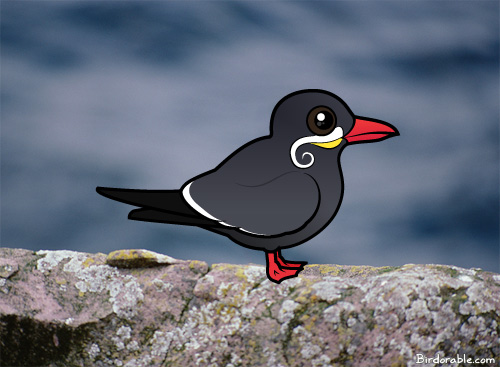
Today we have added the Inca Tern to Birdorable. Inca Terns have a mostly dark grey plumage, with the tail being darker. The wings are tipped in white. Males and females look alike. Adult birds can easily be recognized by their long white mustachial feather plumes. Mustaches are hot right now, making Inca Terns the most popular birds on the beach!

inca-tern

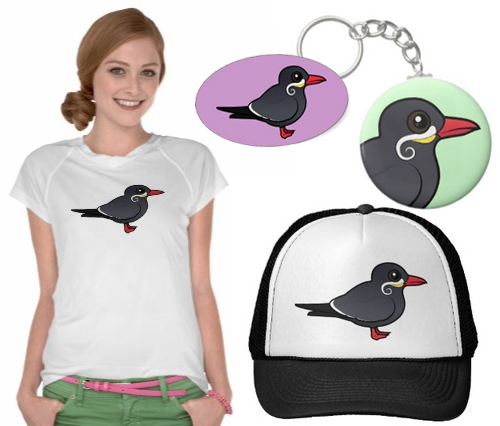
Inca Terns are piscivorous, meaning their diet consists of mostly fish. They eat small fish including anchovies and silversides which are snatched from the water as the bird swoops down from a hovering position. Love these ornate fish-loving birds? Be sure to check out our collection of cute cartoon Inca Tern gifts!

inca tern

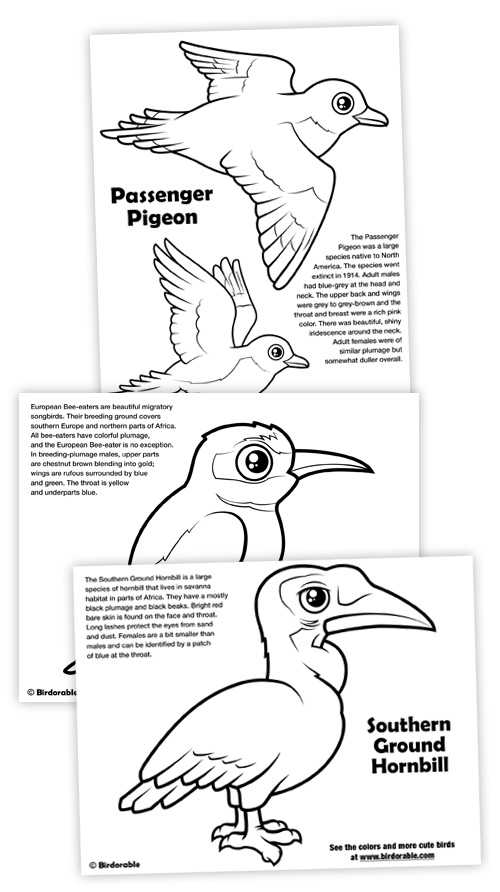
To celebrate our 500th Birdorable, we've added three new coloring pages to our website today. Go to Coloring Pages to download the PDFs. You can visit the meet pages for each bird to check the colors: Passenger Pigeon, Southern Ground Hornbill and European Bee-eater.

Coloring Pages of Passenger Pigeon, European Bee-eater and Southern Ground Hornbill

Check here for more coloring pages. Subscribe to the Birdorable Blog by RSS feed or by email to get notified when new downloads like this are added. Have you used our coloring pages at home, in your classroom, or at an event? We’d love to hear about it! Send us photos of the pages in action, or the final result – we may showcase them on our blog!

Today our 2013 Birdorable Bonanza concludes as we reveal our 500th species: the Passenger Pigeon.

Billions of Passenger Pigeons

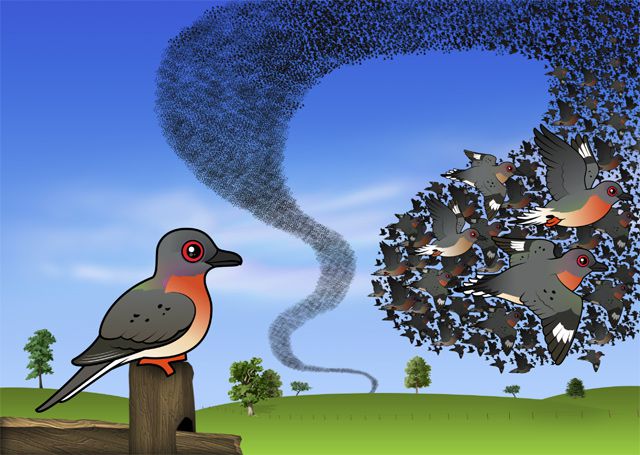
You probably know that the Passenger Pigeon is extinct. But did you know that there used to be up to 5 billion Passenger Pigeons living in North America, making it possibly the most abundant bird species on earth? Flocks, so thick with pigeons that they would darken the sky, would take hours to pass by. How did we lose this species? How did we go from billions to none?

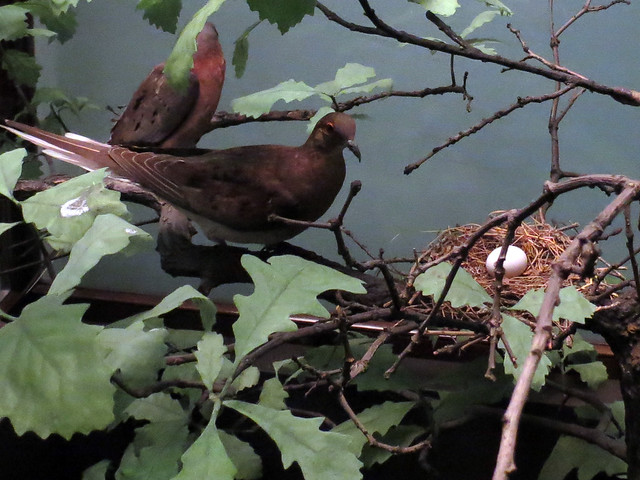
Passenger Pigeon nest
Passenger Pigeon nest display at Chicago's Field Museum (photo by blogger)

The answer is complicated, but two major factors contributed to the demise of the Passenger Pigeon. First, habitat loss was devastating. The birds used huge swathes of woodland to nest and feed, and their preferred trees were taken in huge numbers for both logging and human development. Hunting to satisfy a taste for pigeon was the other major factor. The development of commercial train routes and explosive (human) population growth in eastern North America resulted in a huge trade of pigeon meat. Passenger Pigeons were slaughtered on a mass scale in the Midwest and then transported by rail to cities like New York and Boston for food. This brief account is an extremely simplified version of the complicated story of the loss of the Passenger Pigeon. Project Passenger Pigeon aims to educate people about the Passenger Pigeon and about extinction. 2014 is the 100 year anniversary of the death of Martha, the last Passenger Pigeon. Please visit Project Passenger Pigeon on the web to learn more.

Passenger-Pigeon-Products

This concludes our huge 2013 Birdorable Bonanza! We now offer a whopping 500 different cute cartoon birds, each available on a wide range of products. Thanks for following along!
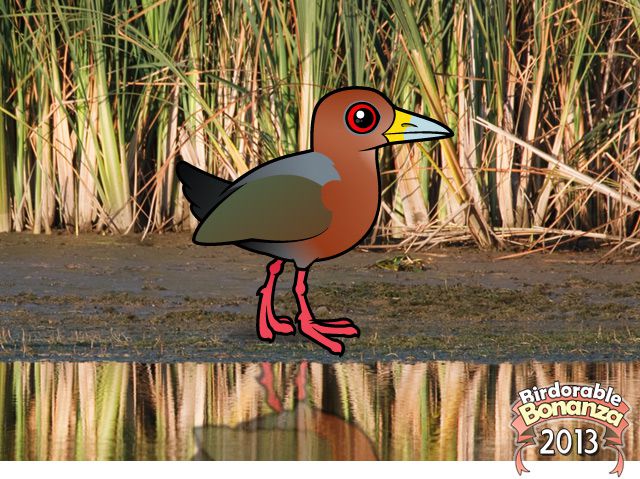
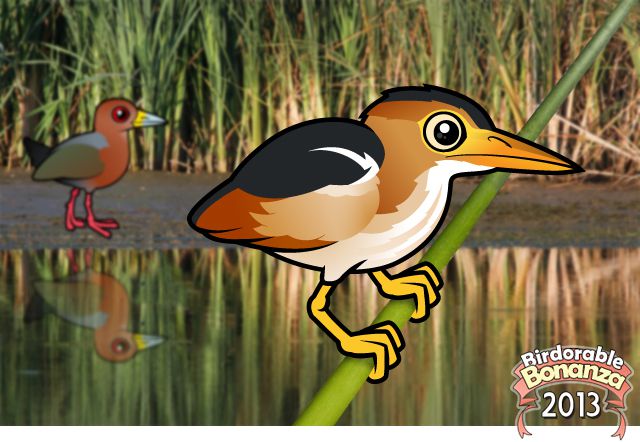
It looks like yesterday's bird, the Least Bittern, totally got photobombed by a Rufous-necked Wood-Rail! How often does that happen? Our 499th Birdorable species and second-to-last 2013 Bonanza bird is the Rufous-necked Wood Rail!

Rufous-necked Wood-rail

Rufous-necked Wood-Rails are usually found in coastal habitats in parts of Central and South America. However, one day earlier this month, birder Matt Daw had an interesting experience while making a video of a Least Bittern at a National Wildlife Refuge in New Mexico. Have a look at the photobombing wood-rail that sent the birding world into a frenzy:


Rufous-necked Wood-Rail, Bosque del Apache NWR by Matt Daw

News of Daw's rare sighting spread like wildfire among the birding community and visitors came from all over the United States to see the wood-rail. American Birding Association president Jeffrey Gordon recorded an interview with Matt Daw which you can see here: Interview with Matt Daw, finder of the New Mexico Rufous-necked Wood-Rail. And the famous sighting also got coverage on a recent episode of CBS This Morning.

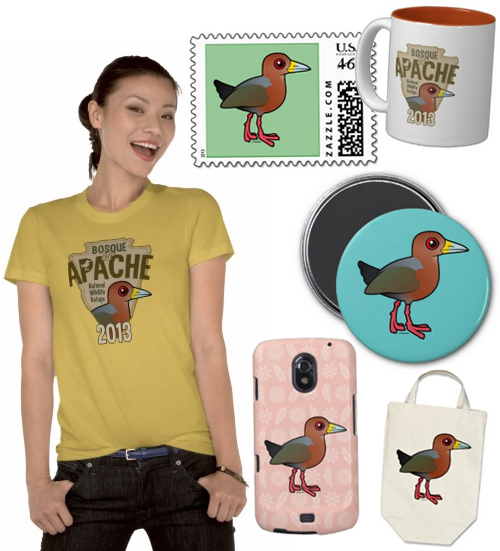
Rufous-necked Wood-Rail merchandise

Tomorrow our 2013 Bonanza will conclude with Birdorable species #500. This once-abundant species will have an important but sad anniversary next year. Join us tomorrow as we reveal our 500th cute Birdorable cartoon bird!

bonanza-2013-preview-31

We’re adding new birds each day until we reach our 500th Birdorable species! Today’s Bonanza bird is species #498 overall: the Least Bittern.

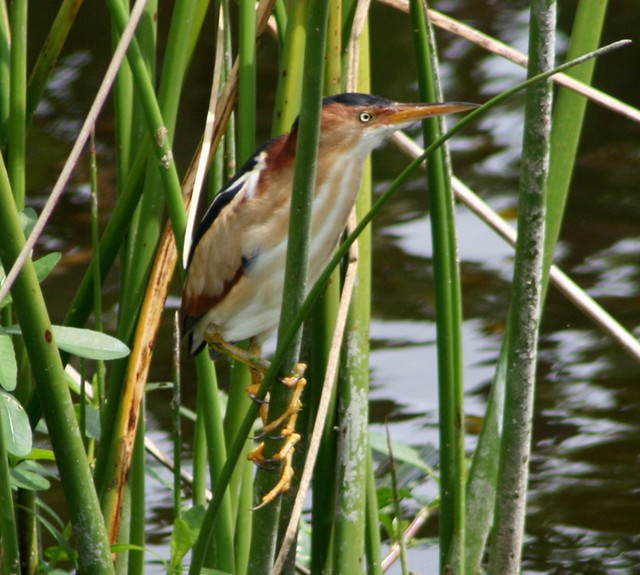
Least Bittern

Least Bitterns are very small herons found in freshwater or brackish wetland-type habitats in the Americas. They are the smallest species of heron found within their range.

Least Bittern comes out to play
Least Bittern by Maureen Leong-Kee (CC BY-SA 2.0)

Least Bitterns are usually found in reed beds, sometimes over rather deep water. They can hunt for small prey like fish, frogs, and insects in water that is too deep for wading birds to enter. They perch on or straddle reeds and look down for prey. If they see something tasty, they stab into the water with their long, pointed beaks.

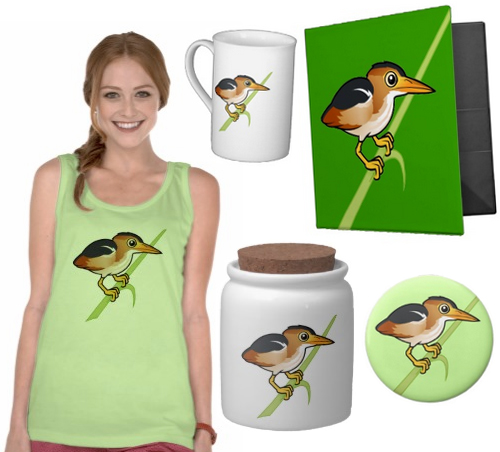
Least Bittern merchandise

Tune in tomorrow to see #499! Wednesday we will reveal our 500th Birdorable!

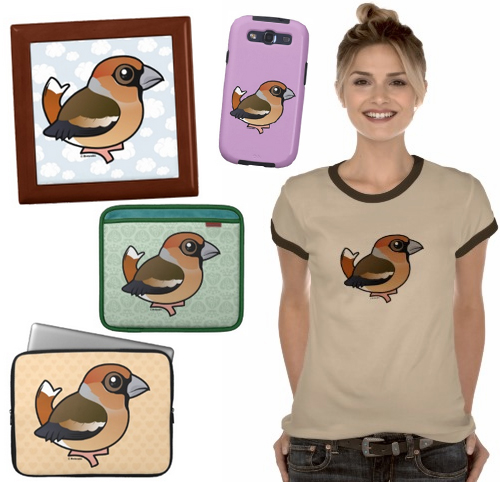
We're adding new birds each day until we reach our 500th Birdorable species! Today's Bonanza bird is the Hawfinch.

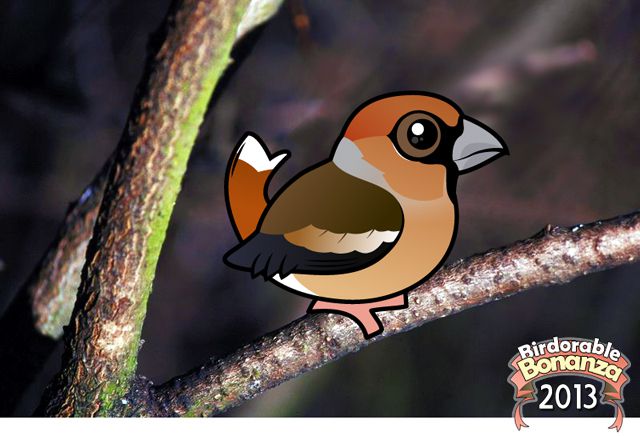
Hawfinch

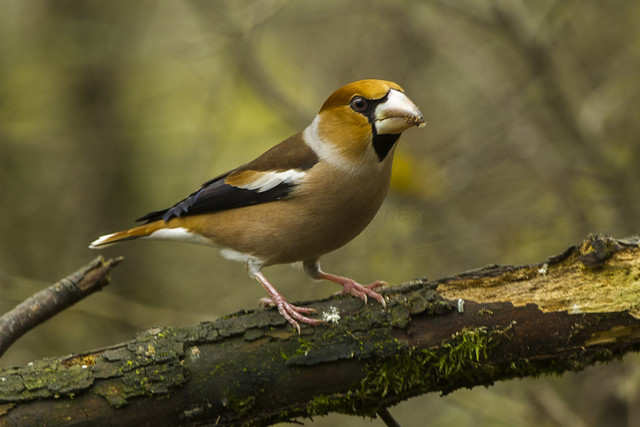
Look at that massive bill! Hawfinches are bulky birds, with large heads and stout bodies. Their large finch beaks have a metallic look to them. Hawfinches feed on hard seeds, including cherry pits and olive pits.

Hawfinch - Kisjuszallas - Hungary_S4E0991
Hawfinch by  Francesco Veronesi (CC BY-SA 2.0)

Hawfinches are social, often feeding in groups -- especially in the winter. They tend to be shy around people, but will visit feeding stations that offer seeds.

Hawfinch merchandise

Tomorrow we'll add a somewhat elusive species of heron found in the Americas. It's a small one!

bonanza-2013-preview-32

X

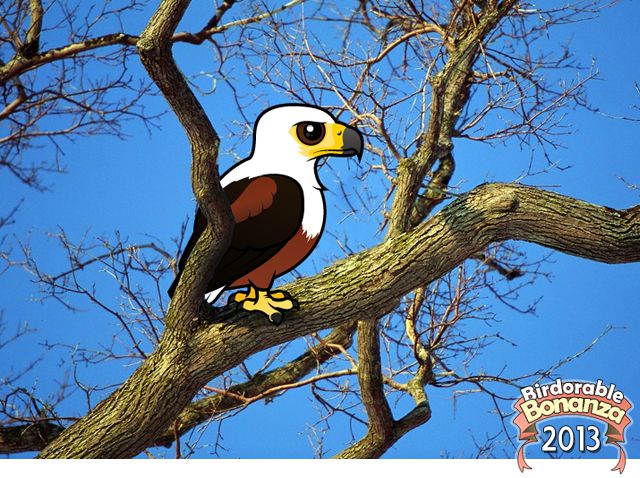
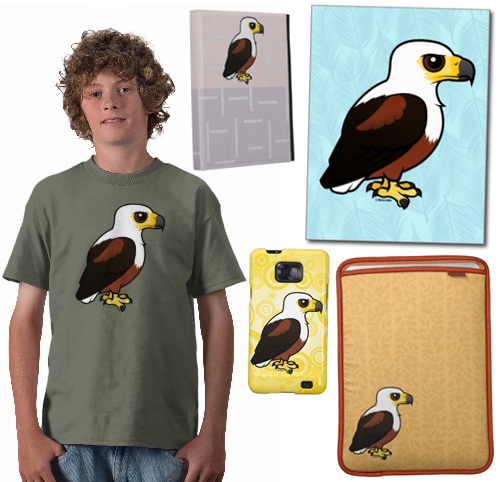
Happy Saturday! Today's Bonanza bird is the African Fish-Eagle.

African Fish-Eagle

African Fish-Eagles are large birds of prey that live in sub-Saharan parts of Africa. They eat a lot of fish (hence the name), but they will also steal prey from other birds or take a variety of other prey items including small turtles, other birds, or even monkeys.

Khalahi
African Fish-Eagle by Jason Wharam (CC BY-ND 2.0)

The African Fish-Eagle has a stable wild population in its rather large natural range. It is the national bird of three African nations: Zimbabwe, South Sudan, and Zambia.

african fish eagle

Tomorrow we'll add a stocky finch species with a very, very big beak. This bird is found across parts of Europe and Asia.

bonanza-2013-preview-25