Gulls Named For People

This week, we're celebrating the gulls of the world! Join us as we highlight these social and intelligent birds. Today we're talking about how some gulls got their common names.

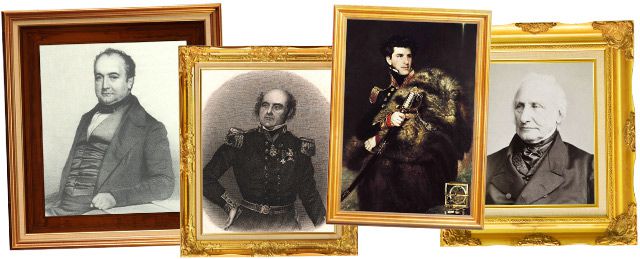
Of the approximately 55 recognized species of gull in the world, at least 12 of them take their common name from an historical figure. So just what does it take for a person to have a gull named after him?

Audouin's Gull is found around the Mediterranean and northwestern Africa. The species was named for the French naturalist Jean Victoire Audouin. Besides birds, Audouin also studied insects, reptiles, and mollusks. In addition to the gull, he had a fungus, Microsporum audouinii, named after him.

Belcher's Gull, also known as the Band-tailed Gull, is found on the Pacific side of South America. This species was named for the British naval officer and explorer Admiral Sir Edward Belcher. The Admiral traveled to and surveyed the habitat of his future namesake gull early in his career.
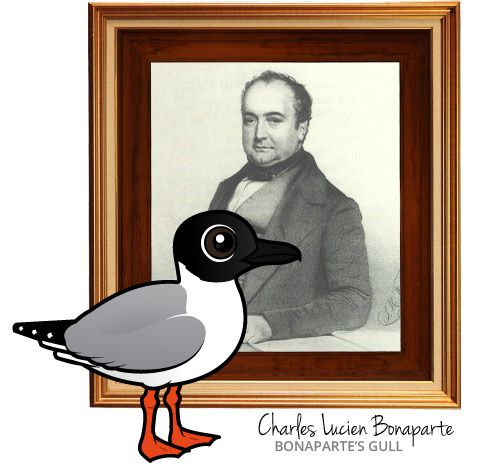
Charles Lucien Bonaparte with Birdorable Bonapart's gull

Bonaparte's Gull is a small species of gull found across parts of North America. The gull was named for the French biologist and ornithologist Charles Lucien Jules Laurent Bonaparte. The scientist was the nephew of Emperor Napoleon. On his voyage to the United States in the 1820s, he discovered the first specimen of what would come to be called Wilson's Storm Petrel.
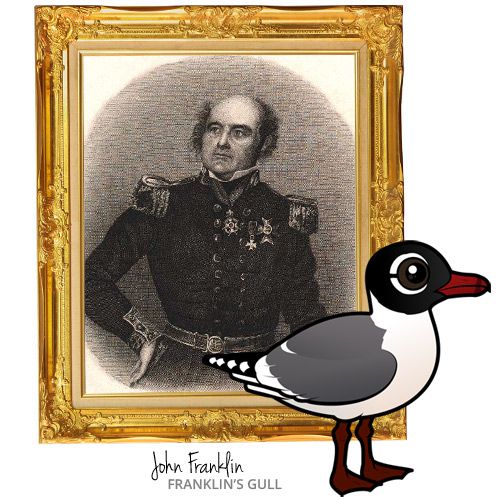
John Franklin with Birdorable Franklin's Gull

Franklin's Gull is a small "black-headed" gull that breeds across parts of North America and winters in the Caribbean and South America. It was named for the British Arctic explorer Sir John Franklin. The first specimen of the Franklin's Gull was collected on his 1823 expedition to the Arctic.

Hartlaub's Gull, also known as the King Gull, is found along the Atlantic coast of southern Africa. The bird was named for the German physician and ornithologist Karel Johnan Gustav Hartlaub. Hartlaub's Bustard and Hartlaub's Duck are also named for this German scientist.

Heermann's Gull is found on the Pacific coast of North America. This striking species was named after the American explorer and naturalist Adolphus Lewis Heermann. During a three-year expedition to the west coast of North America in the 1840s, Heermann collected over 1200 bird study skins.

Heuglin's Gull is a migratory species that breeds across tundra in Russia and elsewhere and winters in Southwest Asia, India, and Africa. The gull was named for German explorer and ornithologist Theodor von Heuglin. Heuglin's Wheatear is also named for the German adventurer.

Kumlien's Gull is a subspecies of the Thayer's Gull. The name comes from Swedish-American ornithologist, naturalist, and taxidermist Thure Kumlien. Kumlien settled in Milwaukee after moving to the United States and made significant contributions to the knowledge of Wisconsin's natural history. Kumlien was also a known authority on birds' nests and an early member of the American Ornithologits's Union.

Nelson's Gull isn't a species, but the result of the hybridization between a Herring Gull and a Glaucous Gull. The informal name given to this offspring was named for the American naturalist Edward William Nelson, who was the first to describe the bird.

Olrog's Gull is found along the Atlantic coast in parts of South America. This gull was named for the Swedish-Argentine biologist Claes C. Olrog, who also has his name on the Olrog's Cinclodes (a type of songbird), Olrog's Chaco Mouse, and Olrog's Four-eyed Opossum.

Pallas's Gull, also known as the Great Black-headed Gull, is a large species that breeds in parts of Russia and Mongolia. The species was named for the German zoologist and botanist Peter Simon Pallas. He described many species for science and has several others named after him, including Pallas's Cat, Pallas's Cormorant, and Pallas's Rosefinch.
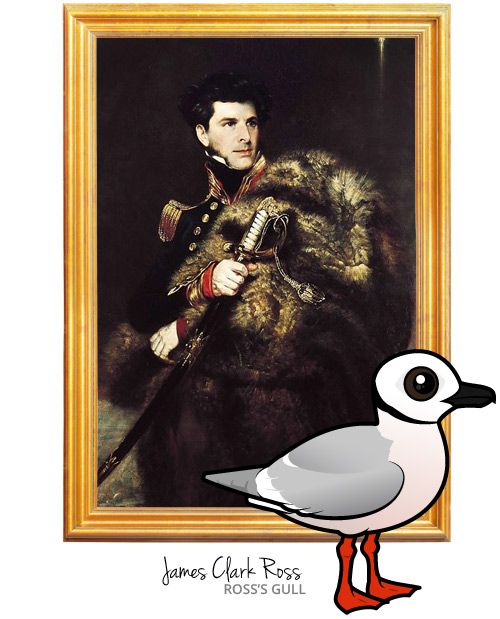
James Clark Ross with Birdorable Ross's Gull

Ross's Gull is a small species that breeds in the high Arctic and Siberia. The gull was named for the British naval officer and explorer James Clark Ross. The Ross Seal, a moon crater, and the James Ross Strait are just a few of the other honorary names given in tribute of James Clark Ross.
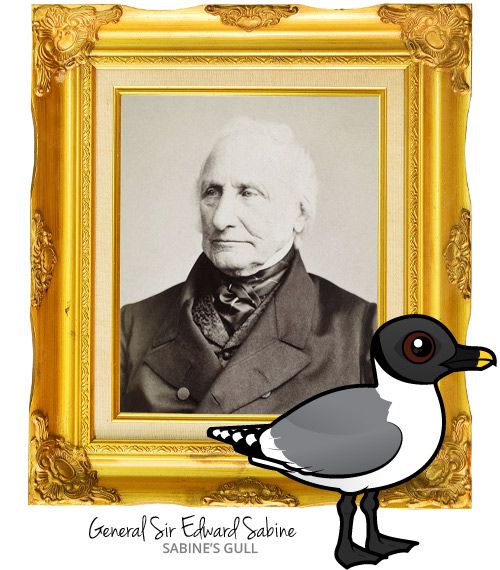
General Sir Edward Sabine with Birdorable Sabine's Gull

Sabine's Gull is a small species that breeds in the Arctic. It is also called the Fork-tailed Gull or the Xeme. The species was named for the Irish scientist Sir Edward Sabine. Sabine had a wide range of interests and is known for his research on the magnetic field of the Earth as well as his study of Greenland's birds. The Sabine's Puffback, a songbird, and the Sabine's Spinetail, a swift, are both also named for the scientist.

Saunders's Gull, also known as the Chinese Black-headed Gull, is an Asian species of gull. The bird was named for the British ornithologist Howard Saunders. The Saunders's Tern is also named after the scientist. Before developing a keen interest in gulls and terns, Saunders studied the birds of Spain.

Thayer's Gull is a North American species. It was named for the amateur ornothologist John Eliot Thayer. Thayer brought early attention to the problems native species suffer when non-native predators are introduced. Thayer's Gull was first collected during an expedition to Alaska in 1913.

Gull Glossary

This week, we're celebrating the gulls of the world! Join us as we highlight these social and intelligent birds! Today we're sharing some keywords that pertain to gulls. This gull glossary also includes definitions that apply to other bird families, but are important topics to understand when studying gulls.

Carnivore
An animal that eats mostly other animals is said to be a carnivore. Gulls are carnivores that feed opportunistically in a variety of ways.

Cosmopolitan
If the range of a species covers much of the world, it is said to be cosmopolitan. In mammals, the Killer Whale is cosmopolitan because it is found in nearly all of the world's oceans. The gull family is cosmopolitan; gulls are found all over the world.

Exocrine Glands
Exocrine glands secrete matter via a duct. There are a variety of exocrine glands in different animals, including sweat glands that excrete sweat, and salivary glands that excrete saliva. Gulls have special exocrine glands that excrete salt, allowing them to drink from salt water as well as fresh water.

Hybridization
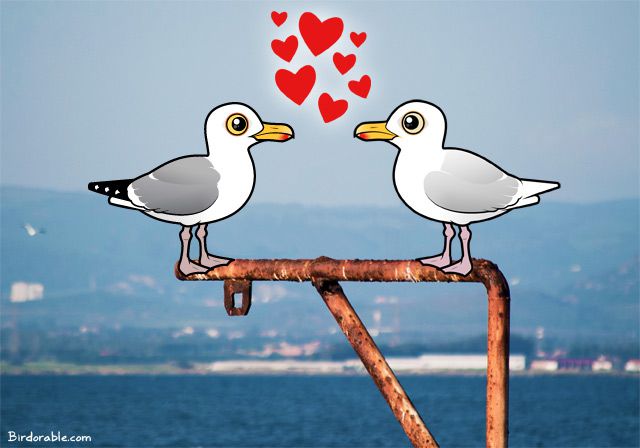
The taxonomy of gulls is complicated, and scientists make new discoveries on the relationships between species and subspecies all the time. Hybridization between closely-related species occurs on a regular basis. For example, Herring Gulls and Glaucous Gulls are known to interbreed in Greenland and Iceland. The offspring are known as "Nelson's Gull."

Birdorable Herring Gull and Glaucous Gull in love

Kleptoparasitism
The act of feeding be stealing food or prey from another is called kleptoparasitism -- literally parasitism by theft. Gulls feed in many different ways, including this method. They may steal fish caught by other birds that are able to dive deeper under the water than gulls are able.

Mobbing
When threatened by a predator or intruder, birds like gulls may work together to drive out the danger. This behavior is known as mobbing and may include vocalizations and movements meant to remove the danger. Birds that breed colonially, as gulls do, will often work together to keep all of the nests in the colony safe.

Monogamous
Gulls stay with their mates for life. While many bird species have monogamous relationships during breeding season, gulls will remain a mated pair season after season, for the life of the birds.

Opportunisitc Feeding
Gulls are able to survive and thrive in a variety of habitats and circumstances. Part of their success is their ability to feed opportunistically. Gulls are able to take advantage of available food sources in the moment; they are able to "improvise" a meal from almost anything edible. Opportunistic feeding is advantageous to a species that may face changes in its environment. An opposite feeding strategy, specialization, means that a species needs specific circumstances to be true in order to eat.

Pair-Bonding
When the breeding season begins, mated pairs re-establish or strengthen the relationship through different rituals. These rituals are known as pair-bonding. In gulls, this may involve special calls or vocalizations, sometimes accompanied by walking together or dancing, and nest-building.

Ring-billed Gull (Larus delawarensis)
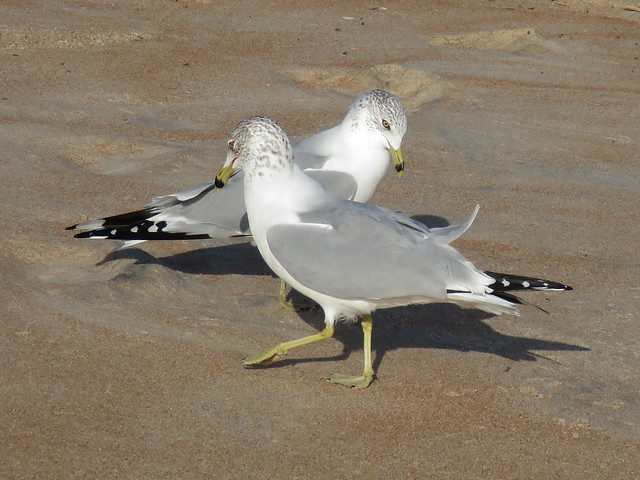
Ring-billed Gulls dancing together (photo by Amy Evenstad)

Precocial
When a just-hatched baby bird is relatively advanced, it is considered precocial. Gulls have precocial young; the birds hatch covered in feathers and they are able to stand, walk, and feed themselves within a short amount of time. Birds that are the opposite of precocial, altricial, hatch nearly featherless and completely helpless, often with their eyes closed. They rely on their parents for everything until they are mature enough to start moving about on their own and care for themselves.

Welcome to Birdorable's first ever Gull Week! We're happy to celebrate gulls, a widespread family of social and intelligent seabirds. So far, we've got 21 species of gull in our cute cartoon style, out of the approximately 55 recognized species of gull in the world.

To start things off, here's a look back at some previous gull posts from our blog.

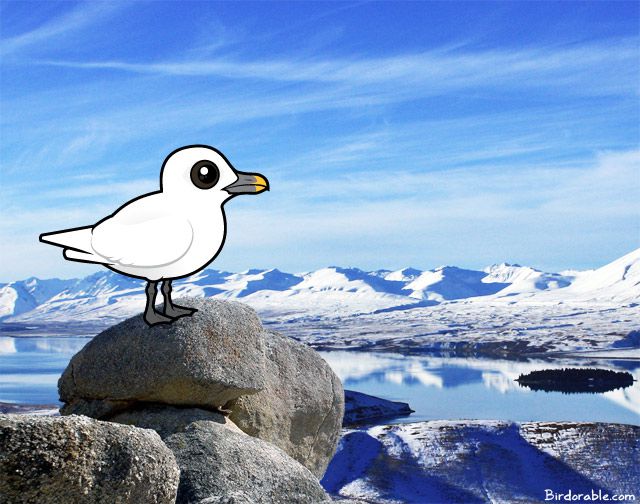
Birdorable Ivory Gull

Gulls are cosmopolitan, meaning they can be found all over the world. Sometimes a gull may be found outside of its regular range, like an Ivory Gull that was seen in New Jersey some years ago. Ivory Gulls normally spend their time in the arctic.

Gulls generally nest in large colonies, like the Herring Gull which was featured as a Baby Birdorable.

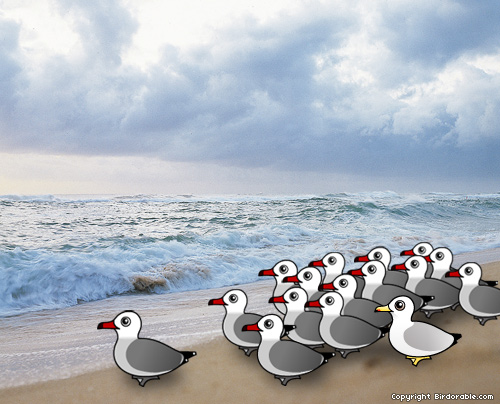
Birdorable Heermann's Gulls

We've featured the beautiful Heermann's Gull, the common Ring-billed Gull, and the large Great Black-backed Gull on the blog as well. That last species has the honor of being the official city bird of Rauma, Finland.

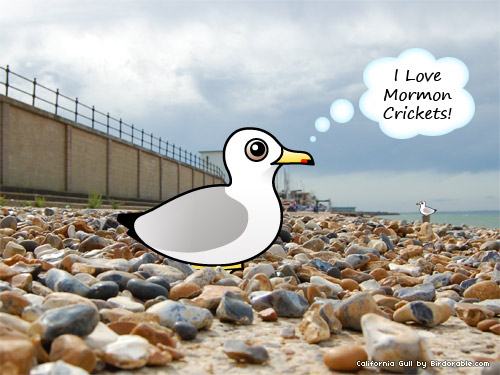
We told you about the official state bird of Utah, which is actually named after another state: the California Gull.

Birdorable California Gull

Some birds in the family don't go by the name "gull" at all; the Black-legged Kittiwake is one.

Join us as this week continues with our celebration of the world's gulls!

Just like the White-winged Dove

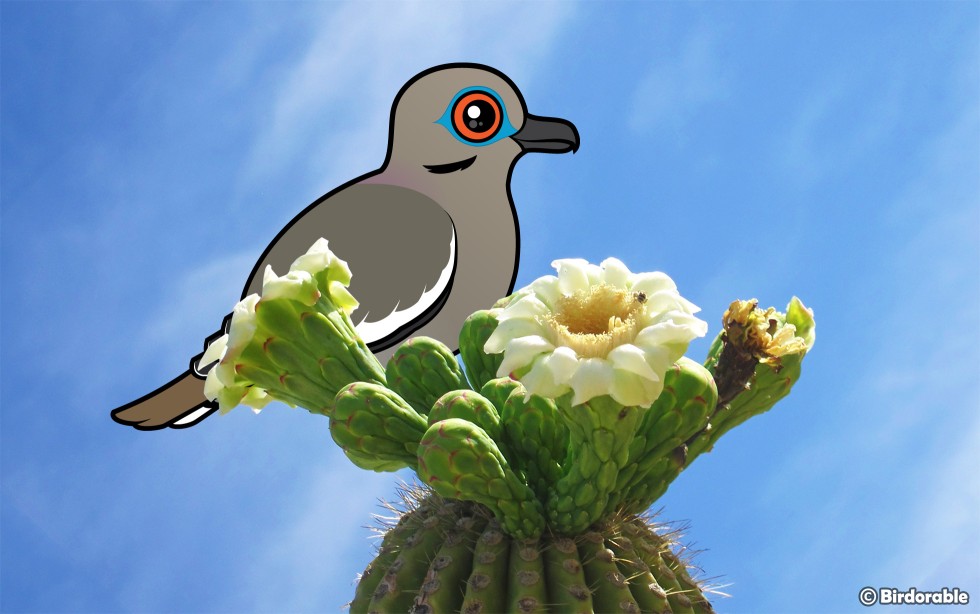
Birdorable White-winged Dove on cactus

The White-winged Dove, a captivating bird species, might ring a bell for fans of Stevie Nicks's iconic 1981 song, "Edge of Seventeen" A memorable part of the song features backup singers echoing "ooohh baby ooohh," a call that strikingly resembles the distinct coo of the White-winged Dove.

Native to the southwestern United States, Mexico, Central America, and the Caribbean, the White-winged Dove has recently expanded its range further east into Texas and beyond, partly due to urbanization and the popularity of backyard bird feeding. This expansion showcases the species' remarkable adaptability.

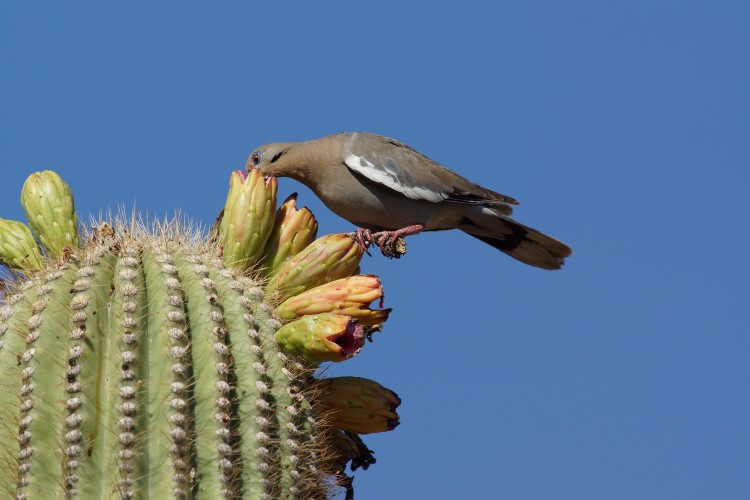
These doves thrive in desert environments, demonstrating incredible resilience. Capable of flying up to 25 miles to find water, they can also obtain necessary moisture from the saguaro cactus, which serves as a vital source of nourishment. Their diet includes nectar, pollen, fruit, and seeds of the saguaro cactus, aligning their migration and nesting patterns with the cactus's fruiting season.

In addition to their adaptability, White-winged Doves are known for their impressive migratory behavior, often traveling in vast groups. Historically, flocks numbering up to one million birds have been observed feeding in Texan grass fields—a truly spectacular sight! Oooh baby, that is a lot of birds!

White-winged Dove by William Herron (CC BY-SA 2.0 DEED)

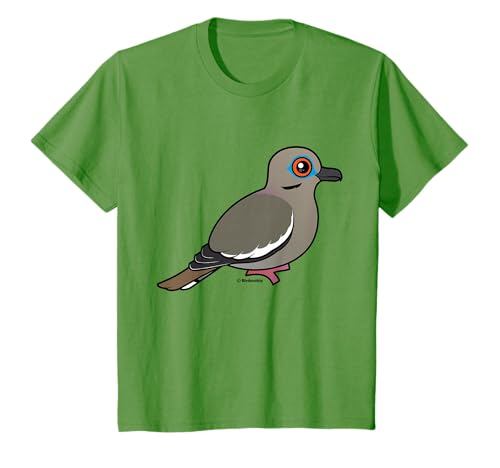
Cute White-winged Dove gifts

T-Shirt Tuesday: Lovebird Love Heart

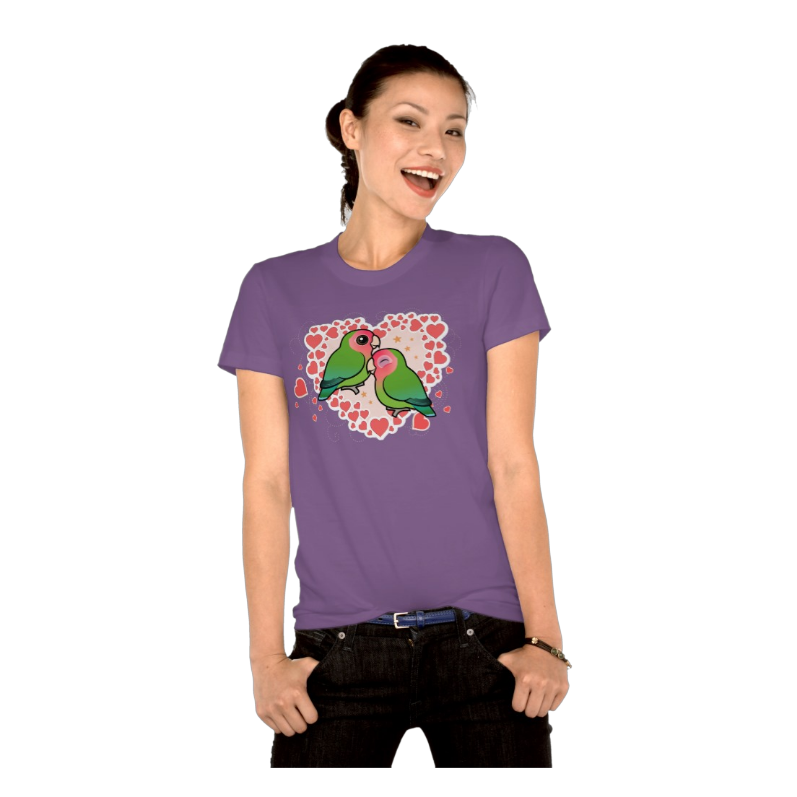
Looking for a Valentine's Day gift? This week's featured t-shirt design is this sweet Lovebird Love Heart with our Birdorable Rosy-faced Lovebird, also known as the Peach-faced Lovebird. Is there anything cuter than lovebirds in love? Here two adorable cartoon Rosy-faced Lovebirds snuggle together with a heart explosion in the background. This original design, shown here on a purple women's American Apparel organic tshirt, is perfect for lovebird lovers! Available on many different apparel styles and colors.

Birdorable Lovebird Love Heart on Women's American Apparel Organic T-Shirt

We have many more Rosy-faced Lovebird gifts and check out our other love and hearts designs.

Welcome to our completely renewed website! As you can see it looks quite a bit different from before and we've added some new features as well, which are listed below. We hope you like the new look! Let us know in the comments below or via our contact form if you have any feedback or issues with the site.

Renewed Birdorable.com

What's new

  • The homepage now features a "Bird a day" and several other new things including a large slider and counter for the number of birds. We've been very busy with the new website but have some new birds to add soon, so check back in the coming weeks for some new Birdorables!
  • You can now log in with your Facebook, Twitter, Google, Windows Live or LinkedIn account by using the "Login / register" link at the top. Once logged in you can upload an avatar to go with your comments, you won't need to enter your name and a captcha each time you leave a comment, you can pick your favorite birds in Meet the Birds, and you can download coloring pages and other fun things in our Downloads section.
  • Previously we would only have a limited number of coloring pages available at a time. From now on all coloring pages are in our Downloads section and they will stay there. We currently have 88 different coloring pages available and we'll add more in the future. You do need to be logged in to download them, but it only takes a second to log in using one of the social media sites. We have also implemented a limit of 10 downloads per 30 days. If you need to download more files for an event or for another specific purpose please contact us with your request.
  • The new and improved Search allows you to search the whole site by keyword and filter the results by Designs, Products, Birds, Articles and Downloads.
  • The Meet the Birds area has been revamped with a new Browse Birds page with bigger pictures and an easier way to find birds. Type a keyword on the left to instantly update the results and click one of the two icons in the top-right to switch the pictures between full bird and head only.
  • You can pick your favorite birds by visiting a bird page (for instance Abyssinian Ground Hornbill) and clicking the new Add to Favorites button. Click the My Favorites page to view all your favorites. When you're logged in your favorites will be remembered.
  • Click Random Bird to let us surprise you with a random bird species. This is a great way to learn new birds.
  • Each bird page now has a Gifts tab where you can view all products with that bird species. It is also easier now to see a list of all the birds featured on a product or design to jump back to the meet pages of those birds.
  • On the Conservation Statuses page you can learn about the different categories from the IUCN Red List and then view all birds in that category, from Least Concern to Extinct.
  • Our shop has been completely updated with new ways to find products and bigger pictures. You can browse all our 1,500+ designs or search by product type.
  • The new Birdorable Gift Finder allows you to filter our thousands of products by age, recipient, interest, budget and more. This part is still in beta as we're testing it out. We'd love your feedback on this.
  • Previously our store contained products of both CafePress and Zazzle. We have moved all our designs to Zazzle and the site now only features products from our fulfillment partner Zazzle, which simplifies things. Check out this page with Zazzle Coupon Codes for the latest discount codes that you can use.

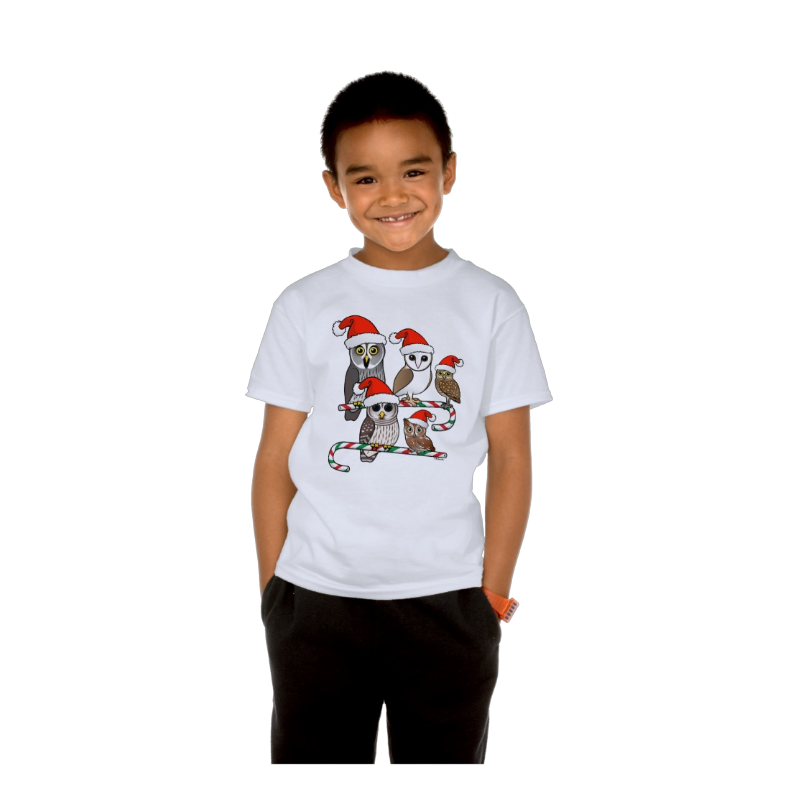
This is one of our most popular designs: cute Birdorable owls wear santa hats while perched upon candy canes. It is not something you would easily see in the wild, but we find it cute nonetheless. Our Santa Owls design is available on many different products including t-shirts for boys, girls, toddlers, babies, men and women in many different styles and colors. Featured on this graphic tee are our Birdorable Great Grey Owl, Barn Owl, Burrowing Owl, Barred Owl, and Eastern Screech Owl for some cute holiday fun! Birdorable Santa Owls Kid's T-shirt

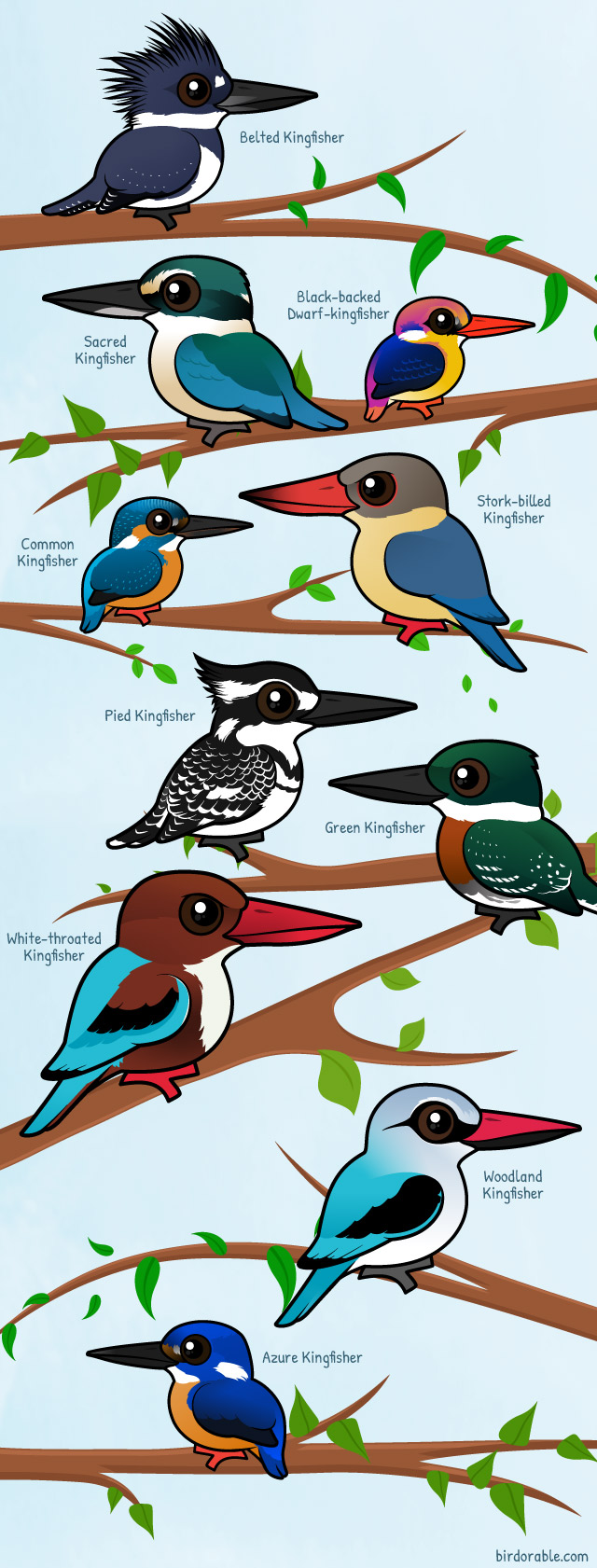
We have recently updated some of our Kingfishers and added several new ones bringing the total number of Kingfishers on Birdorable to ten! There are actually 90 different species of Kingfisher in the world, so we still have a way to go. Each of our birds is available on a wide range of graphic tees, other apparel and gifts from our Birdorable shop.

Ten Birdorable Kingfishers

Pictured in this image from top to bottom are: Belted Kingfisher, Sacred Kingfisher, Black-backed Dwarf Kingfisher, Common Kingfisher, Stork-billed Kingfisher, Pied Kingfisher, Green Kingfisher, White-throated Kingfisher, Woodland Kingfisher and Azure Kingfisher.

Kingfisher Gifts

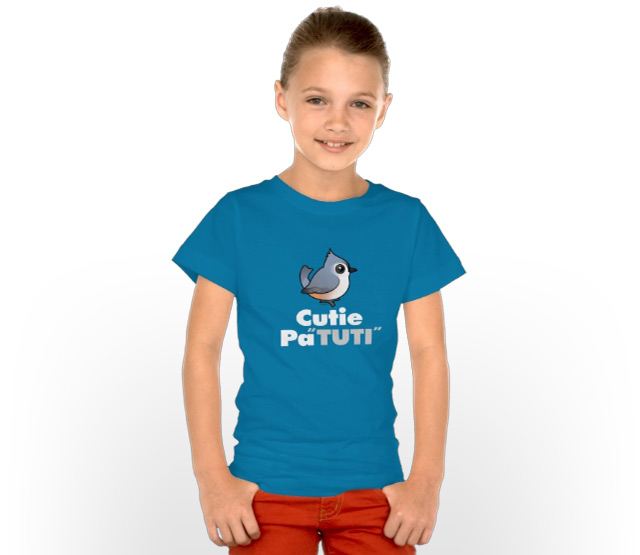
Do you know what TUTI means? It is the four-letter code used by birders and bird banders for the Tufted Titmouse, one of the cutest birds found in Canada and the United States and a common backyard feeder bird. This adorable titmouse design is a sort of inside-joke for birders in the know and a unique way to spell "Cutie Patootie". So next time you encounter a Tufted Titmouse in the field or in your yard, you can call it a Cutie PaTUTI.

Girl wearing Cutie PaTUTI T-Shirt

We would like to wish everyone who celebrates this holiday a Happy Thanksgiving today, with this picture of our Wild Turkey accompanied by a Tufted Titmouse. May the good things in life be yours in abundance, not only at Thanksgiving but throughout the coming year.

Happy Thanksgiving from Birdorable

Thanksgiving Pilgrim Turkey Gifts