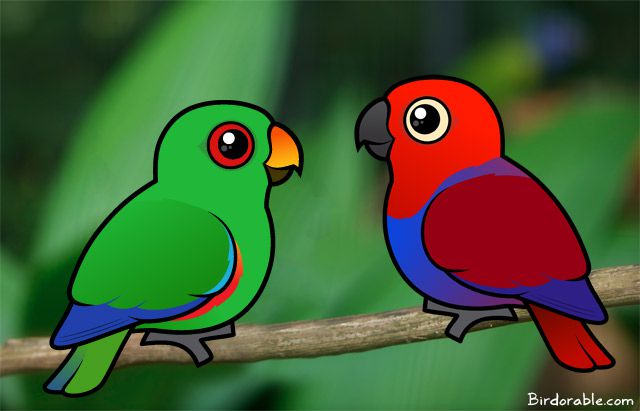
At first glance you may think that there are two different species of parrot in the above picture, but these are actually two Eclectus Parrots, with a male on the left and female on the right. The technical term for this is "sexual dimorphism", which in birds is often manifested in size or plumage differences. In birds of prey the female is usually bigger, and in ducks the male often has a much more colorful and complicated plumage than the female. With most birds in the parrot family the sexes are similar, but not in the case of the Eclectus Parrot. Males have a bright emerald green plumage and females are mostly bright red with some purple/blue plumage. Even the bill color is different.
The Eclectus Parrot is the most sexually dimorphic of all parrot species. The difference is so pronounced that the first European ornithologists to see Eclectus Parrots in the wild on their visits to South-East Asia and Australia mistakenly thought that they were two distinct species. In fact, males were first described in 1776 and females not until 61 years later. It wasn't until the early 20th century that they were finally considered one species.
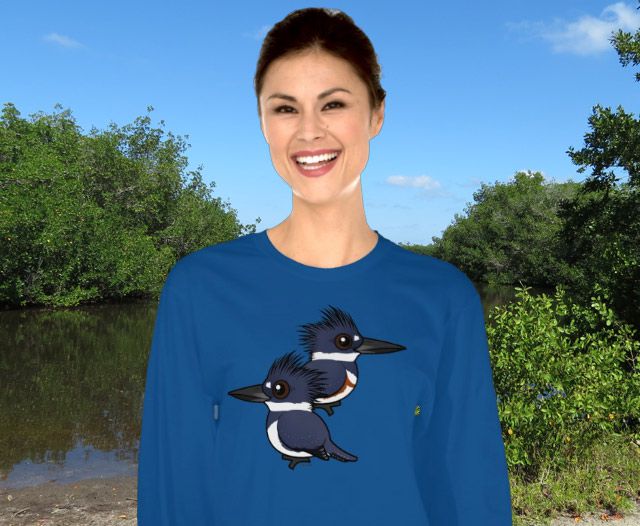
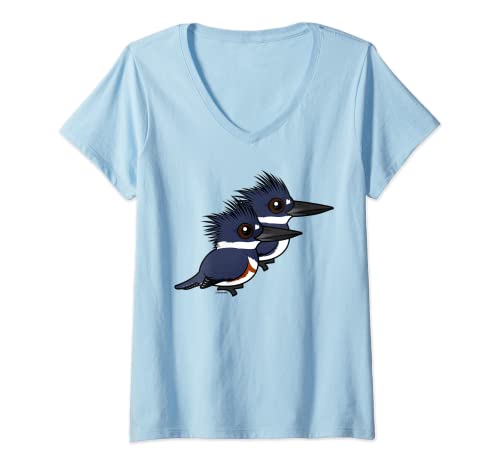
If you live in North America and you love birds then you are probably familiar with the Belted Kingfisher, which can be found across the continent from coast to coast. This cute design features a pair of Birdorable Belted Kingfishers. Can you tell the difference between the male and the female? Both have the cute shaggy crests and are colored blue and white, but females have rufous across the upper belly.
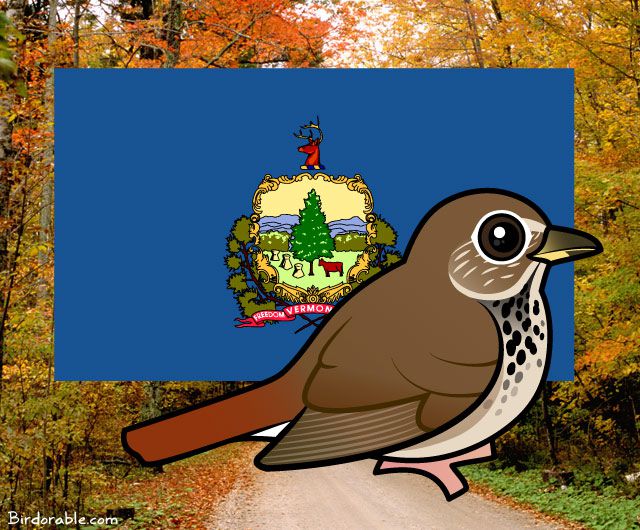
Hermit Thrushes are known to breed in all of Vermont's counties. Most birds leave the state for warmer climates to the south after breeding season, but each year a few hardy Hermit Thrushes are found in Vermont during the winter (often during the Christmas Bird Count).
The Hermit Thrush was named the official state bird of Vermont in 1941. Apparently during the debate over naming the state bird, some legislators favored other birds, including the Blue Jay, which is resident year-round in Vermont. Also mentioned were "crow" and flying squirrel. Yep, a non-bird was floated as a possible official state bird to represent Vermont!
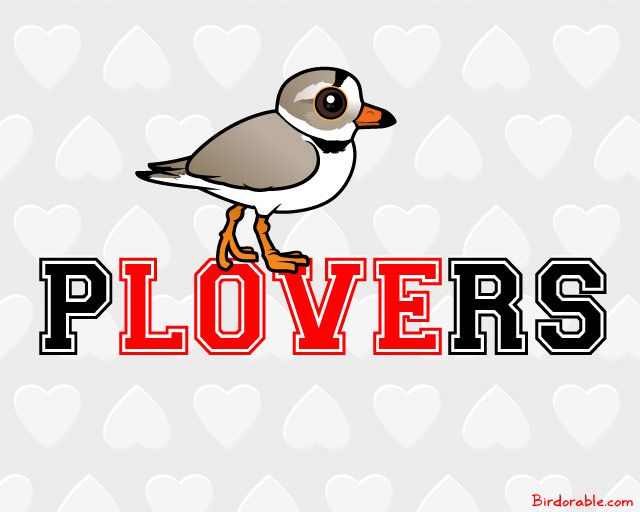
Everybody loves plovers, they are the cutest thing on the planet, and you can't spell Plovers without "Love". Happy Valentine's Day to everyone and if you're looking for some cute heart-themed gifts for your special birder then check out the designs with customizable products in our love and hearts section.
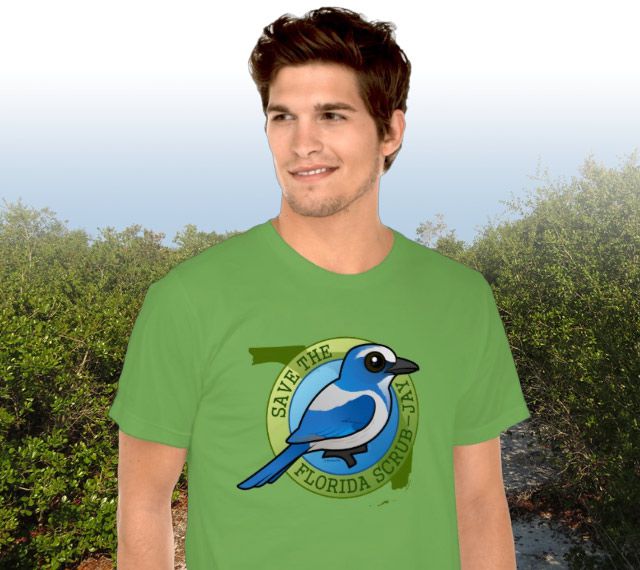
This week we'd like to highlight one of our newest designs featuring our home state and a bird that is very close to our heart. The Florida Scrub-Jay is the only endemic bird of the state of Florida and, with only a few thousand breeding pairs left, considered vulnerable to extinction. Show your support for this highly intelligent and beautiful bird. The design shows our cute Birdorable Florida Scrub-Jay in front of a faint outline of the state and the text "Save the Florida Scrub-Jay", shown here on a green unisex American Apparel t-shirt, which is made of 100% fine jersey cotton and made in the USA.
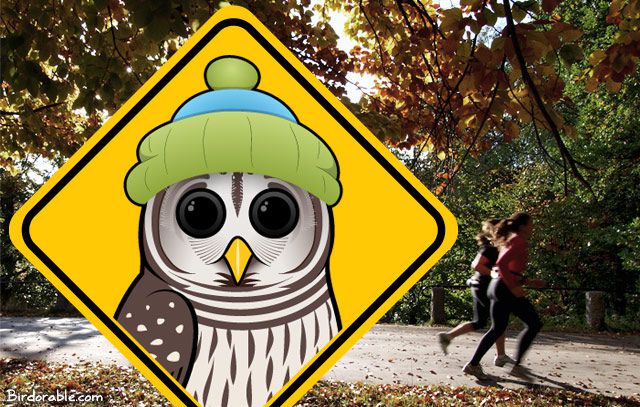
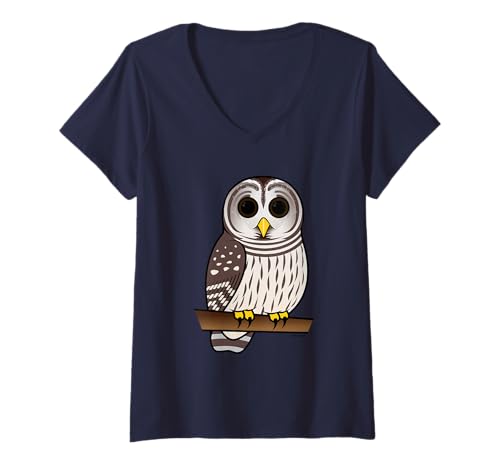
A Barred Owl in Bush's Pasture Park in the town of Salem, Oregon, has been stealing hats from joggers. The hat-loving owl swoops down and snatches hats right off the heads of unsuspecting runners. At least four people have been victimized in the last few weeks and are now forced to buy new hats.
One of the runners named Hilliard told Reuters that he was not hurt in the assault but "just dumbfounded". He said: "It was kind of amazing how it just swooped down and grabbed my hat like that. It just pulled it right off my head like it was nothing!"
The Stateman Journal, a local newspaper, asked their readers to send in names for the now-famous owl and they received more than 100 different suggestions. Our favorites are Hoodini and Owlcapone. The story of the Salem owl has been covered in the news across the country and even made it on the Rachel Maddow show where viewers were challenged to design a new owl warning sign.
The bird is believed to be collecting the hats to build a nest. Owls can be territorial and aggressive during nesting season. A new sign in the park now warns people to use caution from dusk to dawn and recommends people to wear a hard hat.
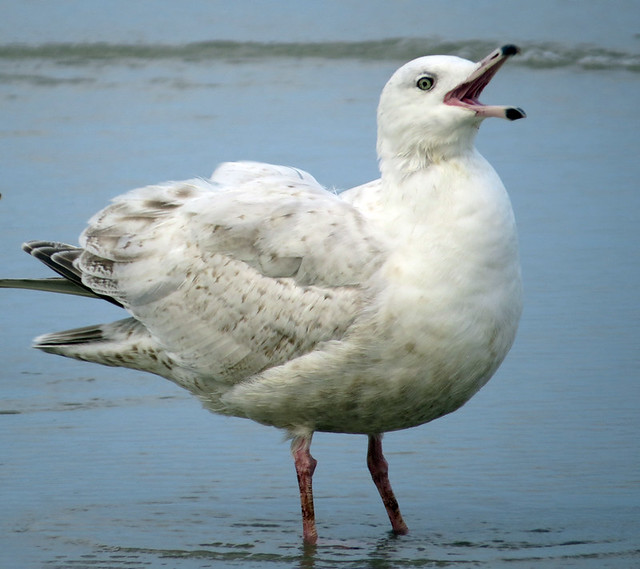
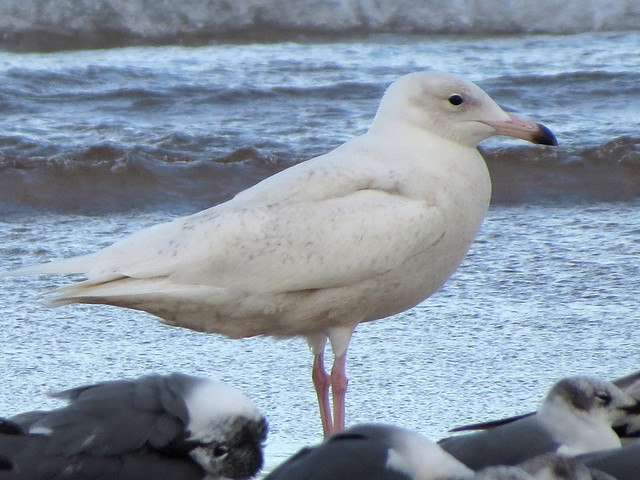
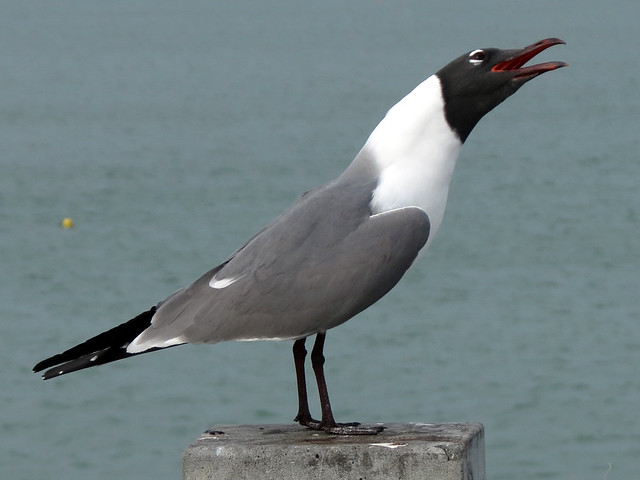
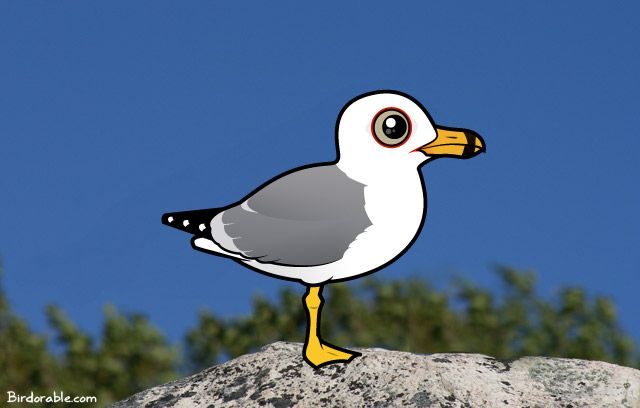
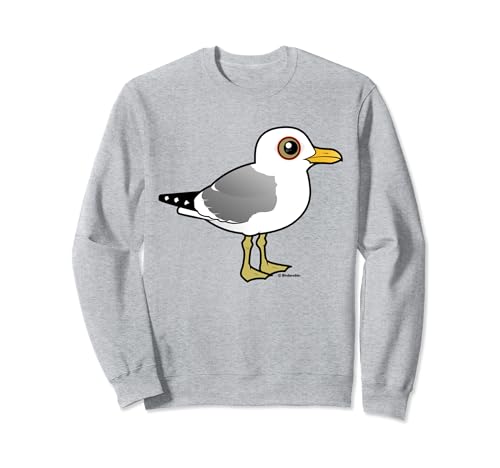
We're celebrating the world's gulls! Today we are sharing some FAQs about gulls.
Why do gulls stand on one leg? Gulls aren't the only birds that stand on one leg. Many species exhibit this behavior, and the reason usually has to do with regulating body temperature. Feathers on a bird's body help to keep it warm in cold temperatures, but when the legs are unfeathered, as in gulls, the bird can lose precious body heat through the exposed skin. Keeping one leg tucked under body feathers while standing on the other helps the bird to keep warm.
Why are gull wingtips often black or dark? Melanin is a natural pigment found in animals; it occurs in mammals, birds, reptiles, and other organisims. However, melanin isn't just about color. Melanin can also strengthen. The melanin in the wingtips of a bird helps to protect the feathers from wear and tear. And it also makes them black. Besides gulls, many raptor species have black wingtips, and some otherwise all-white birds like White Ibises, Snow Geese, American White Pelicans, and Wood Storks also have black wingtips.
Why do gulls stamp their feet? It is thought that gulls tap their feet to imitate falling rain. The sensation of incoming rain "tricks" earthworms or other subterranean creatures to come to the surface to avoid drowning. When the worms reach the surface, they become an easy meal for the clever gull. This kind of "worm stomping" is the original "rain dance"!
What is the difference between a gull and a seagull? Gull is the common name given to seabirds in the family Laridae. Often these birds are referred to as seagulls, but the term is not used by most biologists or ornithologists. The most common gull in Australia, the Silver Gull, is often called "seagull" by locals. But in taxonomical terms, there is no such bird as a seagull.
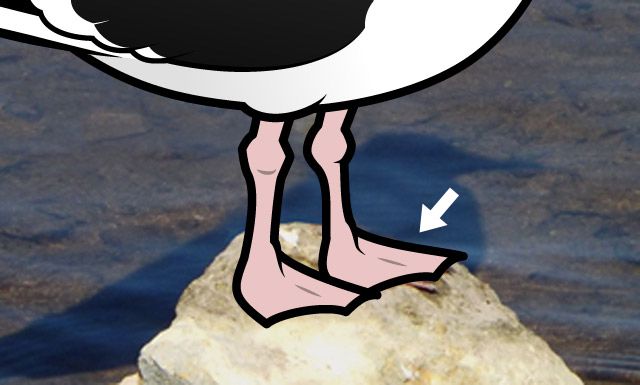
Do gulls have webbed feet? Yes, gulls have webbed feet. Though some gulls live inland and may spend a lot of time away from large bodies of water, many gulls spend much of their time in and around water. Having webbed feet helps them maneuver efficiently in the water. However, this adaptation does limit their ability to carry items with their feet.
What is special about gull jaws? Gulls are opportunistic feeders, meaning they are able to take advantage of a huge variety of food items. They may hunt for live prey, they might steal food from others, or they might scavange scraps from garbage dumps or dead animals (carrion). Something that helps them take the most advantage of eating opportunities is the fact that they have unhinging jaws. This gives them the ability to consume very large items.
What is the collective noun for gull? A collective noun is used to name a group of something. A group of birds is commonly known as a flock. A group of crows is a murder, a group of finches is a charm, and a group of geese is a gaggle. What about gulls? A group of gulls is known as a colony.
Do you have any other questions? Let us know in the comments below or go to our Meet the Birds area and learn about each of our Birdorable gulls. And don't forget to check out our cute gull gifts. Here are some samples below.
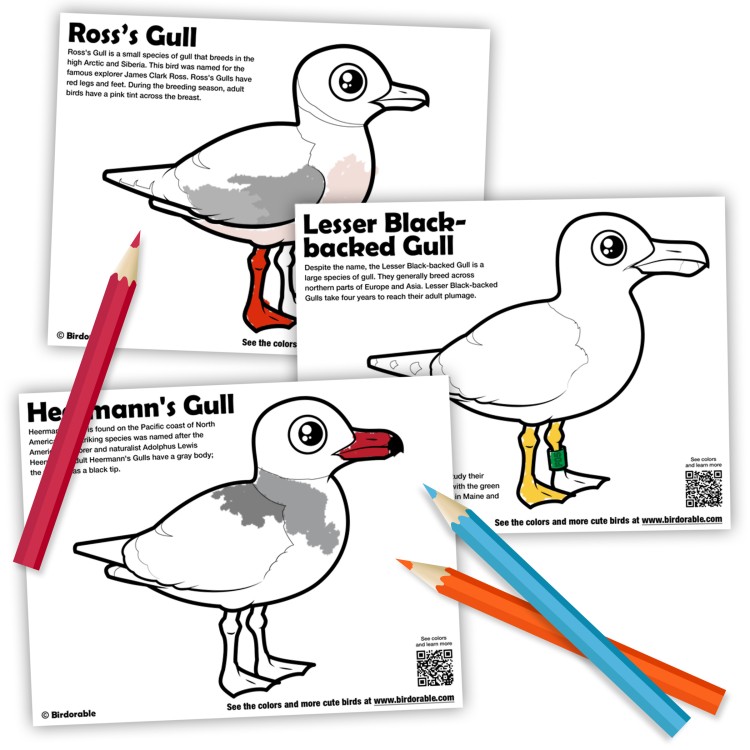
We're celebrating the gulls of the world this week! These social, intelligent birds can be found all over the world. Today we're sharing some fun gull coloring pages!
Gulls tend to have a lot of black, white, and grey in their plumage. The breeding plumage Ross's Gull, for example, is pale grey above and white below. They also develop a pink wash to the breast that is absent other parts of the year. Their feet and legs are red! Heermann's Gull has a different look from other gulls. The body is grey with black-to-grey wings and a red bill with a black tip. We've also included a coloring page of the famous Lesser Black-backed GullPierre, who is wearing his distinctive green color band.
Find more coloring pages for other species on our free coloring page downloads. And be sure to check out the color schemes for these and all of our birds by visiting the Meet the Birds section of our site.
We're celebrating the world's gulls this week! Join us as we highlight these social and intelligent birds. Today we'd like to tell you about a special individual bird.
Lesser Black-backed Gulls generally breed across northern parts of Europe and Asia. In the winter they move down across Europe and into parts of Africa, the Middle East, and southeast Asia. A portion of the population is also found wintering along the Atlantic coast of North America each year.
One exception to the rules is a particular Lesser Black-backed Gull who was first seen at a nest site on Appledore Island in Maine back in the spring of 2007. The Lesser Black-backed Gull (LBBG) was apparently tending a nest with a Herring Gull. This discovery was only the second time a LBBG was known to breed in North America, and a first record for the Atlantic coast.
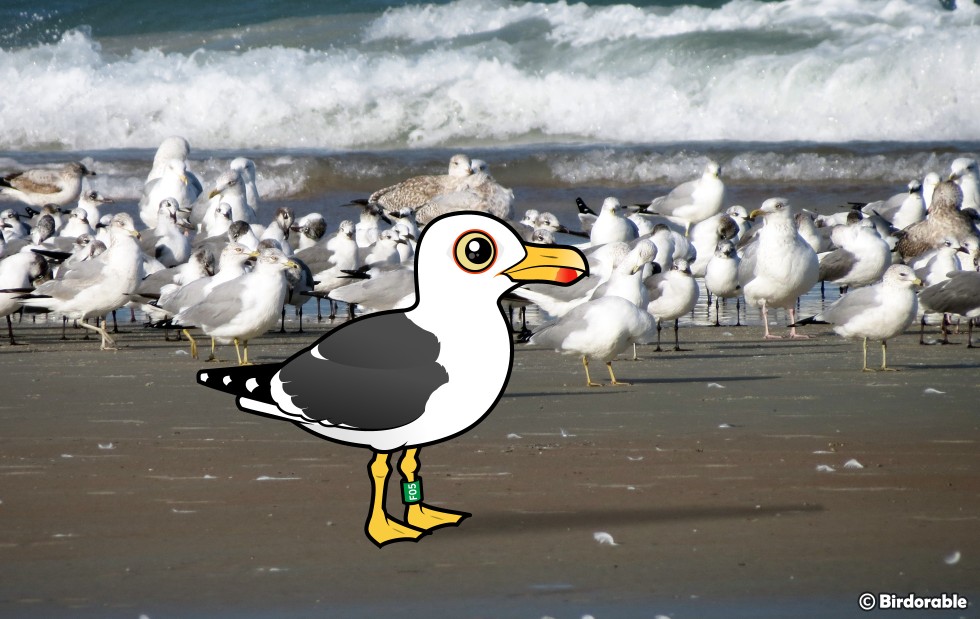
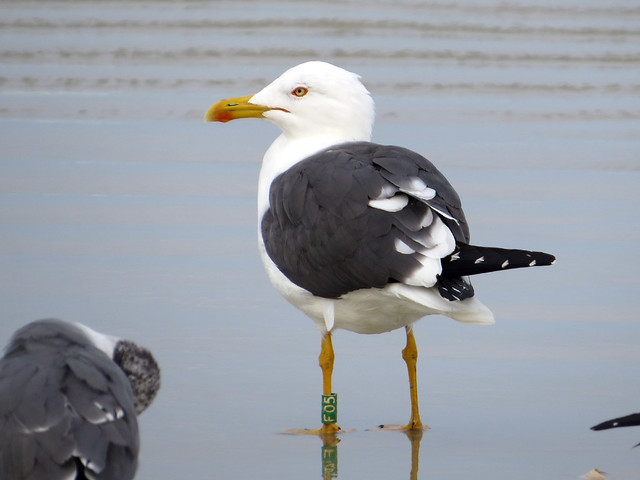
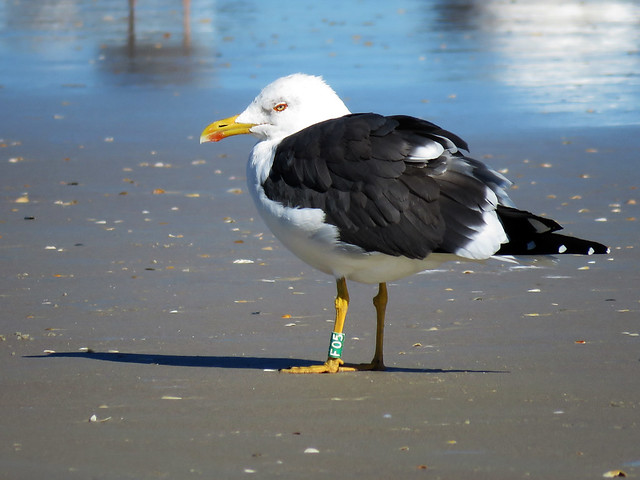
During the following spring, both the LBBG and its Herring Gull mate were banded by Dr. Julie Ellis's scientific study team. The Lesser Black-backed Gull was given a green color band with the code F05. The pair returned to the nesting area again in 2009, when observation of the pair together revealed the LBBG to be a male bird.
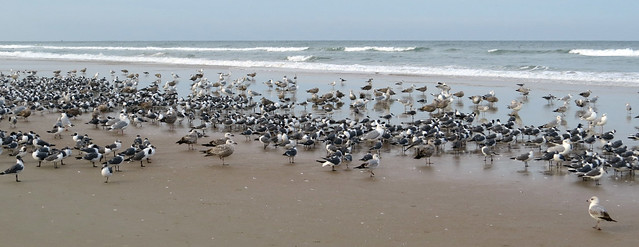
In January of 2009, F05 was discovered wintering on the Atlantic coast of Florida in Daytona Beach Shores, which is not far from Birdorable Headquarters. This location is known for having the largest winter gathering of gulls in North America. Picking out F05 couldn't have been an easy task!
Lots of gulls on the beach at Daytona Beach Shores, Florida (photo by Amy Evenstad)
F05, also sometimes known by the name "Pierre", continued to be observed in Daytona Beach Shores the following winters. However, during the 2012 breeding season, F05 was not found at his normal nesting grounds. Gulls tend to be faithful to their nesting sites, so it was presumed that F05 had perhaps died. But the old gull was again found to be wintering in Daytona Beach Shores during the winter of 2012-2013. Where he spent the summer is a mystery. However, F05 returned to Appledore in the spring of 2014.
F05 in February 2013 (photo by Amy Evenstad)
This winter, F05 is again spending his time in Daytona Beach Shores. Time will tell if he again returns to Appledore in the spring for another nesting season. Lesser Black-backed Gulls start breeding at age four. Since he was first seen as an adult in 2007, F05 must be at least 12 years old as of the coming spring.