Here are three new Birdorable coloring pages for some cute coloring fun! They are the Gouldian Finch, Wood Duck and Laughing Kookaburra, three new birds from our Birdorable Bonanza. Go to Coloring Pages to download these two new PDFs and check the Meet the Birds page to check the colors.

Birdorable Coloring Pages: Gouldian Finch, Wood Duck and Laughing Kookaburra

These downloads will be available until 15 September 2010. Check here for more coloring pages. Subscribe to the Birdorable Blog by RSS feed or by email to get notified when new downloads like this are added.

Birdorable Tree Swallow

For 18 days we're adding a new Birdorable bird every day as part of our Birdorable Bonanza 2010. Today's bird is the Tree Swallow! Tree Swallows are relatively common North American breeding birds that nest in cavities. They will use nestboxes when natural cavity nesting sites are unavailable. Tree Swallows are extremely agile in flight. They are adept at catching their primary food - insects - on the wing.
Tree Swallow Closeup
Tree Swallow Closeup by Phil Armishaw
Birdorable Tree Swallow Organic Grocery Tote Birdorable Tree Swallow EDUN LIVE Lamb Toddler Essential Crew T-Shirt
Birdorable Tree Swallow
Organic Grocery Tote
Birdorable Tree Swallow
EDUN LIVE Toddler T-Shirt

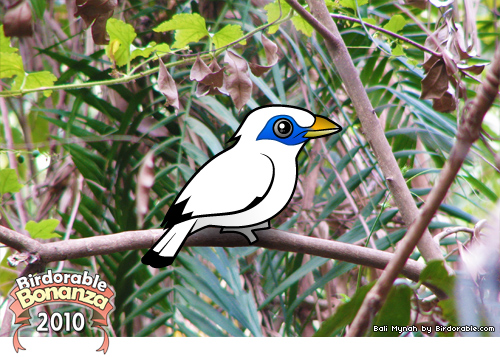
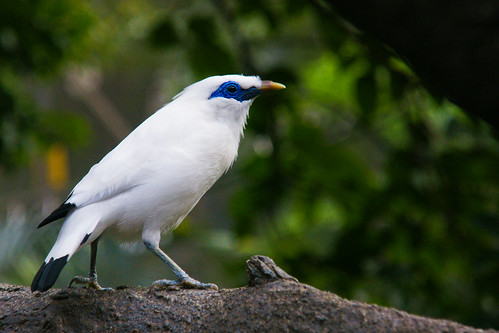
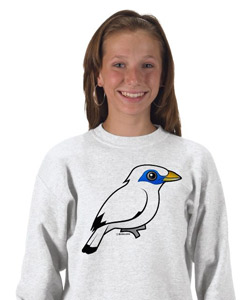
Tomorrow's bird is a critically endangered bird that is endemic to Bali, Indonesia. Can you guess what it will be?

Birdorable Red-winged Blackbird

For 18 days we're adding a new Birdorable bird every day as part of our Birdorable Bonanza 2010. Today's bird is the Red-winged Blackbird. Red-winged Blackbirds are closely related to orioles and grackles. Here in northern Illinois, where we live, Red-winged Blackbirds are an early sign of spring. They return to nest in our county each after spending the winter further south. Hearing the first Red-winged Blackbirds calling on territory with their distinctive "konkaREE!" cry always means warmer weather is on the way soon.

Red-winged Blackbird
Red-winged Blackbird by Gary Grossman
 
What a Display!
What a Display! by vtpeacenik

Tomorrow's bird is an aerial forager who nests in cavities. Can you guess what it is?

Red-winged Blackbird Gifts

Birdorable Wood Duck

For 18 days we're adding a new Birdorable bird every day as part of our Birdorable Bonanza 2010. Today's bird is the North American Wood Duck. Male Wood Ducks, like our new Birdorable, are beautifully plumaged. Iridescent green heads, brick-red breasts and sandy flanks are just part of the multicolored story.

Wood Ducks nest in trees, or nest boxes. They are considered perching ducks, and it is not uncommon to see them perched high up in trees.

Wood Ducks (Aix sponsa)
Wood Ducks (Aix sponsa) by musicarver

Tomorrow's bird likes to show off his red epaulets while calling. Can you guess what it is?

Birdorable Chattering Lory

For 18 days we're adding a new Birdorable bird every day as part of our Birdorable Bonanza 2010. Today's bird is the Chattering Lory. The Chattering Lory is a beautiful species of parrot native to parts of Indonesia. They have gorgeous bright red heads and bodies, with green wings and orange beaks.

Chattering Lory (Lorikeet): Kuala Lumpur, Malaysia
Chattering Lory by dbillian

Tomorrow's bird is a beautiful North American duck. Can you guess what it is?

Birdorable European Greenfinch

For 18 days we're adding a new Birdorable bird every day as part of our Birdorable Bonanza 2010. Today's bird is the European Greenfinch, shown above with two other common European feeder birds: the European Goldfinch and Chaffinch. The European Greenfinch, known simply as Greenfinch in its native English-speaking countries, is a small bird of the finch family. Like other finches, they feed primarily on seeds, and will visit garden feeders to eat sunflower seeds and other bird seed. Greenfinches are social birds and it is not uncommon to find large flocks of them feeding together, especially outside of breeding season. They will form mixed flocks with other small birds, like European Goldfinches or Chaffinches.

Verdilhão / Greenfinch
Greenfinch by António Guerra

Tomorrow's bird is a chatty red parrot from Indonesia. Can you guess what it is?

Birdorable Mourning Dove

For 18 days we're adding a new Birdorable bird every day as part of our Birdorable Bonanza 2010. Today's bird is the Mourning Dove! Mourning Doves are widespread across North America, one of the most abundant birds on the continent. They are ground feeders, feasting on seeds and storing extra food in their crop for later digestion. Mourning Doves are common backyard feeder birds who will often spend hours pecking at seeds while remaining relatively still. Believe it or not, Mourning Doves consume up to 20% of their body weight every day. So that's how they maintain their pleasantly plump profile!

Mourning Dove...up close and personal
Mourning Dove by Joanne-V

Tomorrow's bird is a small green bird that's widespread throughout Europe, north Africa and south-west Asia. Can you guess what it is?

Birdorable Palm Cockatoo

For 18 days we're adding a new Birdorable bird every day as part of our Birdorable Bonanza 2010. Today's bird is the Palm Cockatoo! Palm Cockatoos are very distinctive-looking parrots. They are slate-grey in color, with a featherless, bright red cheek. Their bills are extremely large, and they sport a long, scraggly grey head crest. Because of their rare beauty, Palm Cockatoos are very popular in aviculture. Despite their relatively small native range in Australia, the wild population is stable and not considered threatened.

Palm Cockatoo
Palm Cockatoo by P. Stubbs

Tomorrow's bird is a very common bird across North America. You can find them almost anywhere. Can you guess what it is?

Birdorable Brown-headed Cowbird

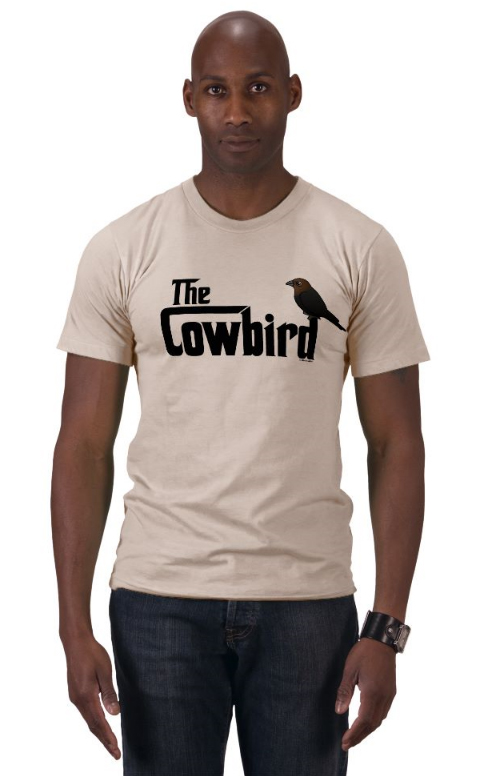
For 18 days we're adding a new Birdorable bird every day as part of our Birdorable Bonanza 2010. Today's bird is the Brown-headed Cowbird! Brown-headed Cowbirds are well-known (and well-disliked!) for being brood parasites. This means they do not make their own nests. Instead, females lay their eggs in the nests of other birds. With this strategy, young Brown-headed Cowbirds are raised by the host parents, which can be as small as Yellow Warblers; more than 140 different species of birds have been seen raising baby Brown-headed Cowbirds. And cowbird adults don't have to deal with defending territories, building nests, or finding enough food to feed a brood of babies. The cowbird's "cunning," however, is the reason it is widely reviled. Because of some methods scientists believe cowbirds use to keep their host nest families in line, Brown-headed Cowbirds have been described as "Gangster Birds." Cowbirds can't really be blamed for their unusual species survival method, though. In fact, factors like prairie habitat loss, the wide extirpation of American Bison, and other human-influenced variables may contribute to Brown-headed Cowbirds turning to a wider variety of parasitic hosts.

Brown-headed Cowbird
Brown-headed Cowbird by nikonjim

Tomorrow's bird is a large Australian parrot. Can you guess what it is?

Birdorable Gouldian Finch

For 18 days we're adding a new Birdorable bird every day as part of our Birdorable Bonanza 2010. Today's bird is the beautiful Gouldian Finch! The Gouldian Finch is one of the most wildly colored birds on Earth. Native to Australia, this little finch's plumage includes feathers of red, yellow, green and black. The head is either red, black or yellow. Formerly considered three different kinds of finches, we now know that these are actually color variants of the same species that exist in the wild. Yellow is the rarest. Because of their amazing plumage, Gouldian Finches are very popular in aviculture. Since 1959 it has been illegal to export the birds from their native Australia. Still, the species is considered threatened today, mainly due to habitat loss. Other factors contribute to the decline of the species, including easy predation - due to their bright colors. If you'd like to learn about the effort to conserve the Gouldian Finch in Australia, visit Save the Gouldian Fund.

Tomorrow's bird is a brood parasite disliked by many bird lovers in North America. Can you guess what it is?