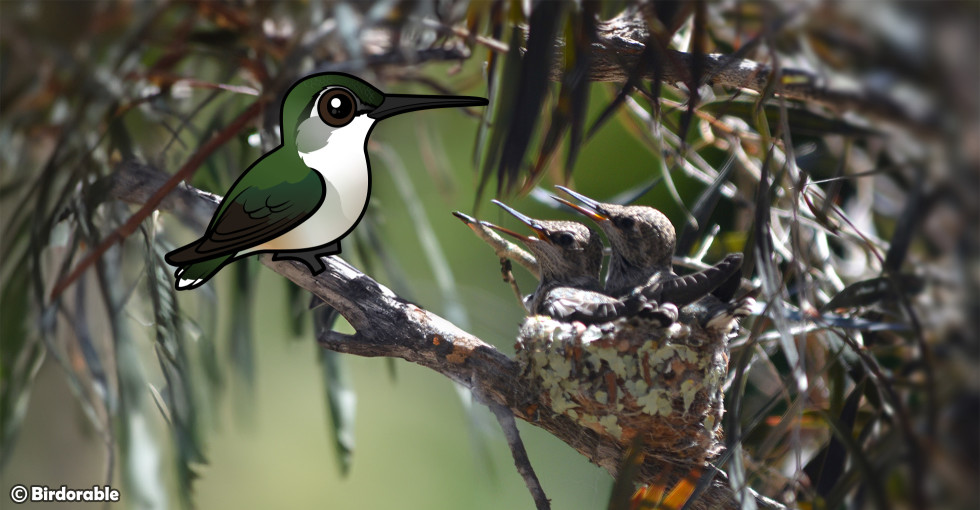
Birdorable Ruby-throated Hummingbird with nest and chicks

Ruby-throated Hummingbird with nest

When it comes to raising their young, birds exhibit a fascinating array of parenting strategies.

One common myth about bird parenting is that it always requires two parents — one male and one female — to successfully raise their young. While this is true for many bird species, it's not a universal rule. The parenting styles in the avian world are as varied and complex as the birds themselves. The truth is much more nuanced and interesting. Let's explore the myth that two parents are required to raise baby birds.
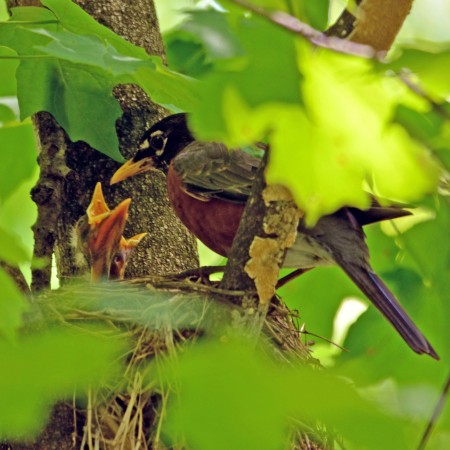
American Robin Tending Young by Courtney Celley/USFWS (Public Domain)

Paired Chick-Rearing Is Typical

In many bird species, parenting is indeed a dual activity. Take, for example, the familiar American Robin. While the female takes care of incubating the eggs, both are involved in feeding and protecting the fledglings. This shared responsibility ensures that at least one parent is always guarding and nurturing the offspring, increasing their survival chances in the unpredictable wild.

Similarly, some species of penguins are famed for their cooperative parenting. In the strategy of the Emperor Penguin, the male takes the first long shift standing over the eggs through the harshest winter conditions, without eating, while the female goes to sea to feed. Upon her return, roles switch, with the female taking over chick-rearing duties. This level of mutual participation is crucial for survival in their extreme environment.

Sometimes Single Parenting Is the Norm

Despite the prevalence of this model, several bird species challenge the notion that two parents are strictly necessary. In some species, single-parent families are not only common but are the norm. For instance, in the case of the Ruby-throated Hummingbird, females manage the bulk of parenting duties on their own, from brooding to feeding and protection.

In the case of the African Jacana, the female is the dominant and more territorial individual. She mates with multiple males, and it’s these males who incubate the eggs and take care of the chicks solo. This role reversal shows how diverse bird parenting can be.
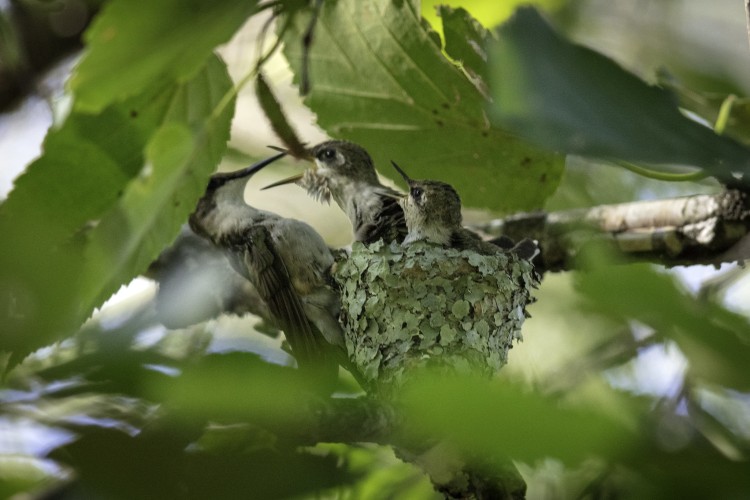
Female Ruby-throated Hummingbird feeds nestlings by Lorie Shaull (CC BY 2.0 Deed)

Some Species Practice Breeding Cooperation

The variability in bird parenting strategies extends even further with communal breeding, where multiple birds share parenting duties, sometimes involving individuals that are not the biological parents of or even biologically related to the young. Species like the Acorn Woodpecker live in large family groups where several females lay eggs in the same nest and the group collectively takes care of all the young. This communal approach can alleviate the burden on any single bird and enhance the survival rates of the nestlings.

In some species of birds, such as the Florida Scrub-Jay, older siblings from previous broods help in feeding and protecting the new chicks of subsequent broods. This behavior not only supports the current breeding pair but also provides valuable parenting experience to the younger birds.
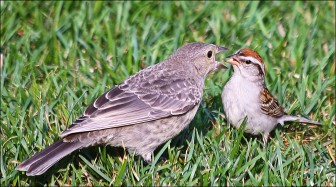
Chipping Sparrow feeding baby cowbird by Sue Thompson (CC BY-ND 2.0 Deed)

Zero Parenting: Brood Parasitism

Then there are brood parasites like the Brown-headed Cowbird, who lay their eggs in the nests of other bird species. The cowbird chick, once hatched, often pushes out the host's eggs and becomes the sole beneficiary of the unsuspecting foster parents' care. This strategy completely removes the biological parents from the nurturing equation, relying instead on deception for the survival of the offspring.

The reasons behind these varied parenting strategies are complex and influenced by ecological and evolutionary pressures. Factors such as predator density, food availability, and environmental conditions can dictate whether a species evolves to favor single parenting, bi-parental care, or communal breeding.

The Loss of an Adult In Paired Chick-Rearing

In species where two parents are generally involved in raising the chicks, the presence of both ensures optimal care: one can forage for food while the other protects and warms the young. However, should one parent perish, the remaining parent may face increased challenges but not necessarily insurmountable ones. The success of single-parenting in such cases largely depends on factors like the species’ natural behavior, the stage of the nestling period, and the environmental conditions.

For instance, in many songbirds, if the male dies after the chicks have hatched, the female alone might still manage to raise the chicks to fledging. This is possible because the most labor-intensive period requiring both parents, which includes egg incubation and early chick rearing, may have passed. At this stage, the demand is primarily for feeding the rapidly growing chicks. If food is abundant and the threats from predators are minimal, a single mother could potentially manage the workload alone.

In the case of the death of the female, leaving the male to care for the eggs or very young chicks, the scenario might be different. In many bird species, males might not be physiologically equipped to incubate eggs or might not have the behavior programmed for such tasks. 

As demonstrated in the examples above, environmental factors play a significant role in nest survival when one parent is lost. In a habitat where food is plentiful and easily accessible, the surviving parent has a better chance of successfully feeding the chicks and themselves. However, in a scenario where food is scarce or requires significant effort to obtain, the stress and physical demands on the single parent could lead to lower success rates for the nest. And the timing of the parent’s death certainly affects outcomes. 

Some bird species have also shown the capacity to find new mates quickly if their partner dies, thereby restoring the dual care system. This flexibility can greatly enhance the survival prospects of the current brood.

Dual Parenting In Birds Myth: Busted

The myth that all birds require two parents to successfully raise their young does not hold up under scrutiny. The avian world is rich with diverse parenting strategies, each adapted to the specific needs and challenges of different species. This diversity demonstrates the adaptability and complexity of birds, making them endlessly fascinating subjects of study and observation.

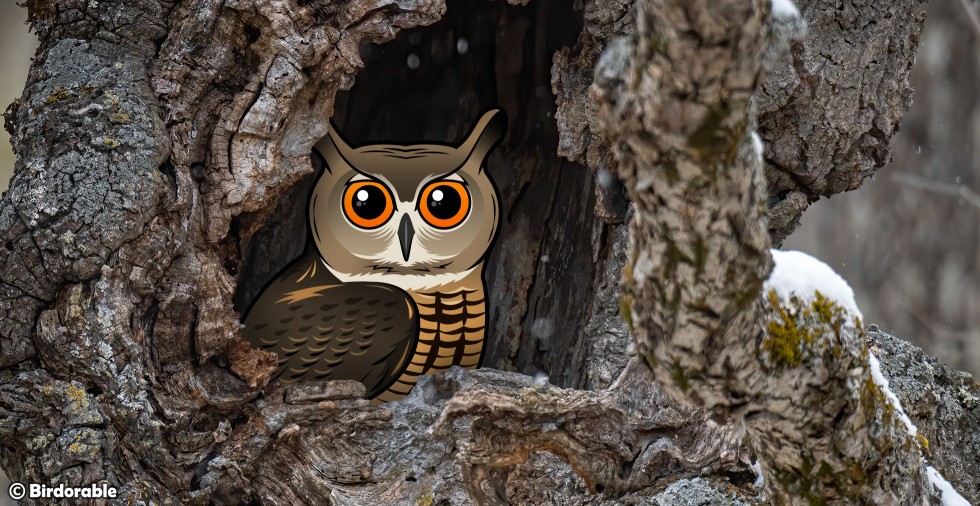
Birdorable Eurasian Eagle-Owl

Eurasian Eagle-Owl

As part of our continuing series on bird myths, today we unravel the truth behind a familiar claim: Owls Can Turn Their Heads 360 Degrees. While this statement stretches the truth by nearly 100 degrees, the reality is no less astonishing. Owls are indeed masters of neck gymnastics, possessing the ability to rotate their heads up to an impressive 270 degrees, which is 3/4 of the way around. This incredible feat of flexibility is no party trick -- it serves a critical role in the survival and hunting strategies of these nocturnal raptors.

The myth of 360-degree neck swivels is rooted in what humans can observe in owls. One can imagine that seeing an owl look directly behind themselves without turning their body might lead someone to believe that owls can actually turn their heads all the way around. But careful observation will reveal the truth -- the bird must turn its head back the way it came to turn back forwards.

But how can owls turn their heads so far, and why do they have this adaptation? Owls have fixed eye sockets, meaning they cannot move their eyes within their skulls in order to look around, as humans and many other animals do. Instead, nature has equipped them with a highly flexible neck, allowing them to swivel their heads extensively in order to look around them. This unique adaptation enables owls to have a wide field of vision, essentially giving them the ability to observe their surroundings in almost every direction, without the need to move their entire body. This capability is crucial for spotting potential prey or identifying threats in their environment, particularly during the night, when visibility is low and owl vision excels.

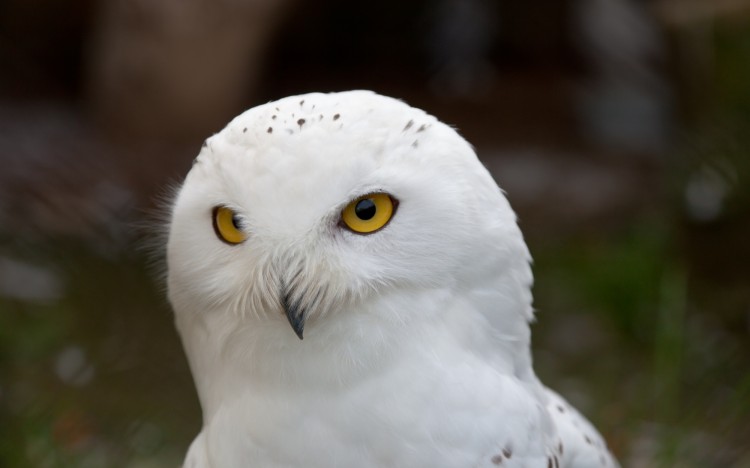
Snowy Owl photo

Snowy Owl

The anatomical secret behind an owl's remarkable head rotation lies in the owl's neck bones. Unlike humans, who have seven cervical vertebrae, owls are endowed with 14, providing the additional flexibility to turn the neck so far around. Moreover, owl neck arteries have special adaptations to prevent blood flow from being cut off or causing damage during extreme rotations. This includes a system of blood vessels that ensures continuous blood supply to the brain and eyes when the main pathways are pinched during rotation.
This 270-degree rotational ability enhances the owl's silent hunting prowess. By minimizing movement, owls can stealthily observe and target their prey, maintaining an element of surprise. Their silent flight, combined with this panoramic vision, makes them formidable predators of the night, capable of detecting and swooping down on unsuspecting prey with remarkable precision.

Understanding the truth behind the owl's head rotation demystifies one of the many fascinating adaptations in the avian world, highlighting the complexity and beauty of nature's designs. It's a great example of the evolutionary marvels that allow birds, like the owl, to thrive in their specific niches, perfectly adapted to their ways of life.

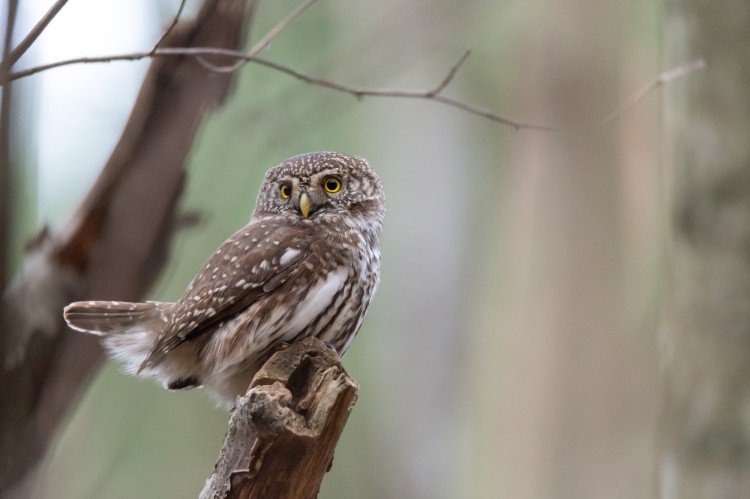
Eurasian Pygmy Owl photo

Eurasian Pygmy Owl

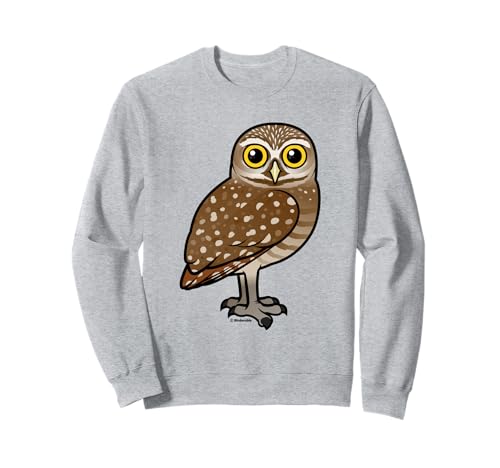
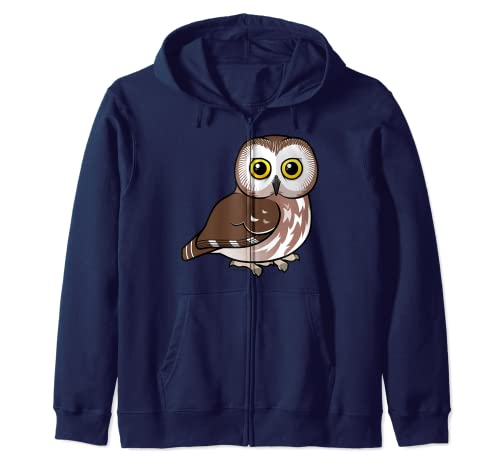
Birdorable Owl Gifts

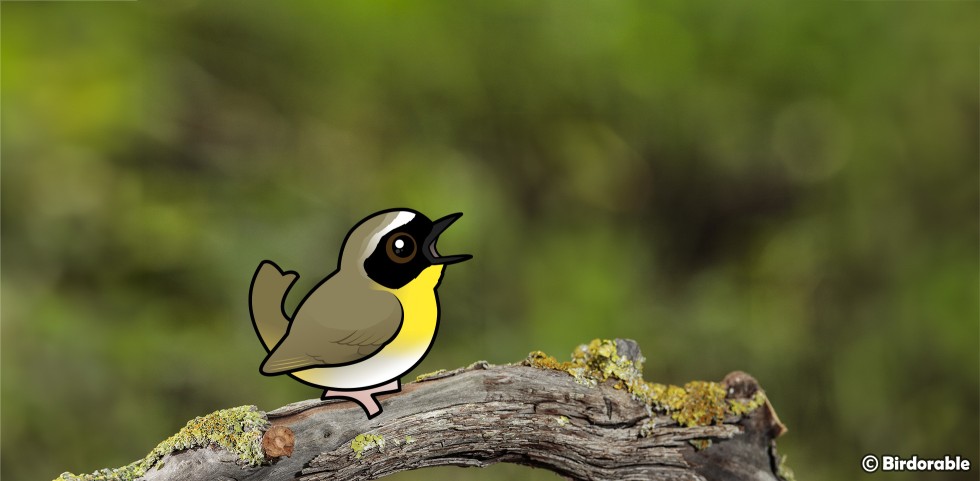
Singing Common Yellowthroat

The melody of birdsong, weaving through a thick forest or a productive meadow, often evokes a feeling of joy. While this sentiment is charming, the true reasons behind avian vocalizations are much more complex and fascinating.. To say that birds simply sing because they're happy is, in fact, a beautiful but misleading myth.

The reality is that bird song serves a multitude of purposes, often far removed from emotional expression. While some species may indeed associate certain melodic phrases with positive experiences, the primary motivation for singing falls into three broad categories: territory defense, mate attraction, and communication.

Bird song often acts as a potent territorial declaration. Picture a male American Robin perched on a branch, belting out a series of rich, melodic phrases. This isn't simply a serenade; it's a powerful message to other males, a kind of auditory fence marking the boundaries of his domain. The complexity of the song, its volume, and even its timing all play a role in deterring intruding males and asserting dominance.
Many birds utilize song as a powerful tool for attracting mates. Imagine a female Worm-eating Warbler captivated by the sweet, high-pitched trill of a nearby male. The more impressive the song, the more likely he is to win the favor of a potential mate.

Bird song often functions as a complex communication system within flocks and families. Different chirps and calls can convey a range of information, from warnings about predators to the location of food sources. Consider a Black-capped Chickadee alerting its flock to a nearby hawk with a sharp, high-pitched call. This vocal exchange plays a crucial role in ensuring the safety and survival of the group.

While the emotional resonance of birdsong remains undeniable, it's good to understand that this vocal tapestry is woven from the threads of necessity, competition, and social interaction. So let's consider the myth "Birds Sing Because They're Happy" to be busted!

Next time you find yourself captivated by the music of birds, remember the meaning that lies beneath the surface of the beautiful song. Birds may not be singing simply for joy, but for survival, for reproduction, for connection.

Cranes in Mythology and Popular Culture

Almost anywhere you can find cranes living in the wild, you can find cranes in human mythology and popular culture. They are often symbols of happiness, youth, good luck, and/or peace.

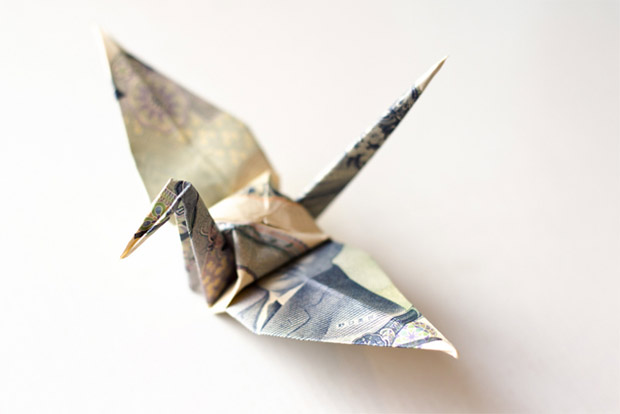
In Japan, as in many other parts of Asia, cranes are regarded as symbols of good fortune, peace, and youth. Japanese legend tells that anyone who folds a thousand origami cranes will be granted one wish.

Crane origami
Crane origami by Japanexpterterna.se (CC BY-SA 2.0)

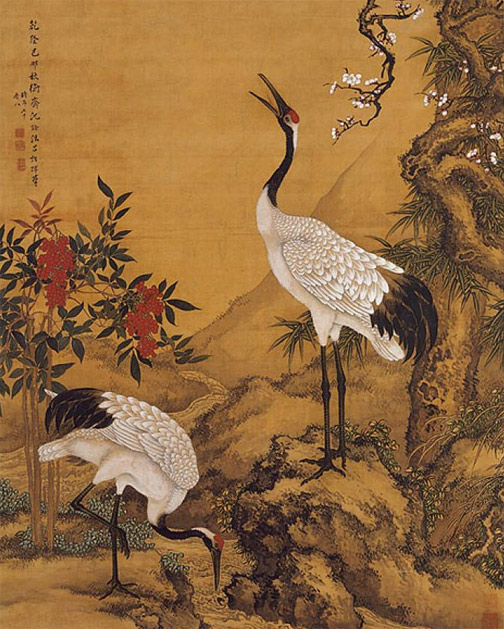
In China, the Red-crowned Crane is prevalent in mythology. It is a symbol of nobility, as well as youth, longevity, and immortality.

Pine, Plum and Cranes (1759) by Shen Quan from the Palace Museum in Beijing, China

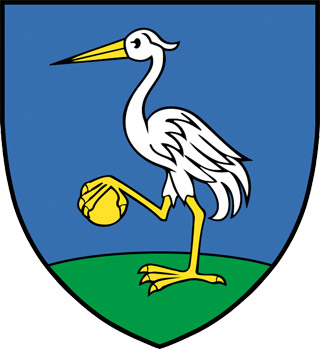
In heraldry or coats of arms, a crane is often shown holding a rock with its foot. The symbolism comes from a legend attributed to Pliny the Elder. He wrote that a group of cranes under attack put one bird on watch. The bird on guard duty would hold a rock; if the crane accidentally fell asleep, the sound of the falling rock would awaken the bird.

Crane coat of arms
Image by Christer Sundin (CC BY-SA 3.0)

The elaborate mating and pair-bonding dances performed by cranes are noted in several cultures. The Blue Crane is prominent in the culture of the Xhosa of southern Africa. Feathers from the bird are used in ceremonies to decorate distinguished men.

In native Siberian culture, the Siberian Crane is sacred, a symbol associated with the sun and spring time.

In Germany, there is a museum devoted entirely to the natural history of the Common Crane! The Kranich Museum is in a renovated manor house in Mecklenburg-Vorpommern. There are displays of various pieces of artwork related to the birds, including video, murals, costumes, and other media.

The Sarus Crane is considered sacred in several Indian cultures. They are known as symbols of marital virtue because they mate for life. When a Sarus Crane dies, its mate was believed to starve to death in sorrow.

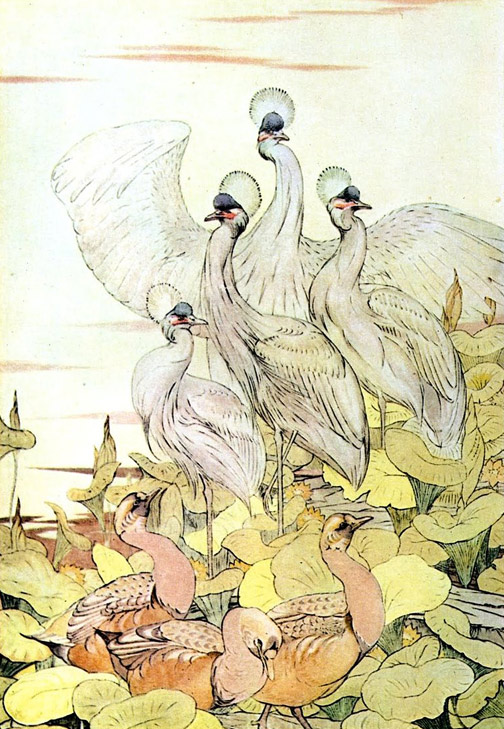
Cranes are featured in a few of Aesop's fables. In The Geese and the Cranes, a mixed flock of geese and cranes were feeding in a meadow. A birdcatcher came to ensnare them in his nets. The cranes, being light of wing, fled away at his approach; while the geese, being slower of flight and heavier in their bodies, were captured. The moral of this story is that those who are caught are not always the most guilty. Other fables attributed to Aesop that include cranes are The Wolf and the Crane and The Peacock and the Crane.

Illustration from 1909 of the fable of the geese and cranes from Aesop's Fables. 

Truth or Tale? The Egyptian Plover and the Myth of the Crocodile Bird

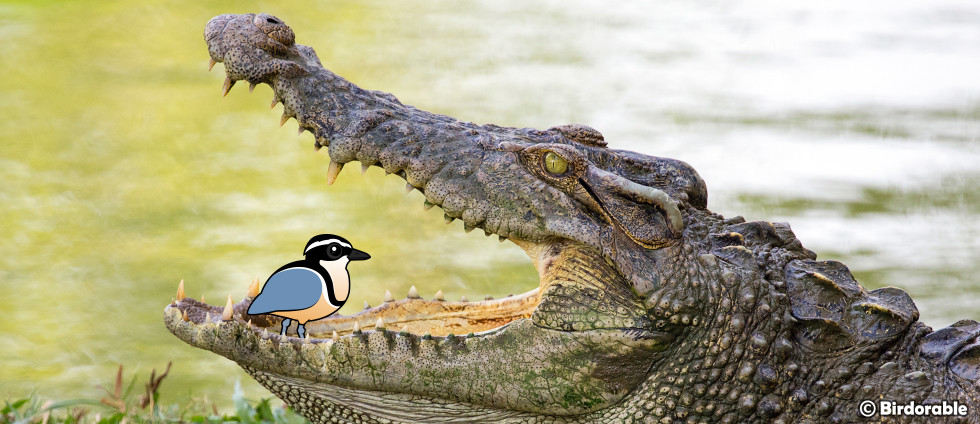
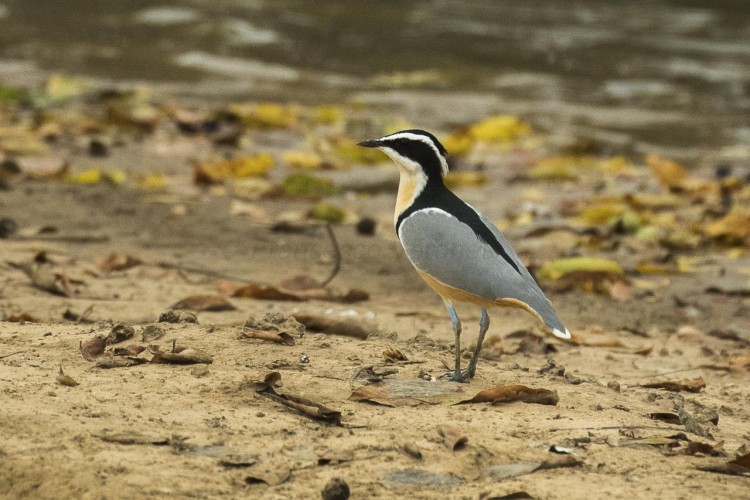
The Egyptian Plover is a beautiful species of wader that lives in parts of sub-Saharan Africa. Despite the common name, their present range does not extend to any part of Egypt. The bird is sometimes known by another name: Crocodile Bird.

During his travels to Egypt in 459 BC, the Greek historian Herodotus recorded a fascinating observation: a small bird, which he identified as the Egyptian Plover, engaging in what appeared to be a symbiotic interaction with a crocodile. According to Herodotus, this bird was seen picking out food from the open mouth of a crocodile, a behavior presumed to be mutually beneficial. The crocodile would receive a thorough cleaning of its teeth, while the bird enjoyed an effortless meal.

However, the reliability of this account has been a subject of debate. Herodotus, known as the world's first historian, was also nicknamed "The Father of Lies," suggesting that some of his observations might have been exaggerated or misinterpreted. The myth of the Crocodile Bird was later revived by explorers and naturalists in the 19th and 20th centuries, with personal eyewitness accounts from a German zoologist and a British birdwatcher. Yet, these accounts have been widely disputed and lack substantial corroborative evidence.

In fact, there is no definitive scientific record of a cleaning symbiotic relationship between any crocodilian species and any bird species. This absence of evidence casts doubt on the validity of the Egyptian Plover's role as a Crocodile Bird.

Despite the questionable authenticity of this behavior, the moniker "Crocodile Bird" undeniably adds an aura of intrigue and mystique to the Egyptian Plover. It's a nickname that captures the imagination, painting a picture of a fearless bird in a daring dance with one of nature's most formidable reptiles. Despite its questionable background, the nickname Crocodile Bird does make the Egyptian Plover sound kind of cool, don't you think?

Photo of an Egyptian Plover in The Gambia

Egyptian Plover in The Gambia by Francesco Veronesi (CC BY-SA 2.0)

Black Swans and Flying Pigs: The Black Swan's Journey from Myth to Emblem of Australia

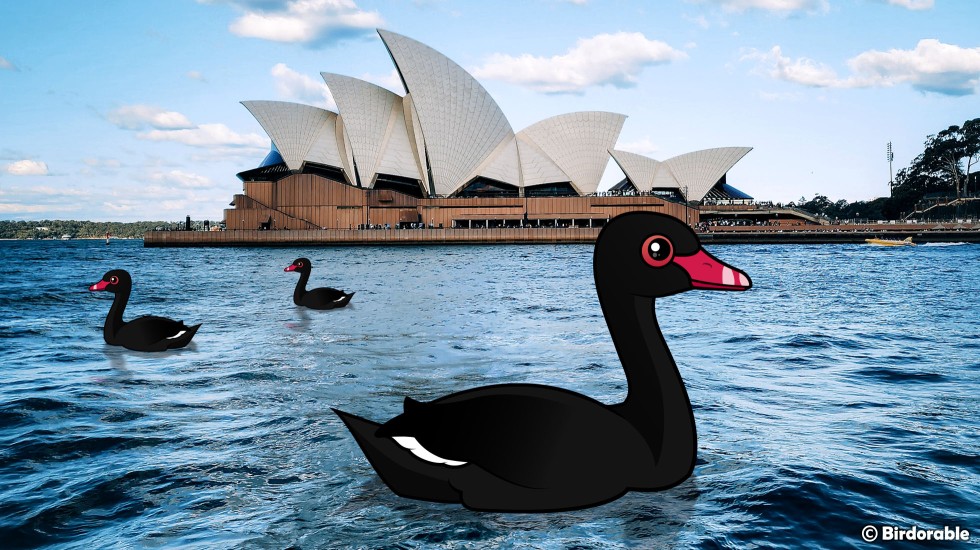
Birdorable Black Swans in Sydney Harbor in front of the Opera House

The Black Swan, a bird steeped in history and symbolism, has traversed an incredible journey from myth to reality in the eyes of Europeans. For over 1,500 years, the term "Black Swan" was a metaphor in European cultures for something that was impossible or did not exist. The prevailing belief was that all swans were white, as evidenced by the only known species at the time, the Mute and Whooper Swans, both predominantly white. Mute Swans and Whooper Swans, both mostly white, were the only species of swan known to western culture at the time. The very idea of a black swan was considered as impossible as a flying pig. 

The discovery of the Black Swan in Australia in the late 1600s by European explorers was nothing short of astonishing. It upended centuries of entrenched beliefs, serving as a powerful reminder of the vastness and mystery of the natural world. The sight of these elegant birds, with their striking black plumage and contrasting red bills was as astounding as stumbling upon a mythical creature.

The Black Swan's presence became a symbol of discovery and the unknown, challenging the limits of people’s understanding of nature. It shifted from a metaphor for the impossible to an emblem of the unexpected and the rare.

In Australia, the Black Swan has assumed a significant cultural role, particularly in Western Australia. Its uniqueness and contrast to the northern hemisphere’s white swans have made it a symbol of Australian identity and the distinctiveness of the antipodean experience. This symbolism is reflected in its prominent inclusion on the flag and coat-of-arms of Western Australia.

The Black Swan’s story is not just about a bird; it’s a narrative that intertwines nature, culture, and history. It represents a paradigm shift in thinking, from the certainty of the known to the acceptance and embrace of the unfamiliar. Australians, especially those in Western Australia, have adopted the Black Swan as a representation of their unique place in the world, celebrating the beauty and diversity of their natural heritage.

If you'd like to read more about Black Swans and pop culture, check out this article.