Vulture Week 2026
Twenty-Three Birds Left: How the California Condor Came Back
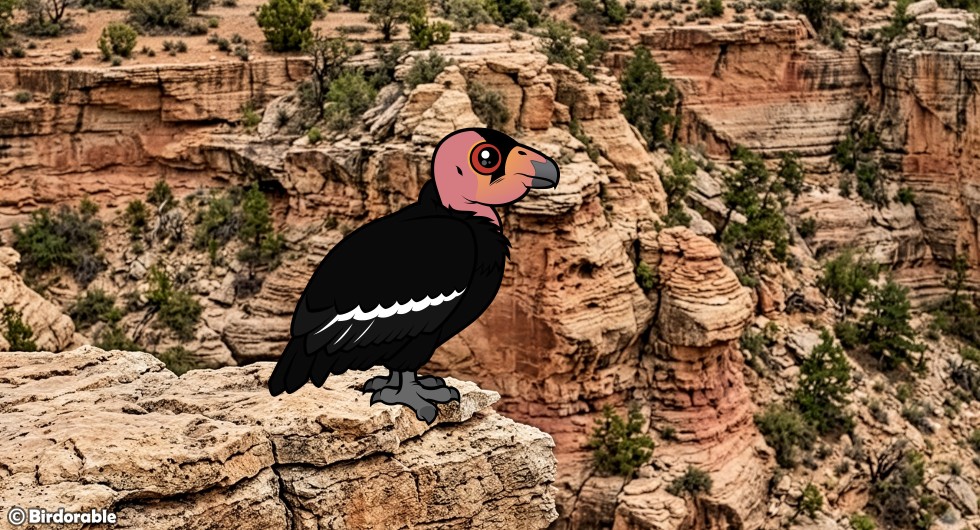
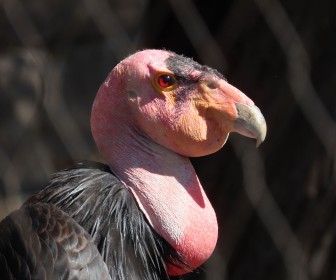
In 1982 you could have counted every California Condor alive on the planet without running out of fingers and toes. There were 23. That wasn't 23 in California, and it wasn't 23 in captivity. That was the entire species: every single condor left on Earth, all twenty-three of them.
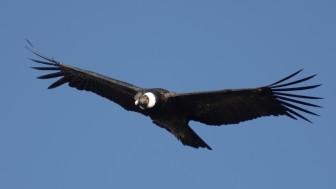
This is a bird with a three meter wingspan, the widest of any bird in North America, a bird that can weigh as much as a small dog, and live for sixty years. Its kind had flown these skies since the Ice Age, when the genus ranged across the Americas and condors soared over what is now Florida. It was down to two dozen individuals, and something had to be done.
The Decision Nobody Wanted to Make
By the mid 1980s the wild birds were dying faster than they were breeding, and biologists faced a stark choice: leave the last few free and hope, or catch every single one and try to breed them in captivity.
The argument ended up in court, where the National Audubon Society sued to stop the Fish and Wildlife Service from capturing every remaining wild bird, arguing some condors should stay free to guide any captive-bred birds released later. A district court agreed and blocked the captures, but in June 1986 the appeals court overturned that ruling, finding the decision to take in the remaining condors "manifestly defensible."
On Easter Sunday 1987, a biologist named Jan Hamber tracked the last free-flying California Condor to a trap site in southern California. The bird was known as AC-9. When he was carried away, the species existed only in captivity. A species that had ridden thermals over that landscape for tens of thousands of years was, as of that afternoon, entirely in human hands.
Puppets
The recovery worked because of a quirk of condor biology. A pair normally raises a single chick, but if the egg is lost early, the female will often lay another. Biologists exploited this by taking the first egg and letting the parents lay a replacement, doubling the output of every pair.
That created a new problem. A chick raised by people grows up thinking it is a person, which is fatal for a bird that needs to find its own food and live wild with its own kind. So the eggs taken away were hatched and fed using hand puppets shaped and painted like the head of an adult condor, so that a growing chick would not learn to associate food with people.
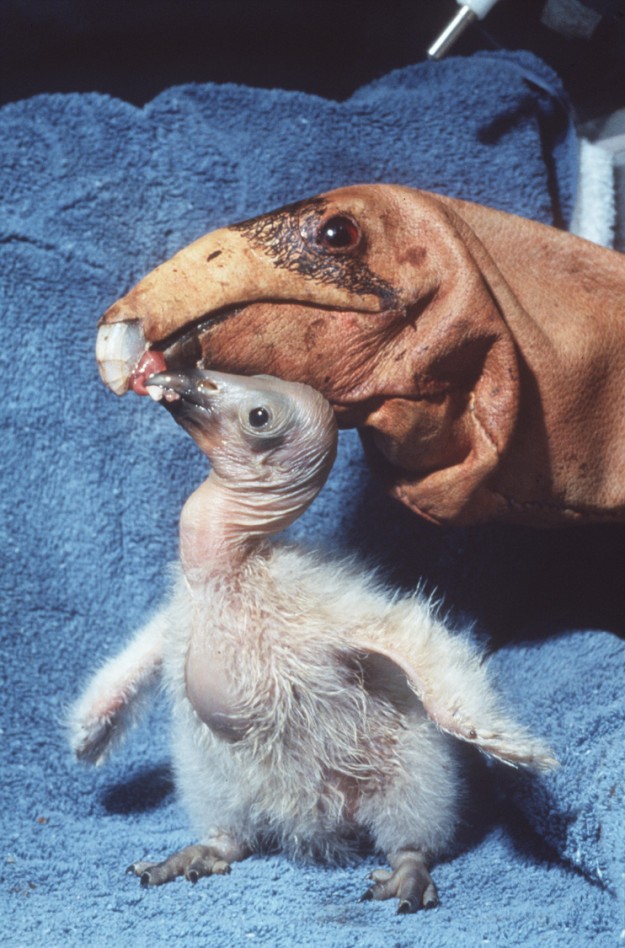
Look closely, that "adult bird" is actually a hand puppet! (source: U.S. Fish and Wildlife Service, public domain)
Back to the Sky
The first captive-bred condors were released in 1991 and 1992, at Big Sur, Pinnacles and Bitter Creek National Wildlife Refuge in California. Arizona followed in 1996, at the Vermilion Cliffs near the Grand Canyon. Later came a site in the Sierra de San Pedro Martir in Baja California, Mexico.
And in May 2002, after fifteen years in captivity, biologists opened a pen at Hopper Mountain and let AC-9 go. The last wild condor became a wild condor again. He was given a new number, 21, and he went on to nest in the Sespe Condor Sanctuary and raise chicks of his own in the open air. He died in the wild on June 29, 2016, by then the oldest bird in the southern California flock.
Prey-go-neesh Comes Home
In 2022 condors returned to a part of their range that had been empty for a century, and they did it because the Yurok Tribe spent years making it happen.
To the Yurok, the condor is prey-go-neesh, among the first beings of the world and the one that carries prayers to the Creator. Condor feathers and condor songs are part of the World Renewal ceremonies, including the White Deer Skin Dance and the Jump Dance. Restoring the bird was not only an ecological project. It was the return of a relative.
The Yurok Condor Restoration Program began releasing birds in Redwood National Park in 2022, and by late 2024 eighteen had been freed there. In May 2026 a two-year-old female called B9 left the redwoods and flew a 380-mile loop over four days, crossing into Oregon and getting within a few miles of Medford before turning for home. She was the first California Condor recorded in Oregon since 1904.
Continued Threats to Condors
The condor is not out of trouble, and the reasons are worth knowing, because most of them are fixable.
Lead poisoning remains the number one known cause of death. A rifle bullet fragments when it hits, and a condor feeding on a carcass or a discarded gut pile swallows the pieces. A 2012 study in the Proceedings of the National Academy of Sciences traced the metal and found that 79 percent of free-flying condors carried a lead signature matching ammunition. Without constant intervention to find and treat poisoned birds, the study concluded, the wild population would slide back toward extinction. California banned lead ammunition within condor range starting in 2008.
The leading killer of condor nestlings is not a predator, it's trash: small fragments of bottle caps, glass, wire, and plastic that parents pick up and carry back to the nest. Condors naturally feed bone chips to their chicks for calcium, and they cannot always tell the difference. A study of nests in southern California found junk in almost every one, in larger amounts than in historic condor nests, and concluded it's now the leading cause of nest failure in the reintroduced population.
In 2023, highly pathogenic avian influenza reached the Arizona and Utah flock. By the middle of April the Fish and Wildlife Service had recorded 20 dead condors there, with the virus confirmed in half of them. The response was unprecedented: an emergency vaccine trial, tested first on American Black Vultures standing in for their rarer cousins, then extended to condors themselves. By February 2024, 94 condors had received at least a first dose.
Where Things Stand
On December 31, 2025, the US Fish and Wildlife Service counted 607 California Condors in the world. Of those, 392 were flying free, in flocks across California, Arizona, Utah and Baja California, and 215 were in captive breeding programs.
Twenty-three birds, all of them in cages, became 607 birds, most of them wild. It took nearly forty years, an enormous amount of money, hand puppets, and the patience of people who knew they might be doing all of it for nothing.
It's worth remembering this on a day set aside for vultures, because the news about vultures is mostly bad. Species are collapsing across Africa and Asia, and the causes are poison, persecution, habitat loss. The condor is the counterexample. It is proof that the decline is not a law of nature.
What Would You Bring Back?
If you could return one bird to a place it used to live, which would you choose, and where? Tell us in the comments below!