Florida Scrub-Jay Fun Facts

Birdorable Scrub-Jay

1. The Florida Scrub-Jay is the only species of bird endemic to the state of Florida.

2. The Florida Scrub-Jay is a federally threatened species. Loss of their specific breeding habitat and their sedentary lifestyle contribute to their threatened status.

3. Florida Scrub-Jays are cooperative breeders. Offspring remain with their parents for subsequent broods, helping with feeding and defending territory.

Florida Scrub Jay
Florida Scrub-Jay by Amy Evenstad

4. Both male and female Florida Scrub-Jays are active during nesting, but with a strong division of labor. Males guard the territory and provide food for the family; females incubate the eggs and brood the chicks.

5. Florida Scrub-Jays have been observed perching on the backs of deer and feral pigs.

6. Florida Scrub-Jays are known to be extremely tame. They will take food from the hand or perch on humans who are providing them with treats. Feeding wild Scrub-Jays is not recommended, though, as it may endanger them by making them drop their guard around dangerous traffic situations and by triggering early breeding which may lead chicks to starve when natural food is not available.

7. The oldest known wild Florida Scrub-Jay lived to be 15.5 years of age.

8. The Florida Scrub-Jay is one of our cute Birdorable birds! The Florida Scrub-Jay was added to Birdorable on August 2nd, 2010.

Florida Scrub-Jay
Florida Scrub-Jay by Amy Evenstad

Cute Florida Scrub-Jay Gifts

Birdorable Black-crested Titmouse

1. The Black-crested Titmouse is closely related to the Tufted Titmouse. They hybridize where their ranges overlap (in Central Texas) and they used to be considered the same species.

2. The bird's DNA suggests that the Black-crested Titmouse diverged from the Tufted TItmouse about 250,000 years ago.

3. It's 'peter, peter, peter' call is similar to that of the Tufted Titmouse, but shorter.

4. Their diet consists of seeds, berries, nuts, insects and insect eggs.

5. The crest of a female Black-crested Titmouse is actually dark gray.

6. Another name for the Black-crested Titmouse is the Mexican Titmouse.

7. Black-crested Titmice are considered residents throughout their range, which covers much of central Texas, and parts of Oklahoma and Mexico. They do not migrate.

8. Black-crested Titmice are cavity nesters, and have been known to line their nests with horse hair, feathers, onion skins, and even tissue paper.

9. The Black-crested Titmouse is one of our cute Birdorable birds! The Black-crested Titmouse was added to Birdorable on November 10th, 2010. Check out our other cute tits and chickadees.

Huey was glad to finally get his little gnome cap.
Photo by martytdx (source: Flickr)

Fun facts about the Northern Shoveler

1. Unique Feeding Technique

Northern Shovelers utilize their uniquely-shaped bills to sift through the water for crustaceans, making feeding an efficient endeavor.

2. Widespread Distribution

The Northern Shoveler boasts a widespread distribution, with populations found in parts of the Americas, Europe, Africa, and Asia, illustrating their adaptability to various habitats.

3. Shoveler Species Family

The Northern Shoveler shares its unique bill shape with three other closely related species: the Cape Shoveler, the Australasian Shoveler, and the Red Shoveler.

4. Hybridization Habits

This species is known for its ability to hybridize with several other ducks, including the Blue-winged Teal, Mallard, Gadwall, Northern Pintail, and Wood Duck, showcasing its diverse genetic compatibility.

5. Distinctive Wing Sound

A distinctive rattling noise can be heard from the wings of Northern Shovelers as they take flight, a unique auditory characteristic of the species.

6. Territorial Behavior

Northern Shovelers display a somewhat territorial nature, especially during the nesting season. Males are known to defend their territory more vigorously than other dabbling ducks.

7. Birdorable Bird

The Northern Shoveler is one of our cute Birdorable birds! The Northern Shoveler was added to Birdorable on December 7th, 2010.

Birdorable Caspian Tern

Here are ten interesting facts about the Caspian Tern:

  1. The Caspian Tern is the world's largest tern species.
  2. The Caspian Tern's diet consists almost entirely of fish.
  3. Unlike many other tern species, the Caspian Tern retains its black cap during the winter (non-breeding plumage).
  4. The Caspian Tern occurs on all continents except Antarctica.
  5. Caspian Terns are highly vocal. Chicks vocalize while they are still in the egg!
  6. Caspian Terns are fastidious when it comes to feeding their young. Adults rinse their bills after feeding their babies. If an offered fish is accidentally dropped on the ground, the adult will rinse it off with water before re-offering it to the baby tern.
  7. Caspian Terns nest along the Gulf Coast and thus are one of the species directly threatened by the BP Oil Spill Disaster of 2010.
  8. Starting from day one, chicks are fed whole fish, which they swallow headfirst.
  9. The oldest known wild Caspian Tern lived to be 26 years old.
  10. The Caspian Tern is one of our cute Birdorable birds! The Caspian Tern was added to Birdorable on July 20, 2007.

Cute Birdorable Caspian Tern Gifts

Embrace Your Inner Birder with this Warbler Fan T-shirt

Birdorable Warbler Fan t-shirt

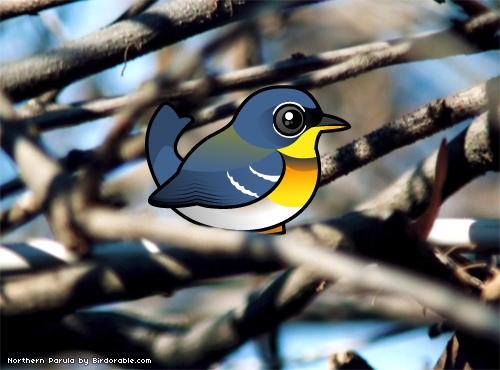
As the chill of winter starts to fade, we're eagerly anticipating the return of warblers this spring. Currently, these tiny travelers are basking in warmer weather far from their breeding grounds up here and further north. Smart birds, indeed! In a few short months, they'll grace us once again, and we'll be out and about, binoculars in hand, searching for beauties like the Northern Parula, Prothonotary Warbler, Common Yellowthroat, Kirtland's Warbler, and Nashville Warbler.

To celebrate their upcoming return, we're spotlighting our Warbler Fan design, shown here on a Bella+Canvas Jersey Short Sleeve T-Shirt from Zazzle. The design is also available other apparel styles and gifts on Amazon and Zazzle. This design showcases some of the most cherished warbler species that birdwatchers love to spot. It's a perfect way to show off your enthusiasm for these feathered wonders and keep the spirit of birding alive, even when the trees are still bare, and the air is crisp. Whether you're a seasoned birder or someone who simply enjoys the colorful spectacle these birds provide, this t-shirt is a wonderful nod to the joy and anticipation that comes with warbler season.

More Warbler Fan Gifts

Mastering the Water's Surface: 10 Facts on Black Skimmers

Birdorable Black Skimmers
  1. Black Skimmers are fascinating birds, known for their unique feeding method. They glide over water, using their elongated lower mandibles to skim the surface and catch fish. This specialized technique is a marvel of nature's design.
  2. Interestingly, baby Black Skimmers are born with upper and lower mandibles of the same length. It's only during the fledging period that the lower mandible grows longer, preparing them for their distinctive way of foraging.
  3. Among the world's bird species, there are only three types of skimmers, and the Black Skimmer is the only one found in the Americas. This makes it a special sight for bird enthusiasts across North and South America.
  4. Parental care in Black Skimmers is a joint effort. Both males and females share the duty of incubating the eggs. Impressively, male Black Skimmers are equipped with brood patches, which is quite rare among birds. After the chicks hatch, both parents continue to brood and feed the nestlings, showcasing a remarkable example of cooperation.
  5. The Black Skimmer has earned a variety of folk names over the years, including Seadog, Scissor-bill, and Cutwater. These names highlight the bird's unique appearance and feeding habits.
  6. While Black Skimmers are active throughout the day, they are mainly crepuscular, meaning they are most active during the twilight hours of dawn and dusk. This behavior allows them to efficiently feed when fish come closer to the water's surface.
  7. One of the most intriguing features of Black Skimmers is their large, vertically-oriented pupils, similar to those of cats. This adaptation is unique among birds and helps them see in low light, aiding their crepuscular feeding habits.
  8. Despite their strong association with water, Black Skimmers do not swim. They have adapted to feed and live near water without the need for swimming capabilities.
  9. The BP Oil Spill Disaster in 2010 posed a significant threat to the Black Skimmer population along the Gulf Coast. Their feeding method, which involves skimming the water's surface, made them especially vulnerable to oil contamination. The disaster resulted in the death of 192 skimmers, as noted by the FWS, highlighting the environmental risks these birds face.
  10. The Black Skimmer has been embraced by bird lovers around the world and was added to the Birdorable collection on December 2nd, 2010. This addition celebrates the bird's unique charm and the affection it inspires among birdwatching communities.

Cute Black Skimmer Gifts

Fly into the Tropics with Birdorable Colorful Toucan T-Shirts & Gifts

Dive into the vibrant world of the tropics with our Birdorable Colorful Toucan design, a dazzling homage to one of the most iconic birds of the rainforest, the Toco Toucan. This striking design captures the essence of the toucan's playful spirit and its remarkable color palette, bringing a touch of exotic flair to your everyday life.

Toucans are known for their large, colorful bills, which are not just visually stunning but also serve practical purposes. These remarkable beaks help toucans in feeding by reaching fruit on branches too small to support their weight and play a crucial role in their social interactions. 

Whether you're a bird lover, a conservationist, or simply someone who appreciates the beauty of nature, this design speaks to the heart. It's perfect for adding a splash of color to your wardrobe, brightening up your home décor, or finding that special, meaningful gift for a friend or family member who shares your passion for birds and the environment.

More Toco Toucan Gifts

10 Fascinating Facts About the Pied-billed Grebe

Birdorable Pied-billed Grebe

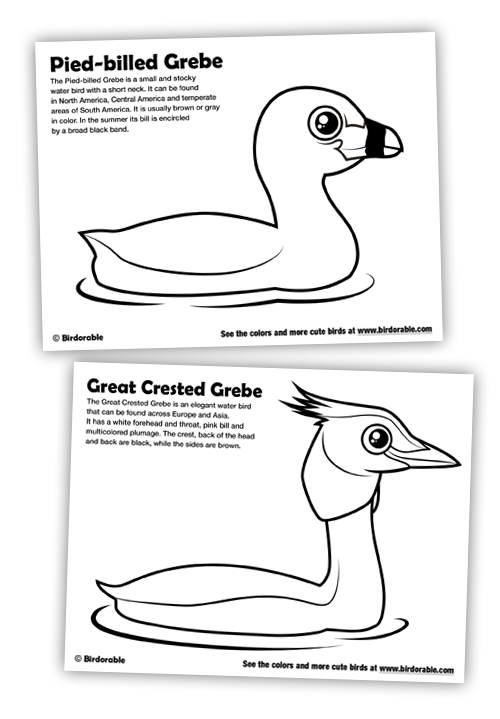
Dive into the intriguing world of the Pied-billed Grebe, a fascinating bird that might not grab headlines but certainly deserves a moment in the spotlight. Here are 10 captivating facts about this modest avian marvel:

  1. Pied-billed Grebes are Excellent Swimmers: These birds are adapted to life in the water, using their lobed feet to propel themselves with ease when diving for fish and insects.

  2. Their Bills Change Color: In the breeding season, the bill of the Pied-billed Grebe turns a distinctive white with a black band, earning them their "pied" name.

  3. Grebes Sink to Escape Danger: Unlike most birds that take flight, Pied-billed Grebes can sink quietly into the water to avoid predators, disappearing without a trace.

  4. They are Poor Flyers: While capable of flight, Pied-billed Grebes are rarely seen doing so. Their strong legs are set far back on their body, making takeoffs awkward and landings splashy.

  5. Pied-billed Grebes are Solitary Birds: Outside of breeding season, they prefer to keep to themselves, often seen alone on ponds and lakes.

  6. Their Vocalizations are Unique: The calls of Pied-billed Grebes include a series of loud, cuckoo-like calls and a strange, pumping noise.

  7. Baby Grebes Can Swim at Birth: Almost immediately after hatching, Pied-billed Grebe chicks are in the water, swimming under the watchful eyes of their parents.

  8. They Eat Their Own Feathers: Both adults and chicks consume feathers, which help prevent injury from fish bones and form a plug in the stomach to trap and digest bones more efficiently.

  9. Pied-billed Grebes Build Floating Nests: Their nests are anchored to plants in the water, providing safety from predators and rising water levels.

  10. They Have a Wide Range: Pied-billed Grebes can be found across the Americas, from Canada to Argentina, adapting to various freshwater habitats.

The Pied-billed Grebe might not be as flashy as some of its avian counterparts, but its unique characteristics and behaviors make it a remarkable species worthy of attention and admiration. Whether you're a seasoned birdwatcher or new to the avian world, keeping an eye out for these intriguing creatures can add an exciting element to your next outdoor adventure.

Pied-billed Grebe by Susan Young (public domain)

Cute Pied-billed Grebe Gifts

Stay Cool with the Birdorable Barred Owl "Owls Are Cool" T-Shirt

Birdorable Owls Are Cool t-shirt

Birdorable "Owls Are Cool" Baby Fine Jersey T-Shirt from Zazzle

Who says fashion can't be a hoot? Certainly not the wise and ever-stylish owls! Our latest Birdorable Owls are cool t-shirt design showcases a Birdorable Barred Owl donning a pair of sleek sunglasses, transforming this nocturnal bird of prey into the epitome of cool. 

Barred Owls are known for their soulful, dark eyes and the distinctive “who-cooks-for-you” hooting, but on this t-shirt, they're bringing a new vibe to the birding community. It's a perfect blend of fun, education, and style, suitable for all ages and destined to spark conversations and smiles.

This t-shirt is perfect for casual outings, birdwatching trips, or as a cozy top for lounging at home, the "Owls are cool" T-shirt is versatile, comfortable, and stylish. It's a wonderful gift for the owl enthusiast in your life or a delightful treat for yourself. So spread your wings, flaunt your feathers, and let the world know just how cool owls—and you—really are.

Cute Owls Are Cool Gifts

12 Days of Birdorable

The Grand Crescendo: Ruffed Grouse Drum Up the Final Day of Birdorable's Christmas Cheer

12 Birdorable Ruffed Grouse

As the festive season reaches its crescendo, the twelfth day of Birdorable brings the rhythmic beat of 12 Drumming Ruffed Grouse! Our celebration of avian charm wraps up today by welcoming the Ruffed Grouse into the Birdorable family.

Echoing the classic line "Twelve Drummers Drumming" from the beloved carol "The 12 Days of Christmas," the Ruffed Grouse offers its own natural percussion. These birds are known for their unique "drumming" behavior, which is a showy display used to woo potential mates. The male Ruffed Grouse creates this drumming sound not with instruments but with the rapid beating of their wings while standing on a log or the ground. This act is as integral to the courtship of these birds as a dozen drummers in a holiday parade.

The drumming of the Ruffed Grouse is more than just a mating call; it's a signature sound of the American woodlands. As we conclude our 12 Days of Birdorable, we hope these drumming Ruffed Grouse have tapped their way into your hearts, bringing joy and a touch of nature's music to your holiday celebrations. May the beat of their wings inspire you to explore and appreciate the natural wonders around us.

We thank you for joining us on this Birdorable journey, and we look forward to sharing more avian delights with you in the future. Happy holidays, and keep listening for the drumming that calls you back to nature!

This is the twelfth and final day of our 12 Days of Birdorable holiday event. Previously featured were:

Cute Ruffed Grouse Gifts