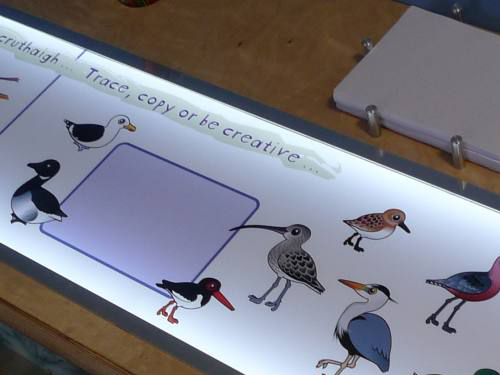
Some Birdorable wetland species are coming soon to the brand new Tralee Bay Wetlands Centre (PDF) in County Kerry, Ireland. A tracing table designed by WWT Consulting will feature Birdorable birds to inspire young artists. Hopefully we'll have more photos to share with you when the centre opens around Easter, but in the meantime here are some sneak peak pictures!

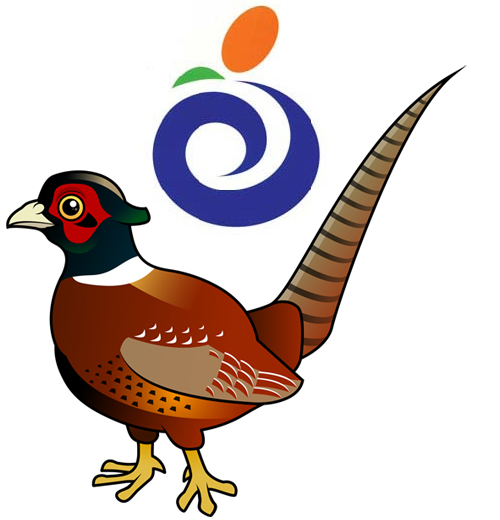
Many countries have an official national bird. For example, the national bird of India is the Indian Peacock, and the national bird of Panama is the Harpy Eagle. All U.S. states also have official birds. But did you know that there are even some cities that have their own official bird? The official city bird of Hanam, South Korea is the Ring-necked Pheasant (also known as the Common Pheasant). Ring-necked Pheasants today can be found almost everywhere, being a common introduced game bird. These beautiful birds are native to parts of Asia, including Korea. Their ability to adapt to a huge variety of habitats has made them extremely popular game birds, and they may be the most hunted bird on earth. At least they get the respect they deserve in Hanam!


Birdorable Ring-necked Pheasant with the emblem of Hanam

Today is Penguin Awareness Day! This commemorative day is always celebrated on January 20th, though the origins of the holiday are unclear. What is very clear is that these special charismatic birds deserve celebration! Many of the world's penguin species face population threats from habitat loss and other environmental strains.

Here are some resources for learning more about penguins:

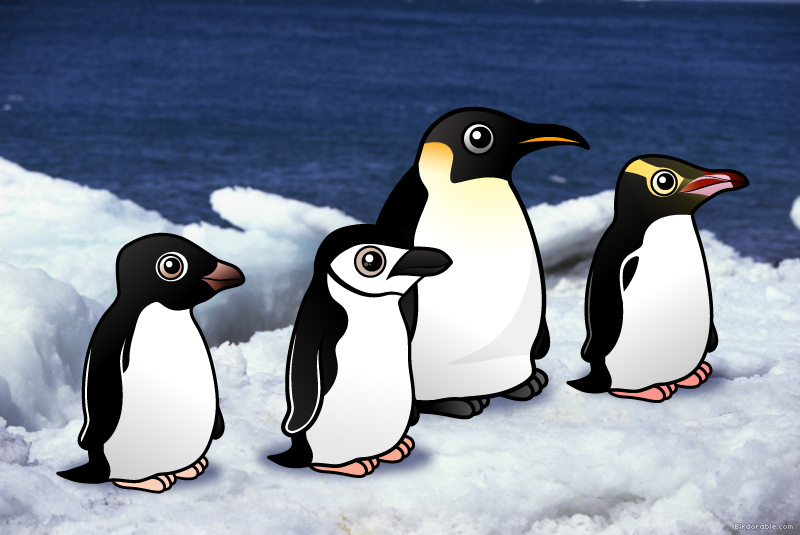
To get your mind on these flightless black-and-white beauties, we are debuting a new fun puzzle series here at Birdorable. Let's play Which one doesn't belong?

The birds in the image below have a lot in common, but one of them doesn't really belong. Can you pick out the species of penguin that doesn't go with the others, and tell us what the others have in common? Visit the meet page if you need help identifying the birds and finding out which one doesn't belong.

Which one doesn't belong?

Discovering Oystercatchers: Fun Facts and Features

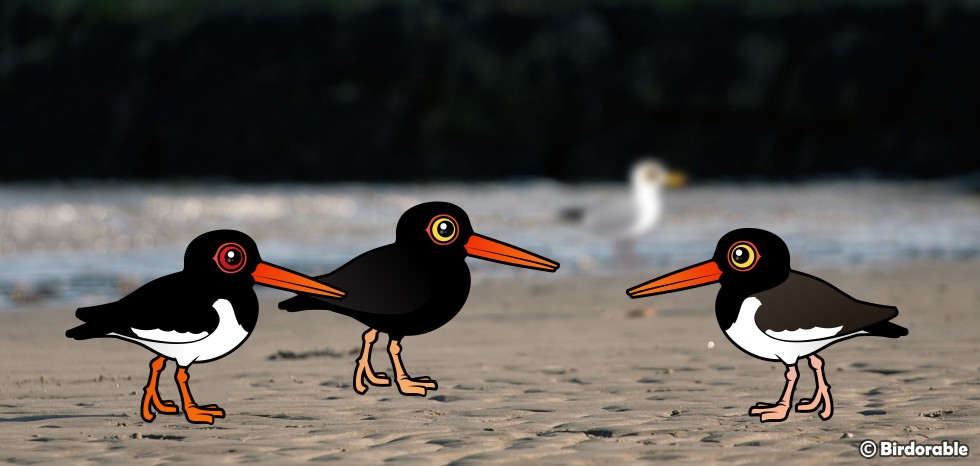
Birdorable Oystercatchers on the beach

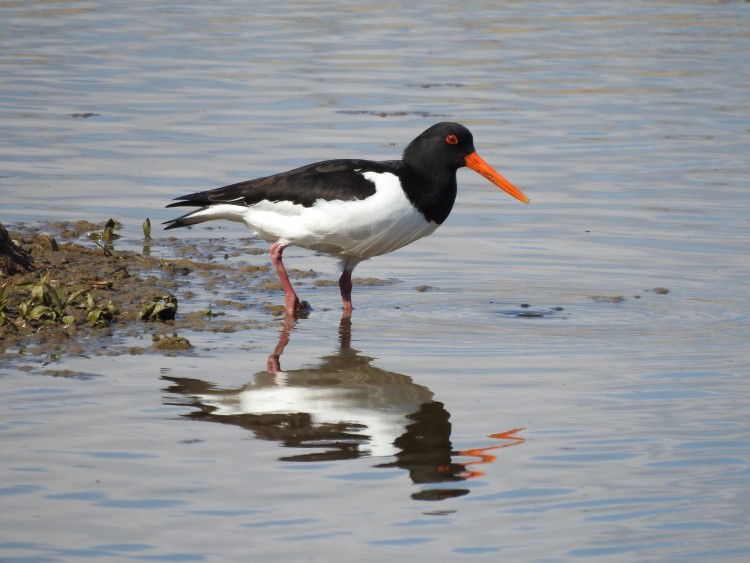
We recently added two new species of oystercatcher to Birdorable: the Black Oystercatcher and the Eurasian Oystercatcher. These join our updated American Oystercatcher.

Oystercatchers are a fascinating family of conspicuous, large shorebirds, boasting several intriguing characteristics and a wide range of species. Here are some captivating facts about these remarkable birds:

  • Currently, there are 11 recognized species of Oystercatchers still living in the world. These birds are spread across various continents, each adapting uniquely to its environment.
  • The Canarian Oystercatcher is a notable species that unfortunately went extinct in the early 1900s, highlighting the fragility of shorebird populations.
  • In the Americas, four distinct species of Oystercatchers can be found: the American Oystercatcher, Black Oystercatcher, Blackish Oystercatcher, and Magellanic Oystercatcher. Each of these species has its own unique traits and habitats.
  • Australia and New Zealand are home to five Oystercatcher species: the Sooty Oystercatcher, Pied Oystercatcher, Variable Oystercatcher, Chatham Oystercatcher, and South Island Oystercatcher. These regions provide diverse environments for these birds to thrive.
  • The remaining two extant species are named after their geographical ranges: the Eurasian Oystercatcher and the African Oystercatcher.
  • Oystercatchers, across all species, have a stocky shorebird build, adapted for their shoreline habitats.
  • While all Oystercatcher species have black feathers, some species feature black on top with white feathers underneath, showing diversity within the family.
  • A striking feature of Oystercatchers is their large bills, which are either bright orange or bright red, aiding in foraging and feeding.
  • Contrary to what their name suggests, Oystercatchers do not exclusively feed on oysters. They have a varied diet, and each species has a slightly different bill shape, specialized for the type of food they primarily consume.
  • Nesting habits of Oystercatchers involve creating scrapes on the ground, with most species nesting at or near shore habitats, taking advantage of their natural surroundings.
  • The Eurasian Oystercatcher stands out as the lightest species, averaging around 526 grams, while the Sooty Oystercatcher is typically the heaviest, averaging about 833 grams.
  • The Eurasian Oystercatcher's ability to inhabit both coastal and inland areas is unique among its kind.
  • The national bird of the Faroe Islands is the Eurasian Oystercatcher, a testament to its cultural significance in the region.
  • Variable Oystercatchers are named for their plumage variations, ranging from all-black to pied black-and-white, demonstrating remarkable diversity within a single species.
  • The South Island Oystercatcher, endemic to New Zealand, is also known as the South Island Pied Oystercatcher, or SIPO, highlighting its distinct regional presence.

These fascinating facts about Oystercatchers offer a glimpse into the diverse world of these shorebirds, each species bringing its own unique qualities and behaviors to the ecosystems they inhabit.

Eurasian Oystercatcher by ianpreston (CC BY 2.0 DEED)

Cute Oystercatcher Gifts

Happy Holidays

Gingerbread Screech Owl

We wish you a wonderful Christmas and happy holidays. Arthur & Amy

Fun Bobolink Facts

Have you ever seen a Bobolink? Here are some fun facts about these striking prairie birds!
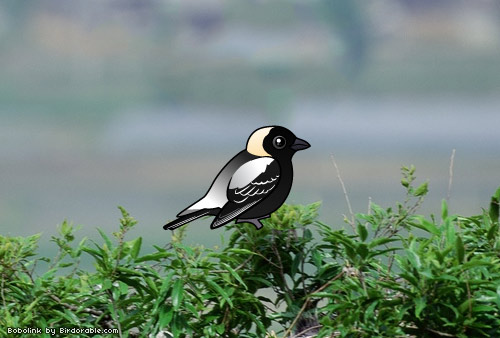
Birdorable Bobolink

1. One nickname given to the Bobolink is "skunk blackbird." The breeding plumage of males is distinctive in North America; it is the only bird with a black front and white back.

2. Bobolinks have two other nicknames, both food-related, in their migration and wintering grounds. They are called "butterbirds" in Jamaica, where they are captured during migration and consumed by locals as food. In South America, they may be considered pests, where they feast on fields of grain. Here they are called "ricebirds."

3. The mechanical-sounding call of the Bobolink is sung by the males during spring, often in flight. Here is what it sounds like:

4. Bobolinks molt their feathers twice a year, which is unusual for a songbird. One molt occurs after breeding and before migration; the other molt occurs on the wintering grounds. Males change their appearance drastically. They go from the striking "skunkbird" black and white to more muted coloring and resemble the female bird, seen below.
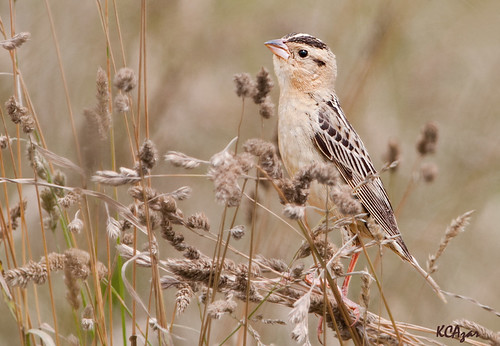
Bobolink, female
Bobolink, female by Kelly Colgan Azar

5. A group of Bobolinks is called a chain.

6. Bobolinks are known to be extraordinary migrants. They breed across much of the northern half of the United States and into parts of Canada. During the fall, the birds travel down to south-central South America, a journey that may span over 12,000 miles round trip!

7. The Bobolink has been celebrated by several American poets. Emily Dickinson wrote The Way to know the Bobolink. And here is a verse from William Cullen Bryant's Robert of Lincoln:

Robert of Lincoln’s Quaker wife, Pretty and quiet, with plain brown wings, Passing at home a quiet life, Broods in the grass while her husband sings: Bob-o’-l ink, bob-o’-link, Spink, spank, spink; Brood, kind creatures; you need not fear Thieves and robbers while I am here. Chee, chee, chee.

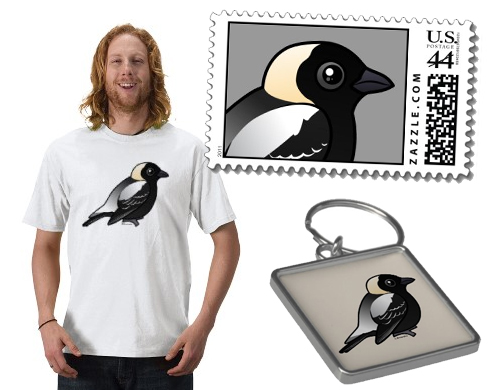
8. The Bobolink was added to Birdorable in 2011. Be sure to check out our great collection of Bobolink t-shirts & gifts!
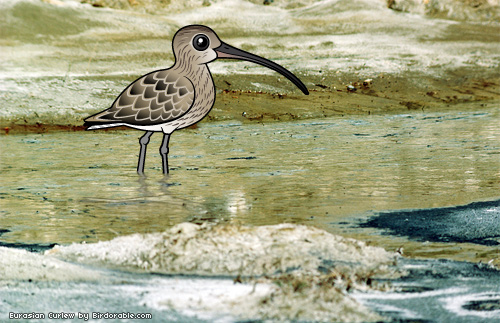
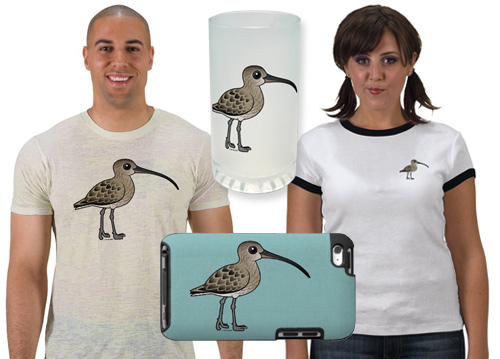
Birdorable Eurasian Curlew

Here are ten facts about the Eurasian Curlew:

  • The Eurasian Curlew is the largest wading bird found in Europe;
  • In Scotland it is known as the "Whaup";
  • The birds can be found from central and southern Europe and Asia to parts of Africa;
  • Curlews are migratory, but are present all year in the milder climate of the British Isles and the adjacent European coasts;
  • Within its range the Curlew is most similar to the Whimbrel, but the latter is smaller and has a shorter bill that is less smoothly curved;
  • They eat mostly worms, crabs and invertebrates, which they find by touch using their long curved bill to probe soft mud;
  • Its name is derived from its 'curloo-oo' call;
  • The female is larger and has a longer bill than the male, but the different is not always distinct;
  • A group of curlews is called a "curfew", "salon", or "skein" of curlews;
  • The species is threatened due to loss and fragmentation of moorland and grassland habitats.

The Eurasian Curlew is the 360th bird species on Birdorable. Check out our Curlew t-shirts and gifts and other Birdorable Plovers & Shorebirds.

Birdorable Eurasian Curlew sample products
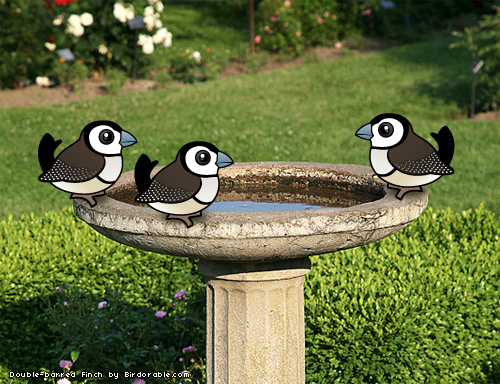
Birdorable Double-barred Finch

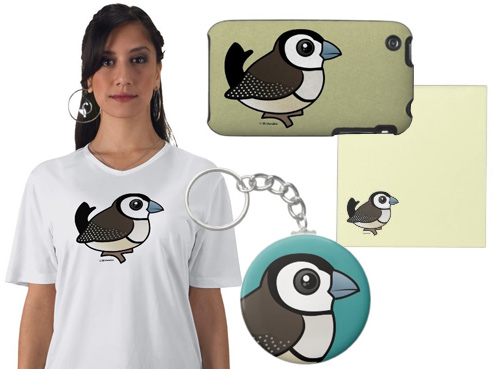
We recently added the Double-barred Finch to Birdorable. This cute little bird is also known as the Owl Finch because its facial markings resemble the disc-like appearance of some owl species. Owl Finches will visit feeders and bird baths in their native range over parts of north and east Australia, where they feed on seeds. They also eat insects. They are gregarious in nature, so Australian back yard birders may have a flock of several birds invading a feeder or bath at the same time. Check out our Owl Finch t-shirts and gifts and other Birdorable Finches.

Birdorable Double-barred Finch sample products

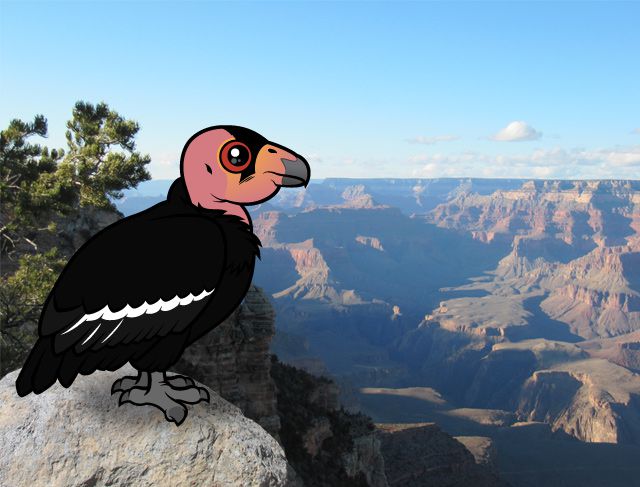
The California Condor has been selected as Audubon California's Bird of the Year for 2011. The endangered species won the title after receiving nearly 35% of the almost 10,000 votes cast in the annual election. The condor beat out the Black Oystercatcher, Western Snowy Plover, Sandhill Crane, and three other species.

Birdorable California Condor

The California Condor is a critically endangered species that was down to just 22 wild birds in the late 1980's. These birds were captured and bred as part of a captive breeding program that continues to see limited but steady success. Today there are over 180 California Condors living in the wild. One totally unnecessary threat still facing California Condors is lead poisoning. If hunters would universally adopt lead-free ammunition, the U.S. Fish and Wildlife Service says that the California Condor recovery program "would [be] wildly successful." Unfortunately, lead-riddled carcasses limit the species' rebound. The California Condor's reign at Audubon California Bird of the Year 2011 highlights the plight of these special birds.

California Condor Gifts